

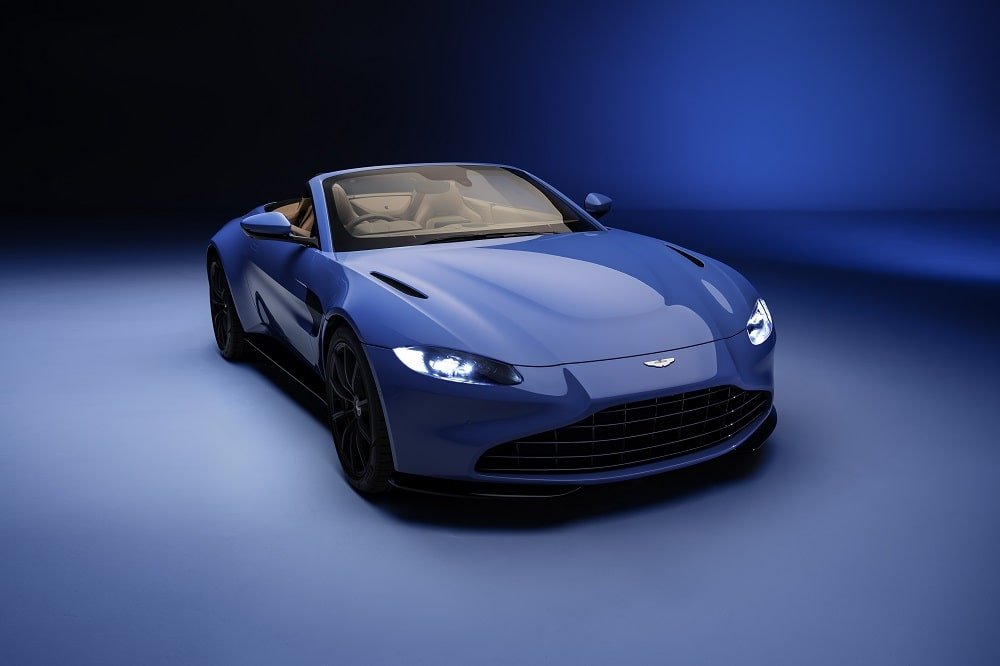
Aston Martin cars are symbols of British luxury, speed, and style. These vehicles combine powerful performance with timeless design. Features of the Aston Martin car include advanced engineering, premium materials, and subtle details that make driving special. Popular models like the Vantage, DB11, DB12, and DBS offer thrilling experiences. The Aston Martin car price ranges from about $150,000 for entry-level sports cars to over $300,000 for top models, with limited editions costing even more.
The brand gained global fame through James Bond movies, where cars like the DB5 featured gadgets and high-speed action. Many fans love these vehicles for their blend of elegance and power. Below are five hidden features of the Aston Martin car that most people do not notice at first glance.
1. Built-in Umbrella Holder in the Trunk
One thoughtful feature of the Aston Martin car is the hidden umbrella holder. In models like the Vantage, there is a special bracket in the trunk designed to hold a luxury umbrella. This keeps it secure and dry. The brand even sells matching umbrellas made with high-quality materials. This small detail shows Aston Martin’s focus on gentlemanly style. Rainy days become easier with this practical touch. It fits perfectly with the brand’s image of sophistication. Owners appreciate how it adds convenience without affecting the car’s sleek look. This is one of the subtle features of the Aston Martin car that enhances daily use.
2. Pop-Out or Flush Door Handles
Many Aston Martin models feature door handles that pop out or stay flush with the body. When the car is unlocked, the handles extend for easy access, then retract to create a smooth surface. This design improves aerodynamics and gives a clean appearance. In newer models like the DBX or DB12, this feature reduces wind resistance, improving speed and efficiency. It is a clever engineering choice that hides the handles when not in use. This makes the car look more modern and streamlined. Such details are part of the innovative features of Aston Martin cars that set them apart from other luxury brands.
3. Concealed Window and Door Seals
The Vantage model has hidden window seals. These seals are tucked beneath the door skins so they are not visible from the outside. This creates a minimalist and clean look. No bulky rubber edges distract from the car’s elegant lines. It is a design choice that reduces visual clutter while protecting against the weather. This attention to detail improves the overall appearance and shows the brand’s commitment to perfection. Features like this on Aston Martin cars make the vehicles feel premium and well-crafted.
4. Rear Taillights Forming the Iconic Wing Emblem
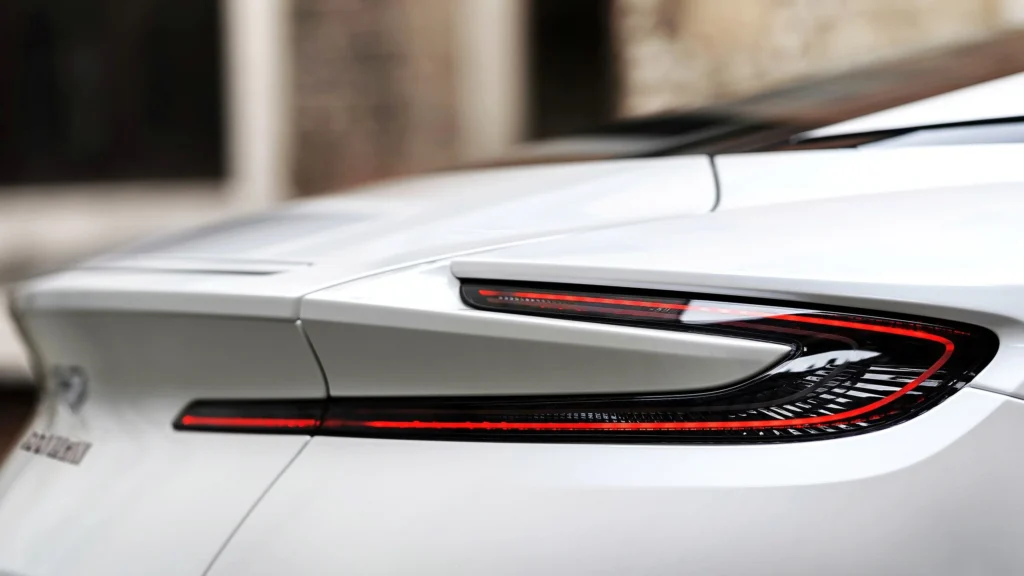
A clever design in models like the DB11 is the rear taillights. The LED lights curve around the back to outline the famous Aston Martin wing emblem. When viewed from certain angles, the lights frame the wing shape perfectly. This subtle Easter egg celebrates the brand’s logo without obvious badges. It adds a layer of style that only keen observers notice. This creative touch is one of Aston Martin’s artistic features, connecting design with heritage.
5. Hidden AeroBlade System or Deployable Rear Wing
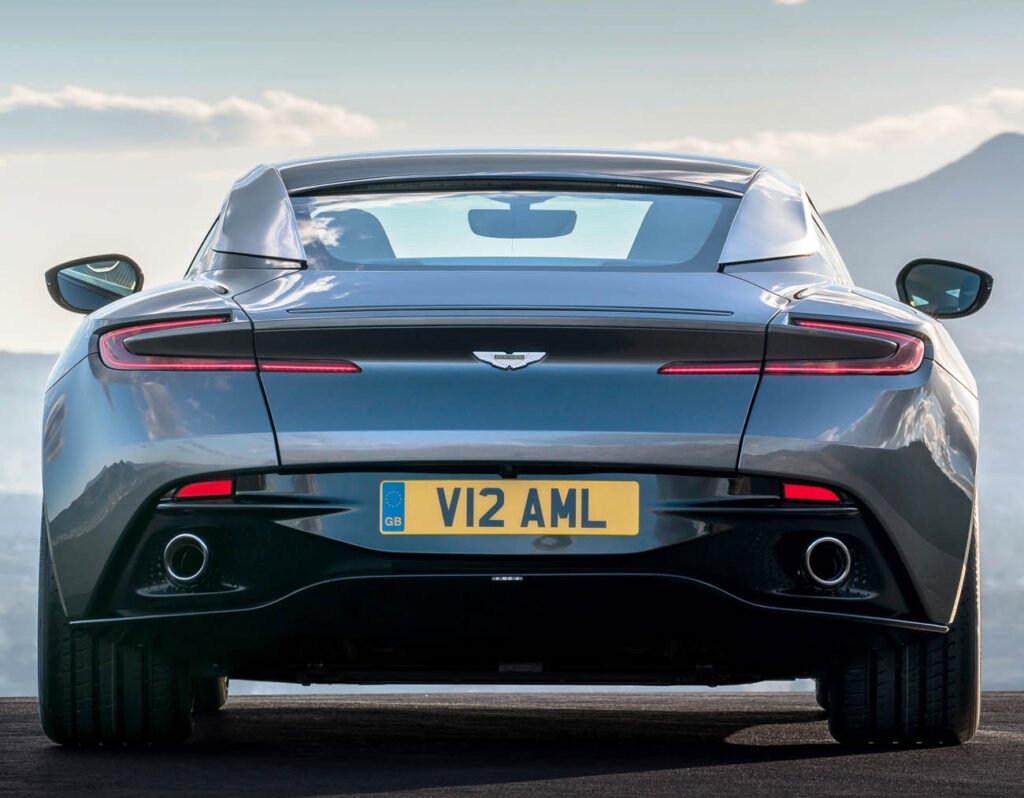
The DB11 features the AeroBlade system, a hidden aerodynamic aid. Air flows through the body’s ducts to generate downforce at the rear without a visible spoiler in normal driving. When needed, a small vent or wing deploys for extra stability at high speeds. This keeps the car’s lines smooth while improving performance. The system hides advanced tech inside the body. In other models, active rear wings pop up only during fast driving. These smart features of Aston Martin cars balance beauty and function.
Aston Martin cars continue to impress with their blend of power, luxury, and clever details. Aston Martin’s cars go beyond the surface, offering surprises that enhance the ownership experience. From hidden storage to smart aerodynamics, these elements make every drive special. Whether you admire them in movies or consider buying one, Aston Martin models deliver excitement. The Aston Martin car’s price reflects its quality, but its hidden features add real value. If you love cars that combine style and innovation, Aston Martin is hard to beat.
Something more about the Aston Martin Luxury car
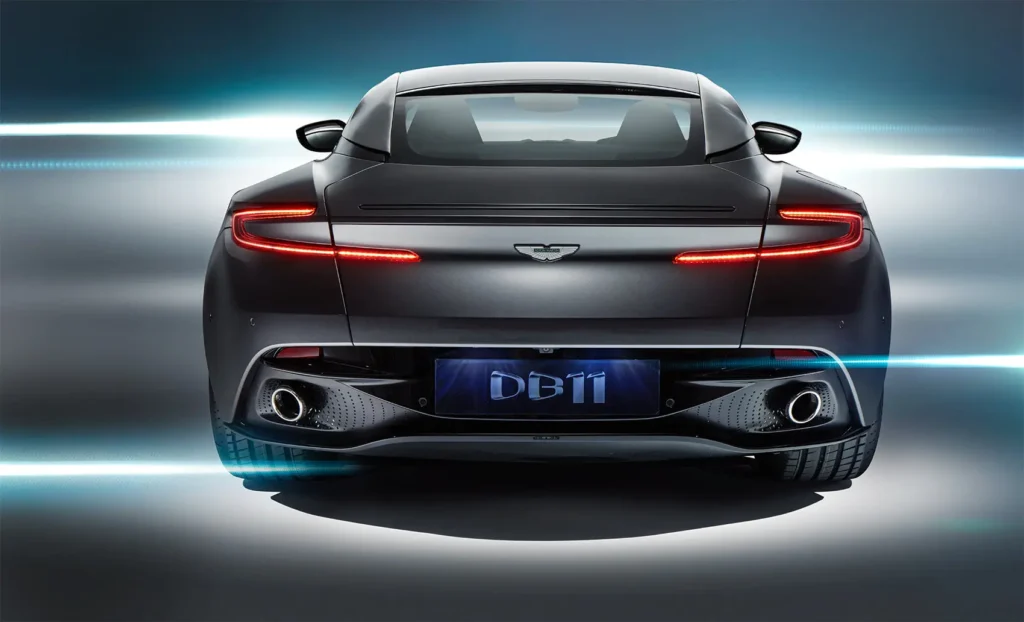
The Aston Martin DB11 AeroBlade is one of the most innovative aerodynamic features on the DB11. Introduced with the DB11 in 2016, this system enables the car to generate significant rear downforce without a traditional fixed rear wing or a large, visible spoiler. This keeps the DB11’s elegant, clean lines intact while improving high-speed stability and handling.
How the AeroBlade System Works
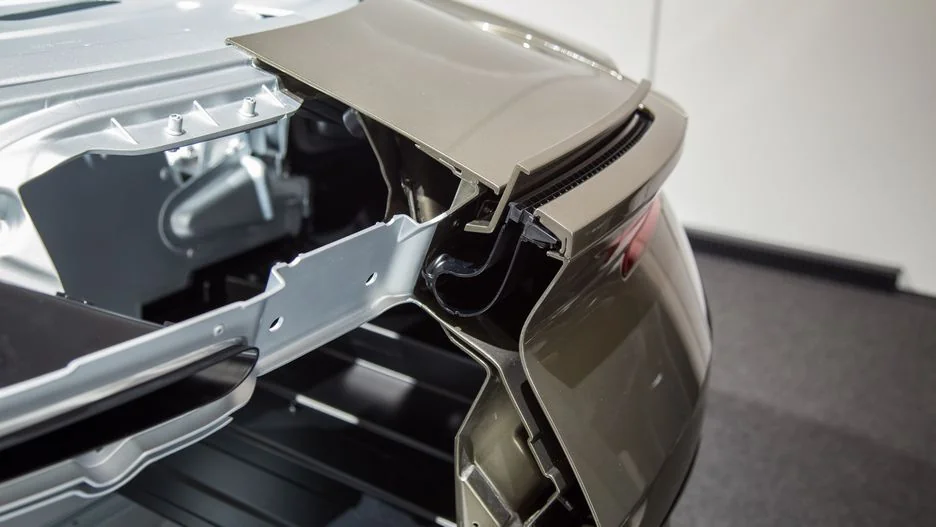
The AeroBlade functions as a “virtual spoiler.” It channels high-speed airflow through the car’s body to create downforce at the rear.
- Air Intake: Air enters discreet intakes located at the base of each C-pillar (the vertical pillar behind the rear windows, sometimes described near the rear side windows or B-pillar area in some explanations). These openings are subtle and blend into the design.
- Internal Ducting: The captured air travels through hidden ducts inside the bodywork, routed under the car or through the structure toward the rear.
- Exhaust Vent: The air exits as a high-speed jet through a narrow slot or aperture that spans the width of the rear decklid (trunk lid). This upward and rearward jet of air reduces lift (or creates effective downforce) by accelerating airflow over the rear of the car, pressing the back of the car down onto the road.
This mimics the effect of a conventional spoiler but without adding drag from protruding bodywork. The system is passive in basic operation, relying on the car’s speed to drive the airflow.
To enhance performance at very high speeds, the DB11 pairs the AeroBlade with a deployable active spoiler (or rear wing). This small flap automatically rises from the decklid at higher speeds (typically above certain thresholds like 50-80 mph in related models) to manage excess airflow over the roof and further reduce downwash, boosting overall aerodynamic efficiency.
The result is balanced aerodynamics: the car delivers real grip and stability at speeds up to 200 mph, while preserving the smooth, uncluttered aesthetic Aston Martin is known for.
Key Benefits and Design Philosophy
Engineers developed the AeroBlade because a large rear wing would clash with the DB11’s grand-tourer style. It needed downforce for dynamic performance but without compromising beauty. The system effectively reduces rear-end lift and works with other aero elements, such as the flat underbody, rear diffuser, front splitter, and “curlicue” vents (inspired by the Vulcan hypercar) to manage airflow holistically.
This feature highlights Aston Martin’s blend of form and function. It’s a clever, hidden technology that owners appreciate for both looks and performance.
These images show the DB11’s sleek rear design, the subtle decklid slot where air exits, and examples of the deployed spoiler in context.
The AeroBlade remains a standout engineering highlight of the DB11, influencing aerodynamic approaches in later Aston Martin models while keeping the brand’s signature elegance.
AeroBlade in DB11 AMR variant
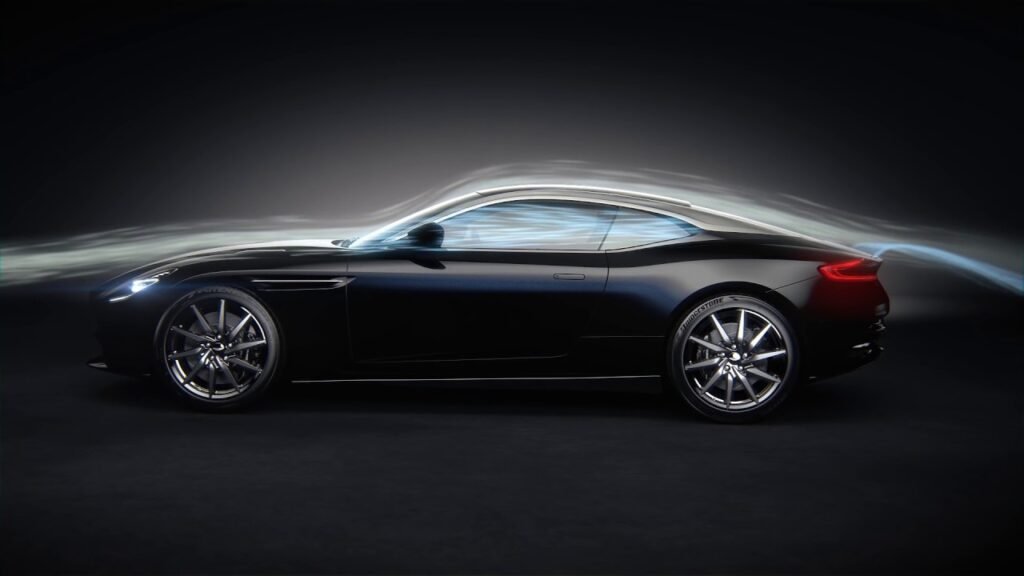
The Aston Martin DB11 AMR variant fully retains the innovative AeroBlade system introduced on the standard DB11. As the high-performance flagship of the DB11 range (launched in 2018 to replace the original DB11 V12), the AMR focuses on enhanced power, sharper dynamics, and a more aggressive character while preserving the core aerodynamic design that defines the model’s elegant yet effective airflow management.
AeroBlade in the DB11 AMR: Same Core System, No Major Changes
Official Aston Martin technical specifications for the DB11 AMR explicitly list the “Deployable spoiler with Aston Martin AeroBlade™ system” as a standard body feature. This confirms the system is unchanged from the base DB11 models. The AMR does not introduce a different aero setup or remove the AeroBlade; instead, it builds on the same foundation for balanced high-speed stability.
The AeroBlade operates exactly as in the standard DB11:
- Air Intake: High-speed air enters through discreet vents at the base of the C-pillars (sometimes described near the rear side windows or upper body flanks).
- Internal Ducting: Air is channeled through hidden ducts within the car’s bonded aluminum body structure.
- Exhaust Vent: It exits as a high-velocity jet through a narrow slot in the rear decklid (trunk lid). This creates a “virtual spoiler” effect by accelerating airflow over the rear, generating downforce and reducing lift without a prominent fixed wing.
- Active Deployable Spoiler: A small rear flap (the deployable spoiler) automatically rises at higher speeds to manage excess roof airflow, complementing the AeroBlade for optimal balance.
This passive-through-active hybrid approach keeps the DB11 AMR’s rear end clean and uncluttered, true to Aston Martin’s design philosophy of blending beauty with performance. The system helps achieve excellent high-speed stability up to the AMR’s 208 mph (335 km/h) top speed, while maintaining low drag.
Why the AeroBlade Fits the AMR Variant Perfectly
The DB11 AMR prioritizes track-inspired enhancements like:
- Increased V12 power (630 bhp from the twin-turbo 5.2-liter engine, up 30 bhp over the standard V12).
- Quicker 0-62 mph time (3.7 seconds).
- Stiffer suspension tuning, retuned adaptive dampers (with GT, Sport, and Sport+ modes), and lighter forged wheels.
These upgrades demand strong aerodynamics for confidence at extreme speeds, but Aston Martin avoided bulky spoilers to preserve the grand tourer’s sleek lines. The AeroBlade delivers subtle rear downforce, pairing well with other aero elements like the front curlicue vents, splitter, and diffuser.
No sources indicate any modifications, deletions, or upgrades to the AeroBlade specifically for the AMR; it’s carried over identically from the original DB11 platform. Later evolutions (like in the DBS Superleggera) built on similar principles, but the DB11 AMR sticks to the proven setup.
These images highlight the DB11 AMR’s rear-decklid slot (where AeroBlade air exits), the subtle C-pillar intakes, and the deployed spoiler in action.
showing how the system integrates seamlessly with the car’s design.
In summary, the AeroBlade remains a standout hidden feature in the DB11 AMR, delivering real aerodynamic benefits without compromising the model’s timeless elegance. It’s a clever engineering choice that helps make the AMR one of the fastest and most composed grand tourers in Aston Martin’s lineup.
AeroBlade downforce metrics
The AeroBlade system in the Aston Martin DB11 (including variants such as the DB11 AMR) is a clever aerodynamic feature that generates rear downforce without a large, visible spoiler or wing. This preserves the car’s elegant, uncluttered design while improving high-speed stability and handling.
Official Downforce Metrics for the DB11 AeroBlade
Aston Martin has never publicly released precise, official downforce figures specifically for the AeroBlade system on the DB11. Technical brochures, press releases, and engineering explanations describe it as providing “genuine downforce” or “reducing rear-end lift” through the virtual spoiler effect. Still, they avoid exact numbers like kilograms (kg), pounds (lbs), or Newtons at specific speeds.
- The system is passive at lower speeds and works in combination with a deployable rear spoiler (sometimes called a Gurney flap) that automatically rises at higher speeds (typically around 50-80 mph or more, depending on mode) to enhance the effect and manage excess roof airflow.
- The overall aerodynamic package (including AeroBlade, front curlicue vents, splitter, diffuser, and active spoiler) contributes to balanced aerodynamics, with a low drag coefficient (Cd around 0.3 or slightly better in some reports) for a grand tourer.
- Independent sources and reviews often note that the AeroBlade’s contribution is “modest” or focused more on lift reduction than massive downforce generation suitable for a luxury GT rather than a track-focused supercar.
For comparison:
- In later models like the DBS Superleggera (which evolved the AeroBlade concept into an “AeroBlade II” with a fixed carbon element and double diffuser), Aston Martin officially states the full rear aero setup generates 180 kg (about 397 lbs) of downforce at top speed (Vmax, around 211 mph). This is described as the highest figure for a series-production Aston Martin at the time.
- Some sources mistakenly attribute the 180 kg figure directly to the DB11’s AeroBlade, but it applies only to the DBS Superleggera.
Independent Estimates and Simulations
- Technical analyses and CFD (computational fluid dynamics) simulations shared in enthusiast communities and videos suggest the DB11’s AeroBlade alone produces relatively low downforce, potentially in the range of tens of kilograms (e.g., one simulation mentioned around 16 kg of residual lift without full aero, implying the system counters lift but doesn’t create huge positive downforce on its own).
- The primary goal is neutralizing rear lift for better high-speed confidence up to the DB11’s 200 mph top speed, rather than delivering aggressive track-level downforce (like 200+ kg seen on some supercars).
Why Exact Numbers Are Hard to Find
Aston Martin emphasizes the system’s design philosophy, elegance, and subtlety over raw figures. The AeroBlade excels at being “invisible” while contributing to overall aero balance:
- It reduces the need for a fixed spoiler.
- It pairs with other elements (flat underbody, diffuser) for neutral or slight positive downforce.
- For the DB11 AMR (with stiffer suspension and higher power), the same AeroBlade setup supports the car’s 208 mph capability without changes.
In short, while the AeroBlade is highly effective for what it is, a hidden, drag-efficient way to manage rear airflow, the specific downforce it generates on the DB11 isn’t quantified publicly by Aston Martin. It’s best viewed as part of a holistic aero solution that prioritizes grand touring refinement over extreme track performance.
These images illustrate the rear decklid vent (where the high-velocity air jet exits), the C-pillar intakes, and the deployed active spoiler, which works alongside the AeroBlade for enhanced downforce.
CFD Simulations of AeroBlade
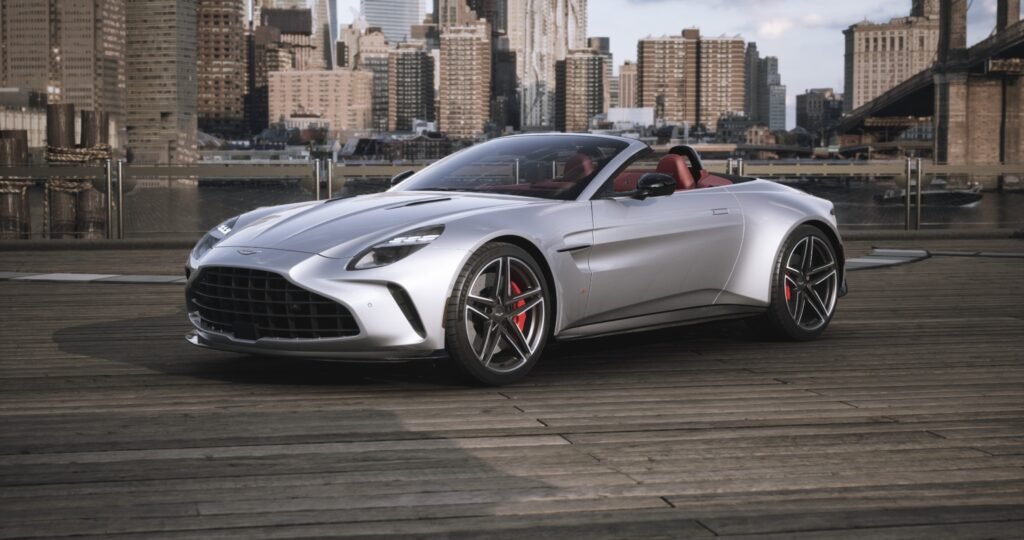
CFD Simulations of the Aston Martin DB11 AeroBlade
Computational Fluid Dynamics (CFD) simulations have been used extensively in the development and independent analysis of the Aston Martin DB11 AeroBlade system. While Aston Martin itself reliesitself relies heavily on CFD (along with wind tunnel testing and real-world validation) during the car’s design phase, it has not released detailed public CFD data or exact downforce metrics for the AeroBlade. However, enthusiast-created simulations, academic studies, and engineering breakdowns provide valuable insights into how the system performs aerodynamically.
Aston Martin’s Use of CFD in Developing the AeroBlade
Aston Martin engineers, including head of product development Ian Minards, employed CFD modeling as part of the design process for the DB11. The goal was to create a “virtual spoiler” that generates downforce while keeping the rear decklid clean and free of a pronounced wing, aligning with design chief Marek Reichman’s vision for elegant, uninterrupted lines.
- Air enters through subtle inlets at the base of the C-pillars.
- It travels through internal ducts.
- It exists upward as a high-velocity jet from a narrow slot across the rear decklid.
This jet accelerates airflow over the rear, reducing lift (or creating effective downforce) with minimal added drag. CFD helped optimize duct shapes, inlet placement, and exit geometry to achieve this balance. Aston Martin’s official videos (using smoke visualization and wind tunnel demos) complement these simulations, showing how the system eradicates downwash when paired with the deployable rear spoiler.
The AeroBlade is part of a holistic aero package, including curlicue vents (inspired by the Vulcan hypercar), a front splitter, a diffuser, and a flat underbody, all refined through CFD for low drag (Cd around 0.3 or better) and balanced stability up to ~200 mph.
Independent and Enthusiastic CFD Simulations
Several third-party efforts have attempted to quantify the AeroBlade’s performance using tools like OpenFOAM or other CFD software:
- A popular YouTube analysis titled “The Most Aerodynamic Supercar Aston Martin DB11?” (by an aerodynamics-focused channel) runs OpenFOAM simulations of the DB11, including the AeroBlade. It visualizes airflow at speeds up to 72 kph (20 m/s), demonstrating how the rear jet generates downforce efficiently. The simulation highlights the system’s low drag compared to traditional spoilers, though exact numbers aren’t always quoted publicly; snippets focus on qualitative flow patterns and efficiency.
- An independent study/book titled “The Aston Martin DB11’s Aeroblade” (available on platforms like Amazon) uses SolidWorks Flow Simulation to compare the AeroBlade against a traditional spoiler. It evaluates drag, downforce, and side force (under crosswind/yaw conditions). Results suggest the AeroBlade offers competitive performance with better efficiency in some scenarios, though it may produce less absolute downforce than a large fixed wing (prioritizing subtlety over maximum grip).
- Reddit discussions (e.g., in r/aerodynamics) and forums often reference Aston Martin’s own explanatory videos, with users attempting to reverse-engineer the effect via simplified CFD. Common consensus: The AeroBlade primarily counters rear lift rather than generating massive positive downforce, making it ideal for a grand tourer but not track-optimized like the DBS Superleggera’s evolved “AeroBlade II” (which claims 180 kg total rear downforce at Vmax, combining diffuser and enhanced ducting).
No widely published, peer-reviewed CFD paper provides precise DB11 AeroBlade downforce in kg or Newtons at specific speeds. Estimates from community simulations often place the AeroBlade’s isolated contribution in the low tens of kg range (e.g., helping neutralize lift). At the same time, the full package (including the active spoiler) delivers more balanced aero benefits.
Key Takeaways from Simulations
- Strengths: Excellent drag efficiency; the jet creates a “virtual” downforce effect without protruding elements, preserving the DB11’s sleek GT aesthetics.
- Limitations: Downforce is modest compared to supercars with big wings (e.g., no 100+ kg claims for AeroBlade alone). It’s optimized for high-speed stability in a luxury context, not extreme track use.
- Visual Insights: CFD color maps (pressure, velocity) show clean flow attachment over the rear, reduced wake turbulence, and effective lift reduction.
These images (from aerodynamic breakdowns and simulations) illustrate airflow paths, the rear exit slot, and CFD-style visualizations of the AeroBlade in action.
In essence, CFD confirms the AeroBlade as a smart, elegant solution proven in Aston’s internal work and echoed in independent efforts delivering functional downforce without sacrificing beauty. For the most accurate data, professional wind tunnel results (which validate CFD) remain the gold standard, but public simulations offer a solid glimpse into its clever engineering.
AeroBlade II in DBS Superleggera
The AeroBlade II (often stylized as Aeroblade II™) is the evolved and enhanced version of Aston Martin’s innovative aerodynamic system, specifically developed for the Aston Martin DBS Superleggera (produced from 2018 to 2024). It builds directly on the original AeroBlade concept introduced in the DB11, refining it for higher performance demands in this flagship super GT model.
Evolution from DB11 AeroBlade to AeroBlade II
The original AeroBlade in the DB11 used hidden ducts to channel air from C-pillar intakes through the body and exit it as a high-velocity jet from a narrow slot in the rear decklid, creating a “virtual spoiler” effect for downforce with minimal visual impact.
In the DBS Superleggera, Aston Martin advanced this into AeroBlade II to support the car’s greater power (725 PS / 715 hp twin-turbo V12), higher top speed (211 mph / 340 km/h), and more aggressive character:
– It incorporates a fixed carbon fiber element (a prominent, sculpted rear aero feature) instead of relying solely on a passive jet or small deployable flap.
– This fixed component controls and redirects turbulent airflow along the body sides behind the C-pillars more effectively.
– It works in close integration with an F1-inspired double diffuser at the rear, which accelerates underbody airflow for additional clean downforce.
– The system ducts airflow cleverly to generate drag-free (or very low-drag) downforce, avoiding the penalty of a large traditional wing while maintaining the DBS’s sleek, muscular lines.
Aston Martin describes AeroBlade II as a key part of the car’s holistic aero package, which also includes curlicue side vents (from the DB11/Vulcan lineage), a large front splitter, extensive underbody management, and optimized body shaping. The result is exceptional aerodynamic efficiency for a production grand tourer.
Downforce Metrics
Aston Martin officially states that the full rear aerodynamic setup, including AeroBlade II, combined with the double diffuser, generates 180 kg (397 lbs) of downforce at VMAX (top speed). This was the highest figure ever recorded for a series-production Aston Martin at launch.
– This downforce is achieved without any additional drag penalty, emphasizing the system’s efficiency.
– For the DBS Superleggera Volante (convertible variant), the figure is slightly lower at 177 kg (about 390 lbs), due to minor roofline differences affecting airflow, still an impressive achievement for an open-top car.
– The AeroBlade II contributes significantly to this total, though exact isolated figures for the AeroBlade II alone aren’t broken out publicly (the 180 kg is the combined rear aero effect).
This level of downforce provides superior high-speed stability, planted handling, and confidence during aggressive driving, all while preserving the DBS Superleggera’s elegant, uncluttered design philosophy, with no bulky fixed spoiler needed.
Design and Functionality Highlights
– Air Management: Air is captured and controlled from side body flows (behind C-pillars), redirected, and exhausted to create downward pressure.
– Fixed Carbon Fiber AeroBlade II: A visible yet integrated carbon element on the rear decklid enhances airflow control compared to the DB11’s more hidden setup.
– No Active Deployment Needed: Unlike the DB11’s deployable spoiler (which auto-rises at speed), the DBS uses a fixed design for constant, reliable performance.
– Benefits: Balances beauty with function, delivers real grip at extreme speeds without compromising the “brut in a suit” aesthetic Aston Martin aimed for.
These images showcase the DBS Superleggera’s rear, featuring the fixed carbon AeroBlade II element, the integrated double diffuser, subtle exit slots, and overall aerodynamic shaping in coupe and Volante forms.
As per Automotive Insider, AeroBlade II represents a sophisticated step forward in hidden yet effective aerodynamics. It helped make the DBS Superleggera one of the most aerodynamically advanced production cars of its era, blending grand touring refinement with supercar level downforce and performance. This system underscores Aston Martin’s ongoing innovation in form follows function design.