

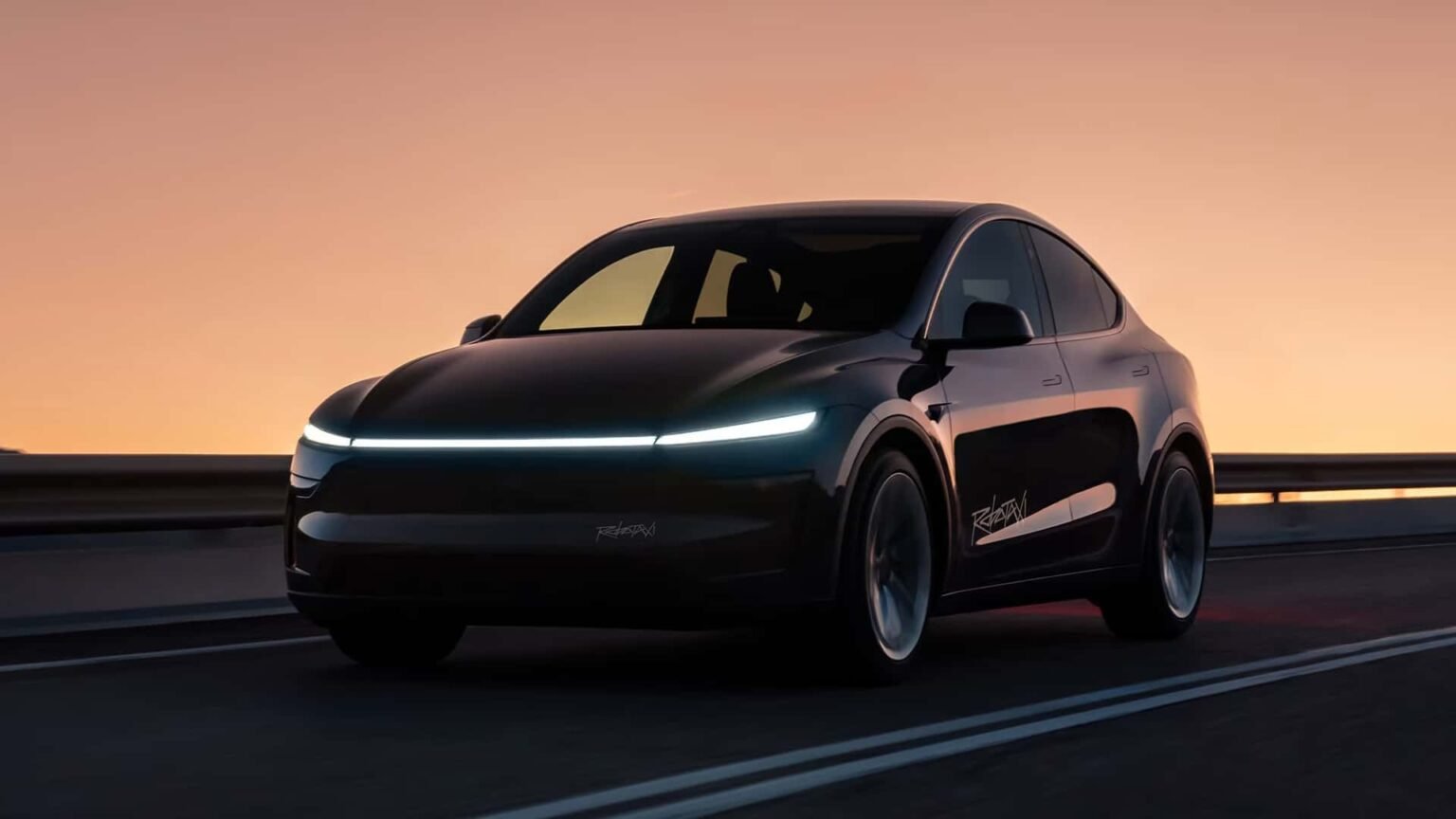
Tesla’s long-promised Robotaxi vision once again took center stage during the company’s Q4 and full-year 2025 earnings call. CEO Elon Musk spoke confidently about rapid expansion, paid rides, and exponential fleet growth, suggesting that Tesla Robotaxi service is already well on its way to transforming urban transportation in the United States.
When Musk’s statements are analyzed alongside publicly available data, regulatory conditions, and Tesla’s production constraints, a significantly more complex and uncertain picture emerges. Although the concept of a large-scale autonomous taxi network remains integral to Tesla’s long-term vision, current evidence indicates that the program is still far from achieving the scale and level of autonomy described.
This gap between ambition and execution has once again sparked debate among analysts, regulators, and industry observers.
Tesla Robotaxi: What Was Claimed on the Earnings Call
During the earnings call, Musk was asked directly about the progress of Tesla Robotaxi rollout and the apparent limits on fleet size, which public tracking suggests remains relatively small. In response, he stated that Tesla now has well over 500 Robotaxi vehicles carrying paid customers across Austin and the San Francisco Bay Area.
More strikingly, Musk suggested that the Tesla Robotaxi fleet is on an exponential growth path, claiming it could double every month.
If accurate, such growth would place Tesla on track to deploy millions of Tesla Robotaxis within a year. These claims, however, immediately raised eyebrows due to the lack of visible evidence to support such a scale.
A Closer Look at Tesla’s Current Robotaxi Operations
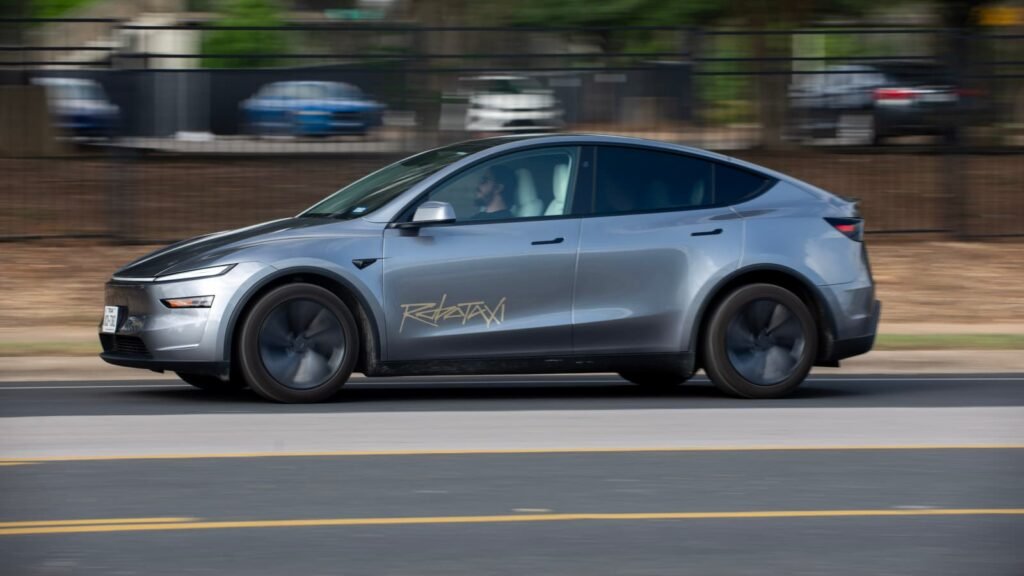
Tesla officially launched its Tesla Robotaxi service in Austin in June 2025. From the beginning, the rollout was limited and tightly controlled. Each vehicle initially operated with a human safety operator seated in the passenger seat, monitoring performance and intervening when needed.
Despite these safeguards, early reports showed the vehicles struggling with navigation errors, unexpected stops, and a crash rate higher than that of human drivers in similar conditions. These challenges highlighted the gap between Tesla’s Full Self-Driving branding and the system’s actual reliability in the real world.
In the San Francisco Bay Area, Tesla Robotaxi branding becomes even more complicated.
Why “Robotaxi” Means Different Things in Different Cities
In California, Tesla is legally prohibited from offering fully autonomous ride-hailing services to the public. As a result, Tesla’s Bay Area vehicles operate with human drivers at the wheel, not just safety monitors. Most of these rides are limited to employees rather than to the general public.
While Tesla refers to this service as Tesla Robotaxi, it functions more like a traditional ride-hailing operation with Tesla branding. The use of the term is a marketing choice rather than a reflection of full autonomy.
In Austin, Tesla briefly attracted attention by moving safety operators out of the vehicle and into chase cars. This move was widely interpreted as a step toward true driverless operation. However, independent observers later reported that these fully driverless vehicles were no longer visible, suggesting the change was temporary rather than a permanent shift.
The 500-Vehicle Claim: Why the Numbers Don’t Add Up
Musk’s claim of over 500 paid Tesla Robotaxi vehicles across Austin and the Bay Area is difficult to verify. Publicly available data does not clearly support this figure, and combining two very different operating models into a single total further muddies the waters.
Even if the number were accurate, the systems in Austin and California function under entirely different regulatory and technical frameworks. Treating them as a single, unified Tesla Robotaxi fleet overstates the level of progress toward true autonomy.
Interestingly, the 500-vehicle figure aligns closely with a previous commitment Musk made to have 500 Tesla Robotaxis operating in Austin by the end of the year. This overlap raises questions about whether past targets are being restated as the current reality.
The “Doubling Every Month” Promise and Its Mathematical Reality
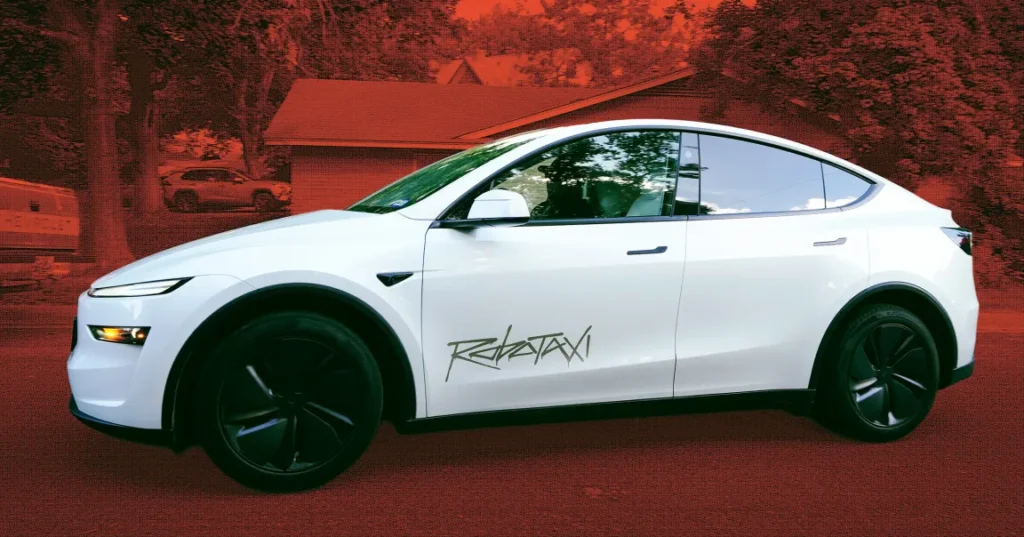
The most ambitious claim made during the earnings call was that Tesla Robotaxi fleet could double in size every month. While this sounds impressive, basic math reveals the scale of what is being suggested.
Starting with 500 vehicles:
- Month 1: 1,000 vehicles
- Month 2: 2,000 vehicles
- Month 3: 4,000 vehicles
- Month 12: Over 2 million vehicles
Such growth would require Tesla to deploy more than two million Tesla Robotaxis within a year, a figure that rivals or exceeds Tesla’s total annual vehicle production. This raises an obvious question: where would these vehicles come from?
Tesla’s Production Capacity and Sales Reality
Musk has recently suggested that Tesla is producing roughly 2 million vehicles per year and that output is increasing. In reality, Tesla’s 2025 production figures fall well short of that number.
Even if Tesla were producing vehicles at that scale, deploying every single one into the Robotaxi network would mean selling none to consumers, an unrealistic scenario for a company that still depends heavily on retail vehicle sales for revenue.
This contradiction highlights the tension between Tesla’s Robotaxi vision and its current business model.
The Long-Promised Owner-Operated Robotaxi Network
For years, Tesla has promoted the idea that individual owners could add their cars to the Tesla Robotaxi fleet. According to this vision, Tesla vehicles equipped with Full Self-Driving software would operate as autonomous taxis when not in personal use, generating income for owners.
This promise played a major role in Musk’s claim that Tesla would become “appreciating assets.”
However, despite selling Full Self-Driving packages for up to $15,000 over nearly a decade, Tesla has yet to deliver a system capable of unsupervised autonomous driving. Owners still cannot legally or practically deploy their vehicles as Tesla robotaxis.
Meanwhile, Tesla itself has begun offering paid rides using non-autonomous vehicles, without extending similar opportunities to long-time customers who purchased FSD early.
FSD Subscriptions: A Partial Path to Scale?
During the earnings call, Tesla revealed that it currently has approximately 1.1 million active Full Self-Driving subscriptions. If every one of those vehicles were integrated into the Tesla Robotaxi fleet, Tesla could reach over one million vehicles.
However, several obstacles remain:
- Not all owners would be willing to participate
- Regulatory approval would vary by region
- Vehicles would still require consistent performance without supervision
Even under ideal conditions, this approach would only achieve about half of the fleet size implied by Musk’s monthly-doubling projection.
The Hidden Bottleneck: Geographic and Technical Complexity
Perhaps the most revealing detail from the earnings call was Tesla’s admission that each new geographic rollout requires extensive work on local “corner cases.” This means mapping, testing, and validating countless unique driving scenarios specific to each city.
This reality contradicts Tesla’s long-standing claim that its autonomy system would scale effortlessly through software updates powered by massive data collection.
Instead, Tesla Robotaxi expansion now appears to require city-by-city customization, a slow and resource-intensive process that limits rapid growth.
Scaling such an approach to millions of vehicles across the United States would be an enormous challenge and would not align with claims of exponential monthly expansion.
Branding Versus Reality in the Autonomous Race
Tesla’s Robotaxi narrative remains powerful, but it increasingly relies on optimistic projections rather than demonstrable progress. The gap between branding and real-world deployment has become harder to ignore, particularly as competitors pursue more conservative but verifiable autonomy strategies.
From an Automotive insider perspective, this pattern reflects a broader issue: bold storytelling continues to outpace measurable results.
How Long Will Optimism Override Evidence?
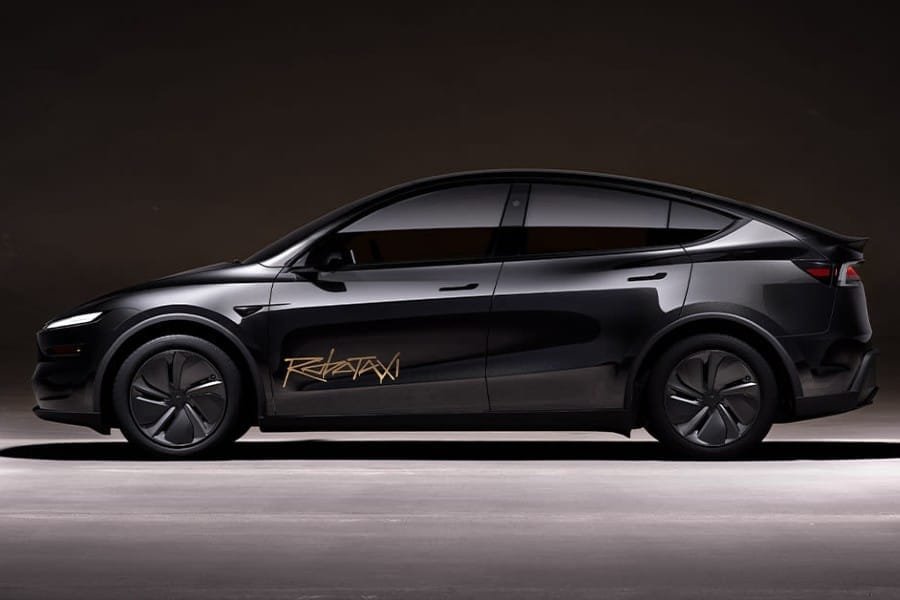
Tesla’s Robotaxi vision is not without merit. Autonomous ride-hailing could reshape transportation, reduce costs, and unlock new revenue streams. However, the current state of Tesla Robotaxi program suggests it is still in an early, fragile phase.
Claims of exponential growth, nationwide coverage, and millions of vehicles on the road within a year are not supported by public data, regulatory constraints, or production realities.
As investors, regulators, and the public grow more informed, the question becomes unavoidable: how long will ambitious promises continue to be accepted without matching proof?
Until Tesla demonstrates sustained, transparent progress toward true autonomy at scale, skepticism around its Robotaxi claims is likely to grow rather than fade.