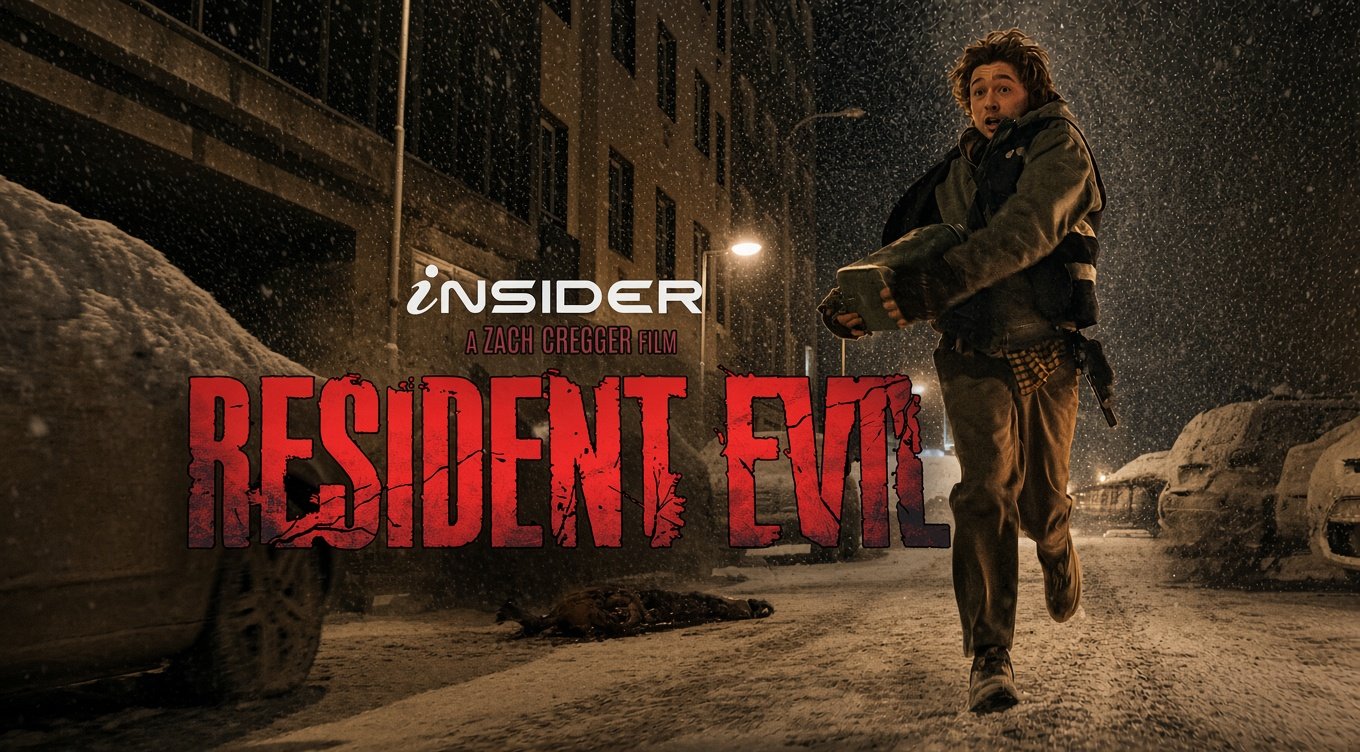

There is a particular kind of dread that Capcom fans know intimately. It is not the dread of a jump scare. It is the dread of a hallway you have to walk down twice, a save room you cannot reach, and an inventory screen that says you have four bullets and a very bad idea. For more than two decades, no film version of Resident Evil managed to bottle that feeling. Zach Cregger’s reboot, which opened in theaters on September 18, 2026, is the first to do so, and critics have responded in a way this franchise has simply never seen before.
Why This Resident Evil Feels Different From Everything That Came Before
The earlier films were not really horror. They were action spectacles wearing a horror costume, built around superhuman heroics and endless slow motion. The new Resident Evil moves in the opposite direction. It shrinks. It picks one ordinary person, drops him into a single catastrophic night, and refuses to give him a way out that feels earned rather than lucky.
Cregger arrives at this project with real momentum behind him, having turned the low-budget Barbarian into a sleeper hit and then turned Weapons, an original film with no existing IP attached, into a genuine blockbuster. That track record matters, because it explains the confidence on display. This is a filmmaker who has already proven he can build tension without a familiar logo doing the work for him, which paradoxically makes him the right person to handle a familiar logo.
The Setup Is Beautifully Simple
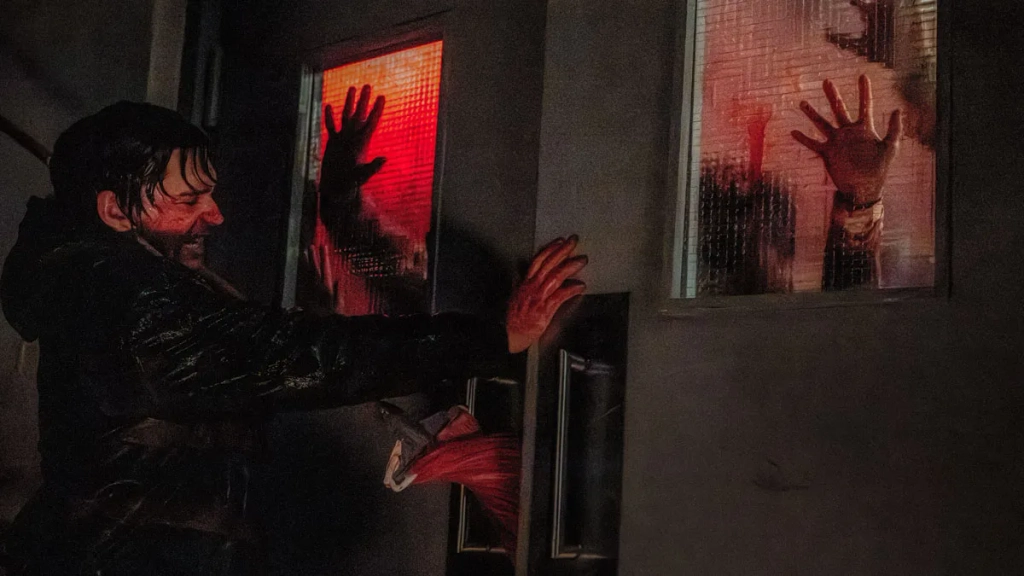
Austin Abrams plays Bryan, a medical courier. His night is already going badly before anything supernatural happens, because his girlfriend has just told him she is pregnant and his reaction was not the one she hoped for. Then he accepts a job paying double his usual rate, delivering a high-priority package to a hospital in Raccoon City. Anyone who has ever held a PlayStation controller knows exactly how much trouble that sentence contains.
What follows is a lean survival run. Sony’s own description frames the film as a race for survival across one horrifying night that collapses into chaos around him. That structure is the smartest decision in the entire production. Resident Evil has always been about scarcity, panic, and improvisation, and a courier with a package and a deadline is a far better vessel for that than an army of commandos.
Cregger Understands Game Logic Without Filming a Playthrough
The most common failure mode for video game adaptations is literalism. Directors recreate cutscenes and forget that the interesting part was never the plot. The new Resident Evil sidesteps this trap by adapting the texture of play rather than the events of any single title.
Critics have noted that the film borrows the dwindling supply problem and something close to a mission-based structure, in which the hero must complete a series of increasingly impossible objectives, even though familiar faces like Leon Kennedy and Claire Redfield never appear.
One reviewer highlighted how carefully the film tracks the guns Bryan acquires and the bullets he fires, never handing him an easy solution to the problem in front of him. That accounting is the whole game. Resident Evil lives or dies on resource anxiety, and this movie keeps a ledger.
The Tone Is the Riskiest and Best Part

Comedy inside horror is a tightrope, and the Resident Evil games have always been a little goofy alongside the terror, from absurd puzzle design to dialogue that has become legend for the wrong reasons. Cregger leans into that duality instead of apologizing for it.
One critic described the film as starting terrifying, gradually becoming ridiculous, and completely getting away with the shift, comparing the effect to Sam Raimi’s Evil Dead pictures. Another noted that the jokes never defuse the tension, making the experience simultaneously stressful and enormously fun. This is a hard trick. Most horror comedies pick a lane, and the other half of the audience walks out. Resident Evil keeps both hands on both wheels.
Not everyone is fully sold. Time Out gave the film three stars and argued that Cregger is so faithful to the console experience that gaming logic sometimes wins out over cinematic logic, with characters wandering offscreen and simply never returning. That is a fair objection, and worth knowing before you buy a ticket. If you want tidy narrative bookkeeping, Resident Evil may frustrate you in small ways.
The Numbers Tell a Franchise Story
Critical consensus around Resident Evil has been remarkable by any measure, and genuinely unprecedented for this series. The reboot landed at 96 percent certified fresh on Rotten Tomatoes, making it the only entry in the entire franchise to climb past 40 percent, and placing it above Weapons, which opened to 43.5 million dollars. Audiences agreed, pushing the audience score to 91 percent against a previous series high of 67 percent for the 2002 original.
Commercially, the picture is just as striking. Preview screenings brought in an estimated 8 to 9 million dollars, obliterating the franchise record of roughly 1 million set by Resident Evil: The Final Chapter in 2016. Variety reported the production budget at 75 million dollars before marketing, with domestic opening projections landing somewhere between 40 and 50 million and international markets expected to add around 31 million. For a series that spent twenty years being critic-proof in the least flattering sense, that turnaround is the story.
Who Should Actually See It
If you loved Barbarian and Weapons, this is the same sensibility applied to a bigger canvas, and you will recognize the rhythm within ten minutes. If you have played the Capcom games since the PlayStation era, the pleasure here is one of recognition rather than reenactment, and the Resident Evil name is earned through feel instead of fan service.
If you skipped every previous film in the series, good news, because you have nothing to catch up on. The reboot builds an entirely new story.
If you dislike gore, this is not your night out. Resident Evil is rated R for reasons that arrive early and stay late, and the creature work is aggressively slimy by design.
My Personal Opinion
The achievement of Cregger’s Resident Evil is that it stops treating the source material as a plot to be transcribed and starts treating it as a mood to be recreated. It is tight, it runs roughly 90 minutes, it never pads itself with lore, and it trusts a single desperate character to carry the weight.
That restraint is exactly what eight previous attempts lacked. Whether it becomes the template for future video game adaptations remains to be seen, but for the first time in the history of this property, a Resident Evil movie has given the franchise something to be proud of rather than something to explain away.