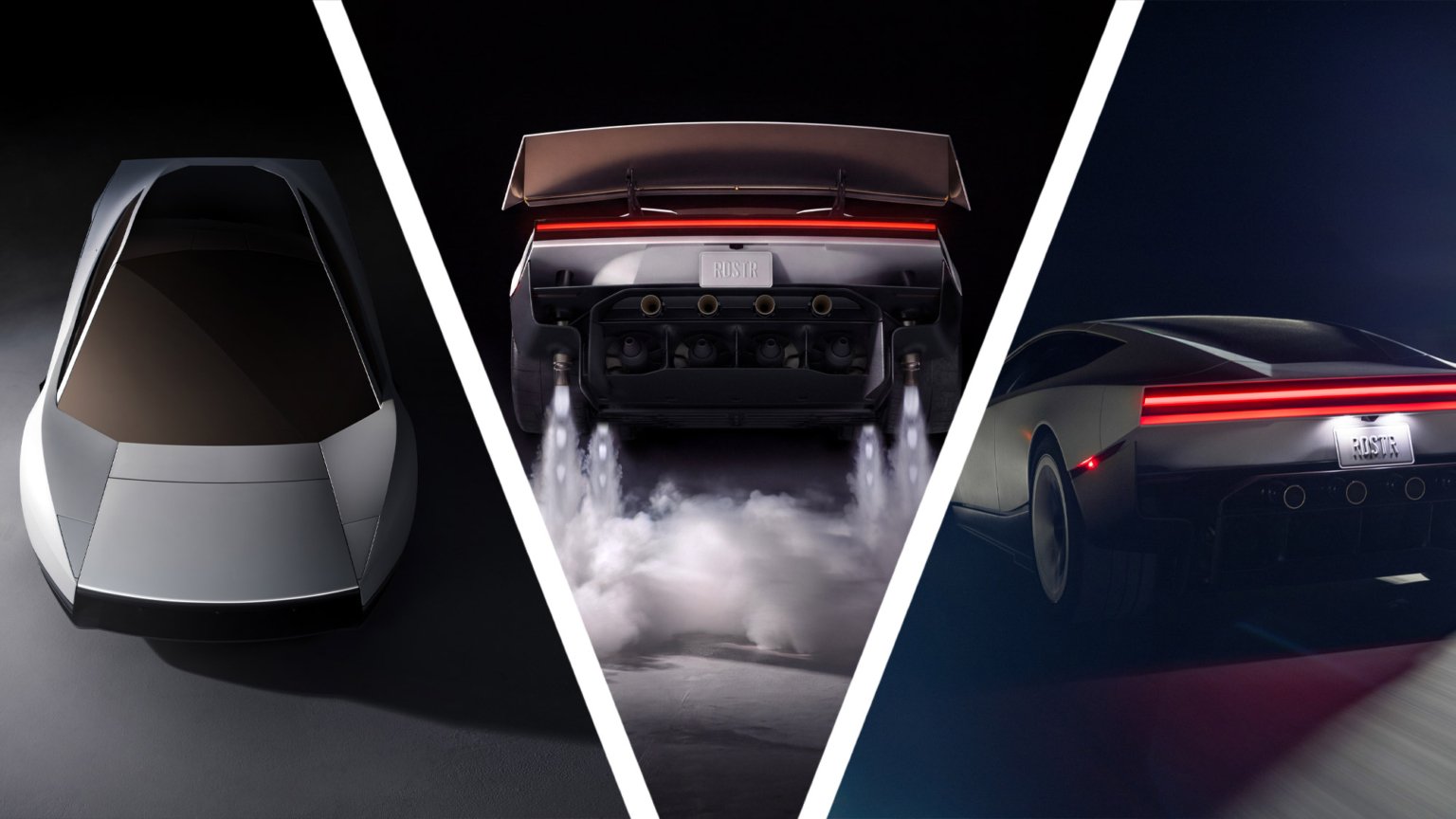

The idea of a car that can fly has fascinated people for decades, but the possibility becomes even more exciting when it is connected to Tesla and Elon Musk. The Tesla Flying Roadster represents a futuristic vision of personal transportation that could combine the performance of an electric sports car with technology designed to lift a vehicle into the air.
However, it is important to distinguish between Musk’s public statements about a possible flying Roadster and a commercially available vehicle. The concept has attracted attention, but a production-ready flying Tesla has not been confirmed.
- What Is the Tesla Flying Roadster?
- Elon Musk Flying Car Vision and Tesla Innovation
- How Does the Tesla Flying Roadster Work?
- Tesla Flying Roadster Performance and Speed
- Tesla Flying Roadster Price and Reservation Details
- When Will the Tesla Flying Roadster Be Available?
- Is the Tesla Flying Roadster Worth the Hype?
- Frequently Asked Questions
For electric vehicle enthusiasts, the Tesla Flying Roadster raises several important questions. Could a car like this actually fly? What technology would it need? How much might it cost? And when could drivers realistically experience such a vehicle? Understanding the possibilities and engineering challenges offers a clearer picture of what the future of transportation might look like.
What Is the Tesla Flying Roadster?
The Tesla Flying Roadster is a futuristic concept associated with Elon Musk’s vision for the next generation of high-performance vehicles. The idea combines the recognizable appeal of Tesla’s electric sports car with the possibility of advanced flight capabilities. Rather than remaining limited to roads, such a vehicle could theoretically travel through the air under carefully controlled conditions.
The concept is closely connected to the next generation of the Tesla Roadster. Musk has previously discussed the possibility of a Roadster with unusual capabilities, including the potential to hover using rocket-related technology. These comments have generated considerable public interest, although they should not be interpreted as confirmation that Tesla has developed a fully operational flying car.
The Tesla Flying Roadster therefore sits somewhere between an ambitious engineering idea and a vision of future mobility. Its actual capabilities would depend on the technology Tesla develops, the results of testing, and the safety requirements that would apply to a vehicle capable of operating both on roads and in the air.
Elon Musk Flying Car Vision and Tesla Innovation
Elon Musk has built much of his public reputation around ambitious technology projects. Through Tesla, he has helped popularize electric vehicles, while his other ventures have pursued reusable rockets, satellite communications, and advanced artificial intelligence. The possibility of a flying sports car fits naturally into this broader interest in challenging traditional ideas about transportation.
The phrase Elon Musk Flying Car is frequently used when discussing the possibility of a Tesla vehicle that can leave the ground. However, a vehicle that briefly hovers using specialized propulsion equipment would be different from a conventional flying car capable of sustained flight, long distance travel, and controlled landings.
A practical flying vehicle would need a reliable propulsion system, precise flight controls, effective thermal management, and a way to operate safely around other aircraft. It would also need to meet applicable aviation and road safety requirements. These challenges are substantial, even for a company with significant engineering resources.
The Tesla Flying Roadster could eventually demonstrate how electric vehicle engineering and aerospace technology might overlap. For now, the concept remains an intriguing possibility rather than an established transportation product.
Tesla Flying Roadster Unveiling and Latest Developments
The story changed significantly in October 2026. On October 15, Tesla unveiled its redesigned Roadster at a demonstration held at a SpaceX facility in Texas. The event showcased a rocket-assisted version of the vehicle performing dramatic airborne maneuvers, including a midair rotation and a controlled landing. Reuters reported that Tesla expects production to begin in 2028.
The demonstration brought renewed attention to the Tesla Flying Roadster and Musk’s long-standing interest in combining electric car technology with aerospace engineering. The vehicle used propulsion technology associated with SpaceX, showing that the concept had progressed beyond earlier speculation.
However, there is an important distinction between demonstrating a vehicle in a controlled environment and delivering a fully tested consumer product. The public demonstration does not establish that every advertised capability will be available on production models, or that the vehicle can fly freely through ordinary airspace.
For readers following Mid Insider, the Tesla Flying Roadster is an important development to watch because it brings together electric performance, experimental propulsion, and questions about the future of personal transportation.
How Does the Tesla Flying Roadster Work?
The most unusual aspect of the Tesla Flying Roadster is its reported use of cold gas thrusters. Unlike a conventional electric vehicle that turns the wheels, these devices release pressurized gas through directional nozzles to generate thrust. By controlling the direction and timing of that thrust, engineers can produce brief upward movement and rotational changes.
Tesla’s current Roadster website describes a Rocket version with thrusters positioned around the vehicle. The company says these components can support forward and upward acceleration as well as lateral rotational movement. The same page explicitly states that the Rocket version is not approved for public road use.
The Tesla Flying Roadster also features a reported multi-mode suction system designed to increase downforce. Powerful fans draw air from beneath the vehicle, helping it remain firmly attached to a surface. This technology could improve traction during extreme driving maneuvers, although it is different from the propulsion system responsible for lifting the car.
The combination of these technologies explains why the Tesla Flying Roadster has attracted attention beyond the electric vehicle industry. Instead of relying exclusively on conventional wheels and aerodynamic surfaces, the experimental design uses active systems to control how the vehicle interacts with its surroundings.
Nevertheless, the technology has limitations. Cold gas thrusters depend on a finite supply of pressurized gas, and producing enough thrust to lift a vehicle requires careful management of mass, balance, pressure, and energy. Sustained flight would present additional challenges that a short demonstration cannot resolve.
Tesla Flying Roadster Features That Make It Different
The Flying Roadster Features are among the most discussed aspects of Tesla’s new concept. The vehicle is designed to combine the performance of an electric sports car with experimental systems that support unusual movements. Some capabilities have been demonstrated, while others will require further development and testing before their practical value can be established.
One notable feature is the cold gas propulsion system. It allows the experimental Rocket version to generate thrust independently of the traditional wheel drive system. This is the technology behind its ability to perform brief airborne maneuvers rather than conventional sustained flight.
Another important feature is the multi-mode suction system. By generating downforce, the system is intended to improve grip and stability, even at low speeds. Tesla presents this technology as a way to push the limits of vehicle control, although its real-world reliability will depend on further testing.
Aerodynamic management is also central to the design. Active wings and other adjustable components can help balance the competing demands of low drag at speed and greater downforce when traction is essential.
The Tesla Flying Roadster is also expected to retain an electric powertrain for conventional driving. That distinction matters because its road performance and its experimental flight capabilities rely on different engineering systems.
It is worth remembering that a list of advertised features does not guarantee that every capability will appear in every version. Buyers should examine the specifications for the exact model and configuration rather than assuming that all Tesla Flying Roadster versions will have the same equipment.
Tesla Flying Roadster Performance and Speed
Performance has always been central to the Roadster’s appeal. Tesla’s earlier specifications for the next-generation electric sports car advertised acceleration from zero to 60 miles per hour in 1.9 seconds, a top speed above 250 miles per hour, and a range of 620 miles. These figures appeared on Tesla’s website before the latest unveiling, so buyers should verify which specifications apply to the final production model.
The new demonstration introduced a more ambitious performance target. Reporting from the unveiling described a rocket-assisted version capable of accelerating from zero to 60 miles per hour in less than one second. That figure is a claimed performance target, not an independently established result for a commercially available production vehicle.
The Tesla Flying Roadster could therefore appeal to people who want more than conventional electric sports car performance. Yet speed alone cannot establish whether a car is practical. Braking distance, tire grip, battery performance, stability, and repeatability all matter when evaluating a high-performance vehicle.
The Elon Musk Flying Tesla concept also introduces a different performance question. A car that can briefly leave the ground must manage its weight, thrust, orientation, and landing forces. Those demands make engineering validation more complicated than improving acceleration on a race track.
For now, the Tesla Flying Roadster should be viewed as an experimental high-performance vehicle with demonstrated airborne maneuvers, rather than a conventional flying car suitable for everyday travel.
Tesla Flying Roadster Price and Reservation Details
One of the biggest questions concerns the Flying Roadster Price. Tesla’s new Roadster program includes different configurations, and the price or reservation terms for one version should not automatically be applied to another.
Reports following the October 2026 unveiling described a $50,000 deposit for the performance version and a $250,000 deposit for the more advanced Thrust version. The Rocket configuration, which includes the experimental flight system, was described as available by invitation. These figures are reservation deposits, not confirmed final purchase prices.
The Tesla Flying Roadster price will ultimately depend on the selected configuration, available options, taxes, import duties, and delivery arrangements. Customers outside the United States may face additional costs if the vehicle becomes available in their markets.
There is also a major difference between placing a reservation and receiving a vehicle. A deposit does not necessarily guarantee a delivery date, final specifications, or regulatory approval for every advertised feature.
Anyone considering the Tesla Flying Roadster should read the current reservation terms carefully, confirm whether deposits are refundable, and check the exact configuration being offered. This is especially important for an experimental vehicle whose production schedule and capabilities may change.
When Will the Tesla Flying Roadster Be Available?
Tesla announced a planned production start in 2028 following its October 2026 unveiling. However, a production target is not the same as a confirmed delivery date. The Roadster has experienced a lengthy development period, making it sensible for potential buyers to remain cautious about schedules.
The Tesla Flying Roadster also faces a more complicated path to availability than an ordinary electric sports car. The standard road-going version and the Rocket version with flight capabilities may face different technical and legal requirements.
Tesla’s website states that the Rocket configuration is not approved for public road use. That means the ability to perform airborne maneuvers in a controlled demonstration should not be interpreted as permission to operate the vehicle on public roads or fly it over populated areas.
Before buying a Tesla Flying Roadster, customers should check the latest information directly from Tesla, including the production schedule, final specifications, regional availability, and any restrictions on the Rocket version.
Can the Tesla Flying Roadster Be Used as an Everyday Car?
The idea of a Tesla Flying Roadster that can move between roads and the sky sounds appealing, particularly in cities where traffic congestion consumes valuable time. In practice, the vehicle demonstrated so far is not an established solution to everyday commuting.
A usable flying car would need to handle much more than brief jumps or aerial rotations. It would require reliable takeoff and landing procedures, predictable control in changing weather, sufficient operating range, emergency systems, and a safe way to share airspace with other aircraft.
Noise is another concern. High thrust propulsion systems can create substantial noise, while the space needed for safe takeoff and landing could limit where such vehicles operate. Urban environments would add further challenges involving buildings, power lines, pedestrians, and other vehicles.
The Tesla Flying Roadster may eventually provide a new kind of driving experience, but its experimental flight technology does not automatically make it suitable for routine transportation. For most drivers, a conventional electric car remains much easier to use, charge, park, insure, and maintain.
Safety and Legal Challenges Facing the Tesla Flying Roadster
Safety could determine whether the Tesla Flying Roadster becomes a genuine commercial success or remains a specialized performance vehicle. A car that briefly lifts off the ground creates risks that conventional vehicles do not face, including loss of thrust, unstable landings, equipment failure, and unexpected changes in vehicle orientation.
A road vehicle must satisfy applicable vehicle safety requirements, while flight-capable operation may involve separate aviation rules. The precise requirements depend on how the vehicle operates and where it is used. A demonstration at a controlled test facility does not establish that the same maneuvers are permitted in public spaces. Tesla has acknowledged restrictions on the Rocket configuration by stating that it is not approved for public road use.
The Tesla Flying Roadster will also need clear operating instructions and effective safeguards if its experimental propulsion technology is offered to customers. Buyers should understand the difference between a system designed for brief stunts and one intended for dependable flight.
These issues are not reasons to dismiss the concept. They are practical engineering and regulatory questions that must be resolved before any flying vehicle can become part of ordinary transportation.
How the Tesla Flying Roadster Could Influence the Automotive Industry
The Tesla Flying Roadster could have an impact beyond its own sales. Its development highlights the growing relationship between electric vehicle manufacturers and aerospace engineering companies. Technologies developed for propulsion, lightweight structures, electronic control, and advanced materials can inspire new approaches to automotive design.
The project also reinforces Tesla’s position as a company willing to experiment with unconventional ideas. However, its commercial value will depend on whether the technology can be manufactured reliably, supported over time, and delivered at a price customers are willing to pay.
For readers following Insider Automotive, the most important question is whether the innovations demonstrated by the Tesla Flying Roadster can eventually improve vehicles beyond this exclusive model. Advances in aerodynamic control, vehicle stability, and lightweight engineering could prove valuable even if personal flying cars remain uncommon.
Competition will also matter. Other companies are developing electric vertical takeoff and landing aircraft, often called eVTOLs, designed specifically for airborne transportation. These vehicles typically use dedicated flight systems rather than attempting to combine a conventional sports car with experimental thrusters.
The Tesla Flying Roadster takes a different approach by starting with a high-performance road vehicle. Whether that approach proves useful for everyday travel remains an open question, but the experiment illustrates how differently manufacturers are approaching future mobility.
Is the Tesla Flying Roadster Worth the Hype?
The Tesla Flying Roadster is an exciting development because it connects a familiar electric sports car with technology that once seemed confined to science fiction. The October 2026 demonstration showed that Tesla’s latest concept is capable of dramatic airborne maneuvers, making the project more substantial than a purely speculative design.
Still, the vehicle’s long-term success will depend on more than an impressive demonstration. Production timing, real-world performance, safety testing, operating costs, and regulatory approval will determine whether the Tesla Flying Roadster becomes a product that customers can realistically own and use.
For enthusiasts, the project offers a glimpse of what may become possible when automotive engineering and aerospace technology work together. For prospective buyers, patience is essential. The production vehicle, its final price, and the practical availability of its flight capabilities all deserve scrutiny.
The Tesla Flying Roadster is worth watching, but it is too early to treat it as a replacement for conventional cars or a practical answer to traffic congestion. Its real achievement will be measured by what Tesla can deliver beyond the demonstration stage.
Frequently Asked Questions
Is the Tesla Flying Roadster real?
Yes. Tesla unveiled a redesigned Roadster in October 2026 and demonstrated a Rocket version performing airborne maneuvers using specialized thrusters. However, the flight-capable version is not approved for public road use.
What is the expected Tesla Flying Roadster release date?
Tesla has announced a planned production start in 2028. This is a target rather than a guaranteed customer delivery date, and the final availability of the Rocket version may differ.
What is the Flying Roadster Price?
Reservation deposits reported after the unveiling were $50,000 for the performance version and $250,000 for the Thrust version. These amounts are deposits, not confirmed final vehicle prices. The Rocket version was described as invitation-only.
Can the Tesla Flying Roadster fly like an aircraft?
The demonstrated Rocket version can perform brief airborne maneuvers using cold gas thrusters. That does not mean it can operate like a conventional aircraft with sustained flight, long-distance range, or unrestricted access to airspace.
What makes the Elon Musk Flying Car concept different?
The concept combines an electric sports car with aerospace-inspired propulsion and a suction system designed to increase downforce. Its distinctive feature is the attempt to combine extreme road performance with limited airborne capabilities.