

Key Highlights
• The Slate EV starts at $24,950, making it the least expensive pickup truck currently available in the United States.
• It offers an estimated 205 miles of range and supports up to 150 kW DC fast charging via a NACS port compatible with Tesla Superchargers.
• Payload capacity sits at around 1,550 pounds and towing at around 2,000 pounds, putting it in the same bracket as the Ford Maverick.
• The base model comes with almost no standard features but can be converted into a two-row SUV or sportback style for an added cost.
• Fleet buyers and businesses are likely the primary audience, as the no-frills design and low price make it ideal for commercial use.
Slate EV Specs and Price Revealed
The Slate EV has finally arrived with full specifications, and it is making a serious case as the most accessible electric pickup truck on the market today. Starting at $24,950, the Slate EV positions itself as a vehicle built around two things: a low price and a clean slate. And while that formula sounds straightforward on paper, the reality of what you get and what you do not get tells a more nuanced story.
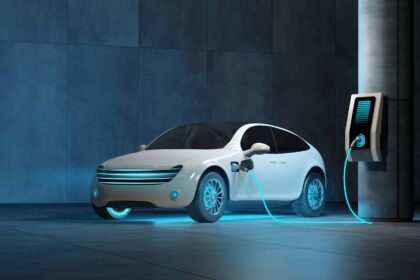
When it comes to charging, the Slate EV uses a NACS port that is compatible with Tesla Superchargers, which is a meaningful advantage for anyone who has driven across a charging network. It supports up to 150 kW DC fast charging, which means you can go from 20 percent to 80 percent in around 30 minutes under the right conditions. That is a reasonable result for a truck at this price point, even if the range itself gives some pause.
The estimated 205 miles of range puts the Slate EV firmly at the lower end of what is available in 2026, where most base electric vehicles comfortably reach between 250 and 300 miles. To put it plainly, the Slate EV offers a range comparable to the Hyundai Kona but falls short when measured against the new Chevy Bolt or the refreshed Nissan Leaf, both of which cross the 250-mile mark with ease, and the Leaf pushing close to 300. For daily commuting and local use, 205 miles will serve most people fine. For anything longer, charging stops become part of the plan.
As a working truck, the Slate EV holds its own in the compact segment. It carries a payload of around 1,550 pounds and can tow around 2,000 pounds, numbers that place it squarely alongside the Ford Maverick, which caps out at 1,500 pounds payload and a base tow rating of 2,000 pounds. The Maverick does have an advantage when optioned up, reaching 4,000 pounds of towing capacity, but for light hauling duties, the Slate EV competes without embarrassing itself.
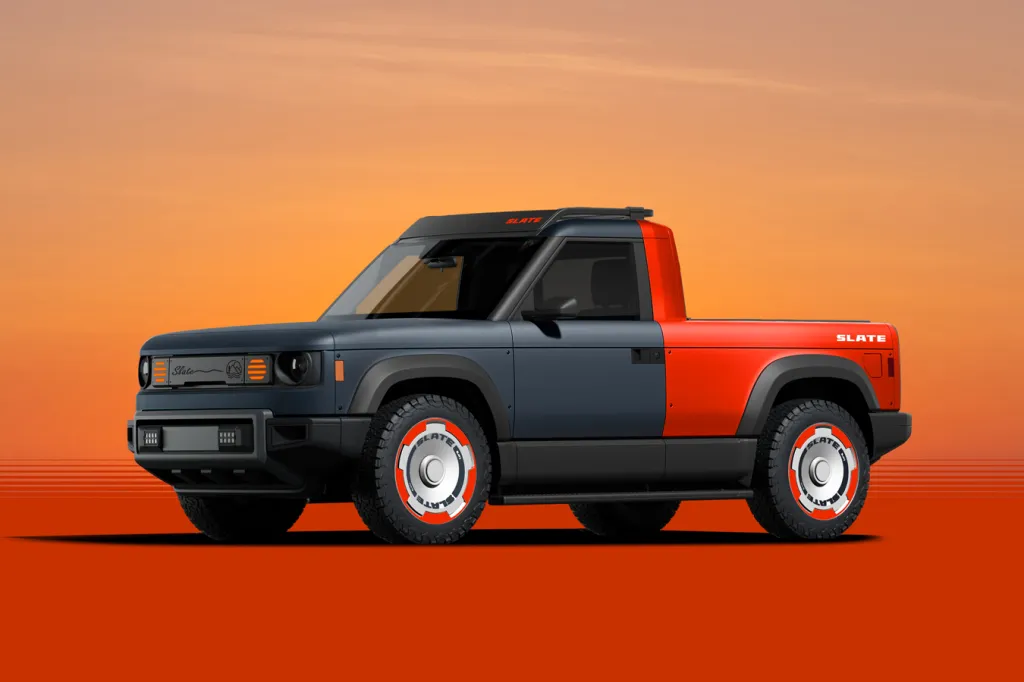
Where the Slate EV is genuinely designed to stand apart is in its customization story. The base version is a two-seater, but buyers can transform it into a two-row SUV for $29,950 or a sportback design at $31,950. The SUV trim calls back to something like a miniature Chevy K5 Blazer, while the fastback version has that early Ford Bronco energy about it. These conversions are not afterthoughts. They are a core part of what the Slate EV is meant to be.
That said, the base Slate EV strips things back further than most modern buyers expect. There is no radio included in the standard trim. Armrests and phone pairing are optional extras. The level of minimalism on offer sits somewhere behind a mid-1990s Toyota pickup in terms of creature comforts. For a certain kind of driver, especially those who have grown tired of touch screens running every function of a modern car, this is actually appealing. I understand that appeal. There is something freeing about a vehicle that does not demand your attention through a dashboard full of notifications.
The color situation is equally stripped back. The Slate EV comes in one color, which is the grey tone the name implies. Rather than offering factory paint options, the company actively encourages buyers to wrap their trucks. The website even includes a configurator for wrap options. This approach mirrors how early automakers managed factory costs by limiting paint choices, and it is similar to how Tesla structures its exterior color selection today.
The Slate EV makes a strong appeal to two groups of buyers. The first is the internet-literate car enthusiast who wants a simple vehicle without unnecessary technology noise. The second, and arguably more important market, is the fleet and commercial buyer. A business that needs ten or twenty cheap, easy-to-maintain electric trucks for deliveries, landscaping, or contracting work will find the Slate EV very compelling. Low cost, simple maintenance, and easy to brand with a wrap. That is a strong pitch for a company fleet.
However, buyers considering a Slate EV purely as a personal vehicle should weigh the tradeoffs carefully. A used Chevy Bolt, Nissan Leaf, or Hyundai Ioniq 5 can offer more range, substantially more features, and potentially a lower or comparable total cost once the used market is factored in. Crank windows and no radio alongside 205 miles of range make the Slate EV a niche proposition for private buyers. It is not the vehicle that will dominate general consumer sales, and the company would likely agree.
Is the Slate EV an exciting addition to the electric vehicle market? Absolutely. It challenges assumptions about what an EV needs to be and brings an entry point that had not previously existed in the pickup segment. But its success will probably depend on fleets, not individuals.
Delivery fees have not yet been announced, and those numbers will matter when buyers do the final comparison. For now, the Slate EV has earned attention, even if the full picture of its appeal is still taking shape.