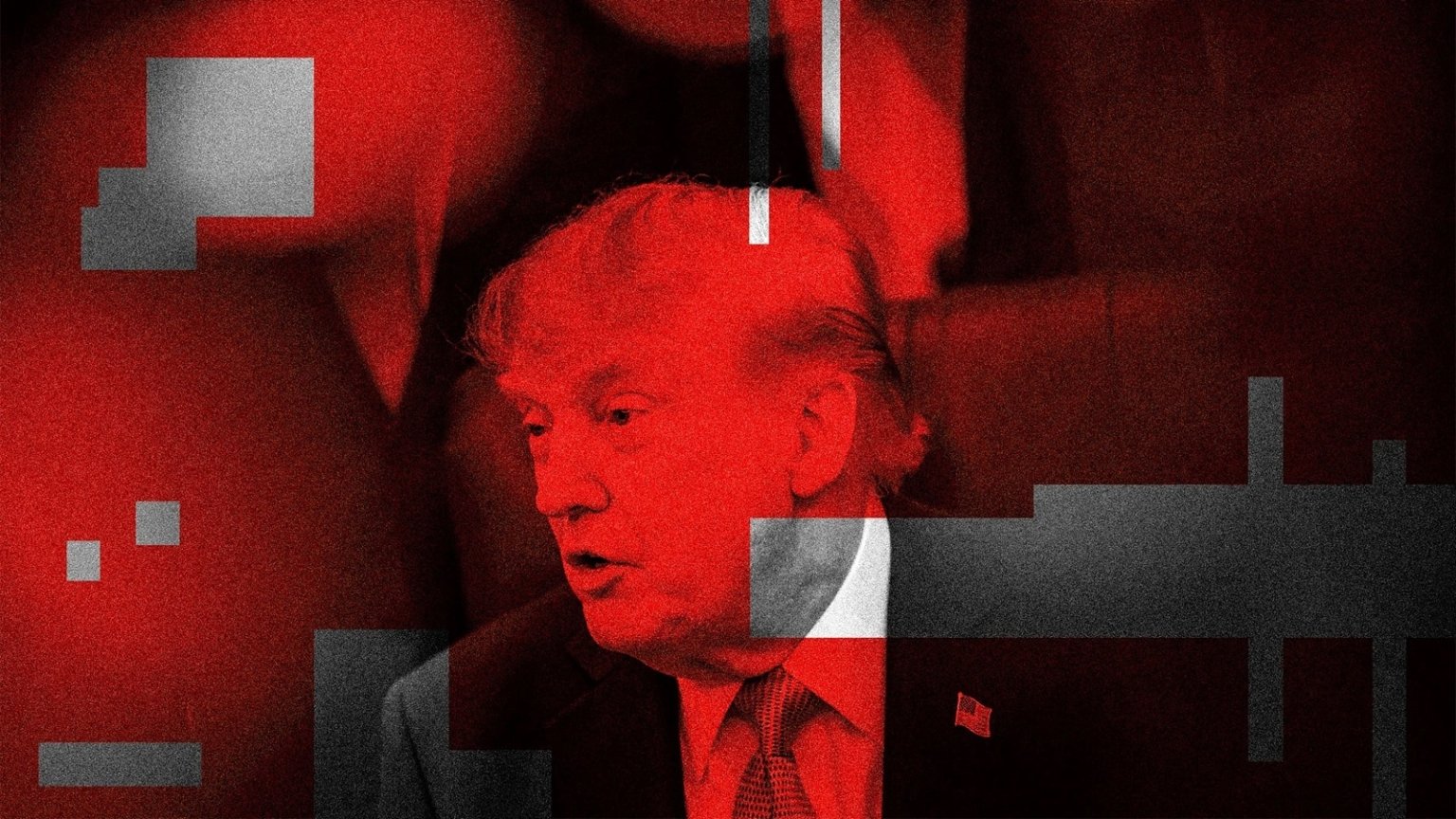

The US President Donald Trump’s announcement of a new artificial intelligence task force and the appointment of an AI czar has exposed a widening communication gap between the White House and Congress. Several Republican lawmakers reportedly learned about the Trump AI Force only after the president announced it publicly, raising questions about its authority, funding, purpose, and long-term strategy.
Lawmakers Were Not Briefed
The Trump AI Force announcement reportedly caught key members of Congress off guard. Two Republican congressional aides told POLITICO that several influential lawmakers had not been informed about the plan before Donald Trump revealed it in a Truth Social post.
- Lawmakers Were Not Briefed
- A New Dispute Over AI Policy
- Republicans Face an Uncomfortable Choice
- Democrats Question the Motive
- The White House and Silicon Valley Were Also Out of the Loop
- What Congress Will Want to Know
- The Risk of Executive Action Without Legislation
- Trump’s AI Strategy Remains Unclear
- Why the Announcement Matters
That lack of advance coordination matters because Congress is already preparing its own artificial intelligence legislation. Senate Majority Leader John Thune and Senate Commerce Committee Chair Ted Cruz are working on proposals designed to address serious AI risks, including potential threats to national security, employment and economic stability.
The Trump AI Force could therefore create confusion at a moment when lawmakers are trying to establish a clear federal policy. Without details from the administration, Congress is left to determine whether the initiative will complement existing legislation or compete with it.
Rep. Mike Simpson, a senior Republican on the House Appropriations Committee, said he knew about the Trump AI Force only through media reports. His comments reflect the broader uncertainty surrounding an initiative that could eventually require congressional funding and statutory authority.
A New Dispute Over AI Policy
The Trump AI Force comes as Washington struggles to define the federal government’s role in regulating artificial intelligence. The technology is expanding rapidly across healthcare, finance, defense, education and the workplace, but the rules governing it remain fragmented.
Trump’s announcement appears to support monitoring AI systems, although the president indicated that existing regulatory bodies should oversee the technology rather than a completely new agency. That distinction could shape the future of the Trump AI Force.
A task force operating inside existing agencies might be created more quickly, but its authority could be limited. Congress would still need to examine its budget, legal mandate, and oversight structure. A permanent federal AI body, by contrast, would likely require legislation and bipartisan negotiations.
Rep. Lori Trahan, a Democrat who supports a bipartisan AI safety framework, said she could consider a federal body focused on AI oversight. However, she argued that creating a Trump AI Force without congressional authorization or a durable strategy could function as a delay tactic rather than a serious policy response.
Republicans Face an Uncomfortable Choice
The announcement places Republican lawmakers in a difficult position. Many members of the party want the United States to lead China in artificial intelligence development, while also responding to public concerns about job losses, national security threats and unsafe systems.
Trump has repeatedly argued that excessive regulation could slow American innovation. In his announcement, he again described fears about AI as exaggerated while emphasizing the importance of economic growth and technological competition.
The Trump AI Force could allow the administration to present itself as taking AI safety seriously without imposing broad restrictions on the industry. That balance may appeal to Republicans who want stronger oversight but fear that regulation could weaken American technology companies.
However, lawmakers may resist an executive initiative that appears to bypass Congress. If the Trump AI Force makes recommendations without legislative backing, its proposals could face resistance from both parties. Republicans may object to the lack of consultation, while Democrats may question whether the effort is designed to protect the public or preserve the interests of technology companies and political allies.
Democrats Question the Motive
Democratic lawmakers have responded to the Trump AI Force with caution. Rep. Josh Gottheimer said the initiative would deserve support if Trump had recognized genuine AI risks and was prepared to act. He also warned that the effort would raise serious concerns if it were merely a public relations diversion or connected to the president’s family investments.
That skepticism reflects a larger Democratic concern about the administration’s approach to technology policy. Democrats have previously criticized White House directives involving AI oversight, arguing that some proposals have stalled or reached Congress without sufficient detail.
For Democrats, the Trump AI Force will be judged by its structure and results rather than its announcement. They are likely to ask whether it will protect workers, address algorithmic discrimination, establish safeguards for powerful models, and prevent the misuse of AI in elections and public services.
The November elections add another political layer. Democratic lawmakers hoping to regain control of Congress may use the Trump AI Force as evidence that the administration is attempting to shape national technology policy without meaningful bipartisan cooperation.
The White House and Silicon Valley Were Also Out of the Loop
Congress was not the only institution that appears to have received limited notice. The technology industry was reportedly not broadly briefed before the announcement either.
That is notable because major technology companies will be directly affected by any new AI standards. Companies developing advanced models, cloud computing systems, and autonomous tools need clear guidance on safety testing, data use, liability, and national security controls.
The Trump AI Force will face credibility problems if it excludes the industries responsible for building these systems. At the same time, close cooperation with technology executives could create concerns about regulatory capture. A credible federal AI strategy must include industry expertise while preserving public accountability.
The administration may therefore need to consult technology companies, civil society organizations, researchers, labor representatives and state officials before giving the Trump AI Force a permanent role.
What Congress Will Want to Know
Before lawmakers support the Trump AI Force, they will likely demand answers to several basic questions. The first concerns legal authority. Congress will want to know whether the task force will operate under existing executive powers or whether the White House expects lawmakers to pass new legislation.
The second issue is funding. A national AI oversight effort could require technical staff, cybersecurity specialists, enforcement personnel, and research resources. Without a clear budget, the Trump AI Force may remain a political announcement rather than an operational institution.
Congress will also ask who the AI czar reports to and how that official will coordinate with agencies such as the Commerce Department, the Department of Defense, the Federal Trade Commission and the Department of Homeland Security.
The Trump AI Force must also explain how it will measure success. Possible benchmarks could include improved AI safety testing, stronger protection of critical infrastructure, faster responses to deepfakes and better safeguards for workers whose jobs are affected by automation.
The Risk of Executive Action Without Legislation
Presidents often use executive announcements to set priorities, but technology policy usually requires long-term coordination. Artificial intelligence affects areas regulated by multiple agencies, making it difficult to create a coherent national framework through a single presidential directive.
The Trump AI Force could begin work quickly, but its durability may depend on Congress. A future administration could restructure or eliminate it if the task force lacks statutory support.
That uncertainty could discourage companies from making major compliance investments. Businesses need to know whether rules announced by the Trump AI Force will remain in place, change after a court challenge, or disappear after the next election.
Congressional involvement would also provide an opportunity for public hearings and transparent debate. Lawmakers could question the AI czar, review the task force’s recommendations, and examine whether the government is protecting citizens without unnecessarily restricting innovation.
Trump’s AI Strategy Remains Unclear
Trump has described AI leadership as a central economic and national security priority. He has also warned against policies that could slow growth, comparing the technology’s potential impact with major transformations such as the Industrial Revolution and the internet.
Those statements reveal the administration’s broad ambition, but they do not explain how the Trump AI Force will operate. The White House has not publicly provided a detailed timeline, organizational chart, budget request, or legislative proposal.
The absence of those details leaves Congress, the technology industry and the public waiting for clarification. It also creates room for competing interpretations of the initiative. Supporters may see the Trump AI Force as a practical mechanism for maintaining American leadership, while critics may view it as a symbolic response to growing public anxiety.
The next stage will depend on whether the White House engages with Congress. If administration officials brief lawmakers and publish a clear strategy, the Trump AI Force could become part of a broader national effort. If the White House continues to operate without consultation, the initiative may deepen the political divisions already surrounding artificial intelligence.
Why the Announcement Matters
The controversy over the Trump AI Force is about more than a single task force. It reflects a larger dispute over who should shape America’s AI future.
The White House wants to move quickly and preserve the United States’ competitive advantage. Congress wants a role in writing durable rules. Technology companies want predictable regulation. Workers and consumers want protection from harmful or unreliable systems.
Those objectives do not have to conflict, but they require coordination. The Trump AI Force can help establish a national direction only if it operates with transparency, technical competence and congressional accountability.
For now, the announcement has created more questions than answers. Until lawmakers receive a formal briefing and the administration explains the task force’s legal authority, funding and responsibilities, Congress will remain largely in the dark about the Trump AI Force. source