
The automotive industry is going through one of its biggest changes in more than a century. EV Technology is changing how vehicles are designed, manufactured, powered, maintained, updated, and even used.
This transformation is not simply about replacing a petrol or diesel engine with an electric motor. Electric Vehicle Technology brings together battery engineering, power electronics, software, charging systems, connected services, advanced manufacturing, and energy management into one increasingly integrated vehicle platform.
- What EV Technology Actually Means
- How EV Technology Is Changing Vehicle Design
- EV Technology Is Turning Cars Into Software-Driven Products
- Charging Infrastructure Is Becoming Part of the Automotive
- EV Technology Is Reshaping Automotive Manufacturing
- The Rise of Advanced Driver Assistance
- Regenerative Braking Changes Energy Use
- EV Technology Is Changing Vehicle Maintenance
- EV Battery Safety Requires Serious Engineering
- Battery Recycling Could Become a Major Industry
- EV Technology Is Changing What Consumers Compare
- The Automotive Supply Chain Is Being Rewritten
- EV Technology Is Creating New Business Models
- What Automakers Need to Get Right
- What the Next Stage of EV Technology May Look Like
- Why EV Technology Matters Beyond Electric Cars
- Final Thoughts on the Future of EV Technology
The scale of the shift is already visible in the market. The International Energy Agency reported that global electric car sales exceeded 20 million in 2025, meaning one in four new cars sold worldwide was electric.
For automakers, suppliers, governments, mechanics, and consumers, that creates both opportunities and difficult questions. The companies that understand EV Technology as a complete industrial system rather than simply a new powertrain are likely to be better prepared for the next stage of automotive competition.
What EV Technology Actually Means
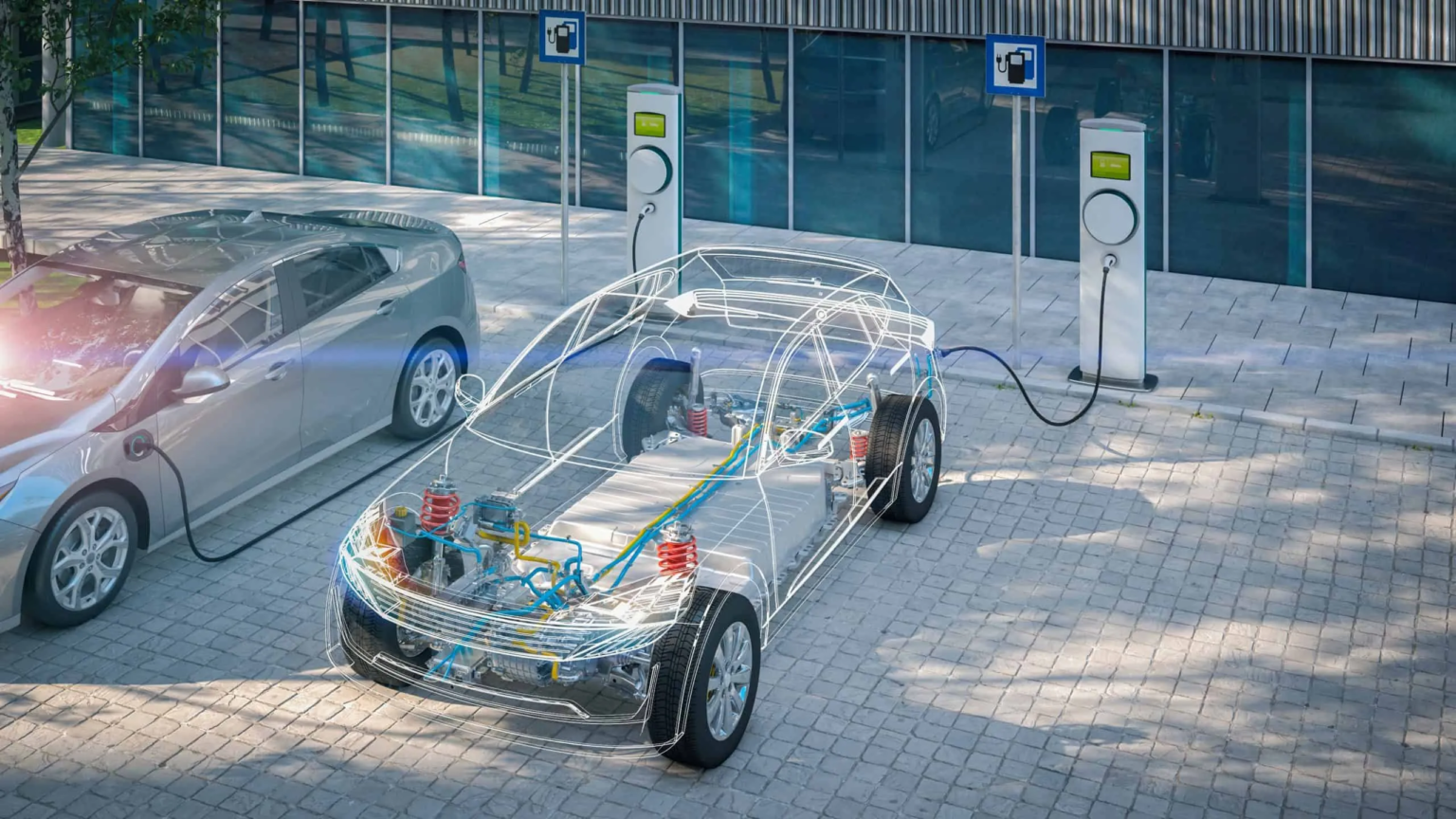
EV Technology refers to the collection of technologies that allow electric vehicles to store, manage, deliver, and use electrical energy for transportation. The battery is only one part of that system. An electric vehicle also relies on electric motors, inverters, battery management systems, onboard chargers, thermal management, regenerative braking, sophisticated software, charging hardware, and electronic control systems.
This is an important distinction because the biggest automotive changes are happening across the entire vehicle. A modern electric vehicle can be mechanically simpler than a conventional internal combustion engine vehicle, but its electrical and software architecture can be considerably more sophisticated. That changes how manufacturers approach engineering, testing, servicing, and product development.
How EV Technology Is Changing Vehicle Design
Traditional vehicles have been built around the internal combustion engine, transmission, fuel system, exhaust system, and associated mechanical components.
EV Technology changes that architecture. Electric motors can deliver torque directly and quickly, while batteries can be positioned low in the vehicle floor. This gives designers more flexibility in distributing weight and creating interior space.
The result is not automatically a better vehicle. Good engineering still depends on suspension design, crash protection, thermal management, aerodynamics, software calibration, and manufacturing quality. What EV Technology does provide is a different engineering foundation.
Battery Packs Are Becoming a Core Vehicle Component
The battery pack is arguably the most important component in a battery electric vehicle because it influences driving range, charging speed, weight, cost, performance, and vehicle packaging.
Battery technology is also evolving. Automakers and battery manufacturers are working with different cell chemistries and pack designs to balance energy density, durability, safety, cost, and charging performance.
The scale of battery manufacturing has expanded rapidly. The IEA reported that EV battery deployment reached about 1.2 TWh in 2025, nearly 30 percent higher than in 2024. That growth has consequences far beyond car production. Battery supply chains now influence automotive investment, mineral demand, manufacturing strategy, international trade, and industrial policy.
Electric Motors Change the Driving Experience
Electric motors have a fundamental advantage in the way they deliver power. They can produce strong torque from very low speeds, allowing smooth and immediate acceleration.
There is also less mechanical complexity in the propulsion system compared with a conventional engine and multi-gear transmission.
However, electric motors are not maintenance-free. Bearings, cooling systems, power electronics, reduction gears, and other components still require engineering attention. The broader change is that vehicle performance is increasingly controlled through a combination of hardware and software.
EV Technology Is Turning Cars Into Software-Driven Products
One of the most important changes in the automotive industry may not be visible when a vehicle is parked. Software now controls many aspects of an electric vehicle, including energy management, charging behavior, battery monitoring, thermal systems, driver assistance features, infotainment, and vehicle settings.
EV Technology therefore allows manufacturers to treat the vehicle more like an evolving digital product. Over-the-air software updates can allow manufacturers to improve certain vehicle functions after delivery, although the exact capabilities vary by manufacturer and model. This creates a new relationship between automakers and customers because the vehicle can continue receiving software improvements after it leaves the showroom.
It also creates new responsibilities. Cybersecurity, software reliability, data protection, and update management become increasingly important parts of vehicle ownership.
Charging Infrastructure Is Becoming Part of the Automotive
A petrol vehicle depends heavily on fuel stations. Electric vehicles depend on access to electricity, but the experience is more distributed. Drivers can charge at home, at workplaces, at public charging stations, and at destinations such as shopping centers or hotels. That means EV Technology is connecting the automotive industry more closely with the electricity sector.
Charging speed is particularly important for long-distance travel. However, charging experience depends on more than the maximum power advertised by a charger.
Vehicle battery temperature, battery state of charge, charger capacity, electrical infrastructure, and charging standards can all influence actual charging performance.
This is why the future of EV Technology cannot be judged by vehicle specifications alone. A technically impressive vehicle can still provide a frustrating ownership experience if charging infrastructure is inconvenient or unreliable.
EV Technology Is Reshaping Automotive Manufacturing
Electric vehicles require manufacturers to rethink factories and supply chains. The production process for an electric powertrain differs significantly from the production process for an internal combustion engine. Batteries and electric drive components require specialized manufacturing capabilities, while traditional engine and transmission production becomes less central to the vehicle.
The IEA reported that 17.3 million electric cars were produced worldwide in 2024. China accounted for more than 70 percent of global electric car production that year.
That concentration demonstrates why EV Technology is also an industrial competitiveness issue. Automakers are investing in battery plants, electric motor production, software development, charging partnerships, and new vehicle platforms. Suppliers that previously specialized in engine components are also being pushed to adapt their businesses.
For workers, this transition means changing skill requirements. Electrical engineering, battery diagnostics, software development, electronics, data analysis, and high-voltage vehicle servicing are becoming increasingly valuable.
The Rise of Advanced Driver Assistance
EV Technology is developing alongside advanced driver assistance systems. Electric vehicles often have sophisticated electronic architectures capable of supporting cameras, radar, sensors, processors, connectivity, and software-based driver assistance features.
It is important not to confuse these technologies with fully autonomous driving. Driver assistance systems still have limitations, and drivers remain responsible for operating their vehicles according to the capabilities and instructions of the particular system.
The important industry shift is that automotive engineering increasingly combines mechanical systems with computing and artificial intelligence-based technologies.
Regenerative Braking Changes Energy Use
Regenerative braking is another important part of EV Technology. When an electric vehicle slows down, its motor can operate as a generator and convert some of the vehicle’s kinetic energy into electrical energy that can be stored in the battery.
This does not recover all of the energy used to accelerate the vehicle. Energy losses occur throughout the process. Even so, regenerative braking can improve overall efficiency and reduce reliance on friction brakes during suitable driving conditions.
For drivers, this can also change the feel of the brake pedal and the way the vehicle responds when the accelerator is released.
EV Technology Is Changing Vehicle Maintenance
Electric vehicles still require maintenance, but the type of maintenance changes. There is no conventional engine oil to replace, no exhaust system in a battery electric vehicle, and fewer traditional engine components to service. Brake wear can also be reduced in some driving conditions because regenerative braking handles part of the deceleration.
At the same time, EV Technology introduces new service requirements. Technicians need training in high-voltage systems, battery diagnostics, electrical safety, thermal management, software faults, and specialized diagnostic equipment.
This creates an important opportunity for automotive workshops. Businesses that invest in technician training and appropriate safety procedures can position themselves for a market in which electric vehicle servicing becomes increasingly common.
EV Battery Safety Requires Serious Engineering
Battery safety deserves a realistic discussion. Lithium-ion batteries can present serious risks if damaged, improperly manufactured, incorrectly handled, or involved in certain crash and thermal events. That does not mean electric vehicles are inherently unsafe.
Vehicle manufacturers use battery management systems, thermal controls, structural protection, monitoring systems, and safety procedures to manage these risks.
Regulators are also developing and enforcing safety requirements. In the United States, for example, NHTSA has introduced requirements covering propulsion battery safety, including measures intended to mitigate fire risks during normal operation, charging, and after crashes.
The practical lesson is simple. EV Technology requires technicians, emergency responders, manufacturers, and owners to understand high-voltage systems rather than treating an electric vehicle as simply another version of a conventional car.
The Environmental Picture Is More Complicated Than Tailpipe Emissions
Electric vehicles have no tailpipe emissions when operating in electric mode, but that does not mean their environmental impact is zero.Battery manufacturing requires energy and raw materials. Electricity generation also varies significantly from one region to another.
For that reason, evaluating EV Technology properly requires looking beyond the vehicle itself. Battery production, electricity generation, manufacturing processes, vehicle efficiency, driving patterns, and eventual battery reuse or recycling all matter.
The environmental case for electric vehicles therefore depends partly on how electricity and batteries are produced and managed.
This is one reason responsible automotive reporting should avoid presenting EV Technology as either a perfect environmental solution or a technological failure. The reality is more nuanced.
Battery Recycling Could Become a Major Industry
As the number of electric vehicles grows, managing batteries at the end of their first vehicle life becomes increasingly important.
A battery that is no longer suitable for automotive use may still have potential applications depending on its condition and economics. Recycling can also help recover valuable materials.
The industry is still developing, and recycling economics, battery chemistry, collection systems, regulation, and processing technology will influence how large the sector becomes.
For automakers, battery lifecycle management is becoming part of the broader EV Technology strategy rather than an issue that can be considered only after a vehicle reaches the end of its life.
EV Technology Is Changing What Consumers Compare
Consumers traditionally compared cars using factors such as engine size, horsepower, fuel economy, transmission type, and maintenance costs. Electric vehicles add a different set of questions.
Buyers increasingly need to consider usable battery capacity, real-world range, charging speed, home charging availability, public charging access, battery warranty terms, software features, efficiency, thermal performance, and total ownership cost.
The IEA reported that the average range of battery electric cars reached almost 380 kilometers globally in 2025, while also noting that average range has plateaued in recent years.
That plateau is not necessarily a technological problem. More buyers are choosing different vehicle sizes and price points, while charging infrastructure continues to develop.
A sensible buying decision should therefore focus on actual daily driving needs rather than chasing the largest possible battery.
The Automotive Supply Chain Is Being Rewritten
EV Technology is also changing which companies have strategic importance. Battery cell manufacturers, semiconductor suppliers, charging companies, software developers, mineral processors, power electronics specialists, and thermal management companies now occupy increasingly important positions in the automotive ecosystem.
Traditional automakers are still central, but the boundaries of the industry are becoming less clear. A vehicle manufacturer now needs expertise that reaches beyond traditional mechanical engineering. Software development and energy management can be just as important to the customer experience as suspension tuning and body engineering. This is one of the reasons EV Technology represents an industrial transformation rather than simply a fuel change.
EV Technology Is Creating New Business Models
Electric mobility is also opening opportunities outside vehicle manufacturing. Charging networks, fleet electrification, battery services, energy management platforms, vehicle software, battery diagnostics, recycling, and second-life energy storage are all connected to the growth of electric transportation.
Commercial fleets may have particularly strong incentives to study these technologies because vehicles often follow predictable routes and return to central locations where charging can be planned.
The economics will differ by vehicle type, electricity prices, utilization, financing, maintenance requirements, and local infrastructure. There is no single EV business model that works everywhere.
What Automakers Need to Get Right
Automakers cannot rely on attractive vehicle styling alone. Successful EV Technology products need competitive pricing, dependable batteries, convenient charging, efficient powertrains, strong software, good thermal management, reliable service support, and clear communication with customers.
The industry also needs to avoid promising capabilities that the underlying technology cannot consistently deliver. Consumers are more likely to trust electric vehicles when manufacturers provide realistic information about range, charging behavior, battery warranties, maintenance, and performance in different conditions. Trust will become a competitive advantage.
What the Next Stage of EV Technology May Look Like
The next stage is likely to involve improvements across several areas rather than one revolutionary breakthrough.
Battery chemistry will continue evolving. Charging systems will become more integrated with electricity networks. Vehicle software will become more capable. Manufacturing will become more automated and localized in some markets.
The IEA’s 2026 outlook expects global electric car sales to continue growing, with 2026 sales projected at about 23 million vehicles and close to 30 percent of global car sales. That is a projection rather than a guaranteed outcome, and policy, prices, trade conditions, infrastructure, and consumer demand can change the result.
The bigger question is no longer whether EV Technology will affect the automotive industry. It already has. The more important question is how quickly different parts of the industry can adapt.
Why EV Technology Matters Beyond Electric Cars
The influence of EV Technology extends beyond battery-powered vehicles. It is pushing the automotive industry toward greater efficiency, more software integration, new manufacturing methods, advanced electronics, connected services, and closer integration with the electricity system.
Even manufacturers that continue selling hybrid or combustion vehicles are operating in a market increasingly shaped by electric powertrains and electronic systems.
For consumers, the transition means more choice but also a new set of ownership considerations. For manufacturers, it means rethinking engineering, factories, supply chains, workforce skills, and customer relationships. For the wider automotive industry, EV Technology represents a structural change that is already underway.
Final Thoughts on the Future of EV Technology
The automotive industry has experienced major technological transitions before, but EV Technology is unusual because it affects so many parts of the business at the same time.
It changes the powertrain, battery supply chain, manufacturing process, service requirements, software architecture, charging ecosystem, and relationship between vehicles and the electrical grid.
The strongest companies will not necessarily be those that build the vehicle with the longest range or the largest battery. They will be the companies that combine efficient engineering, reliable software, practical charging, responsible battery management, competitive pricing, and strong customer support.
That is where the real significance of EV Technology lies. It is not merely changing how cars are powered. It is changing how the automotive industry thinks about the vehicle itself.