

Some criminals are remembered for their brutality. Others are remembered for their brains. Charles Sobhraj is remembered for both. He was half Vietnamese and half Indian, soft-spoken like a professor and handsome enough to pass for a model. Police in several countries chased him for years. Yet when he sat behind bars, prison staff often bent to his wishes. He celebrated birthdays inside his cell, arranged luxuries for fellow inmates, and walked out of one of Asia’s most secure prisons as if it were a hotel lobby.
Behind that polished surface was a man who befriended travelers, betrayed them and silenced many for good. Between 1972 and 1976, accounts of his crimes link him to the deaths of around two dozen people across Thailand, India, Afghanistan, Greece and Nepal. This is the real story of Charles Sobhraj the Charming Predator and, a man the world came to know as the Bikini Killer.
- Charles Sobhraj Family Background
- From Petty Thief to Prison Charmer
- India and the Ashoka Hotel Heist
- Escapes, Betrayals and a Collapsing Marriage
- Charles Sobhraj Bikini Killer: The Thailand Murders
- Charles Sobhraj Inside Secrets: Life as the King of Tihar
- The Great Tihar Escape
- Late Arrest, Marriage and Release
- Charles Sobhraj: The Charming Predator
Charles Sobhraj Family Background
To understand this story, you have to begin with the Charles Sobhraj family background. He was born on the sixth of April 1944 in Saigon, Vietnam. His father was an Indian businessman and his mother was Vietnamese. The marriage cracked almost immediately, and his father walked away while Charles was still a baby.
His mother later married a French army officer, and the family moved to France. His stepfather raised him but never gave him his surname. In the eyes of the boy, he was a guest in his own home. French children kept their distance from a mixed-race child, so he had few friends at school. He skipped classes, wandered alone, and learned to watch people closely.
Those who study Charles Sobhraj’s biography often point to this loneliness. He nursed a quiet anger against the father who abandoned him. In a diary, he wrote that he would make his father regret failing in his duty. Whatever the truth of his inner wounds, he turned them into a weapon. He learned to speak French, English, Hindi, and Vietnamese. He learned to read faces and say exactly what would win trust.
From Petty Thief to Prison Charmer
As a teenager, Charles Sobhraj slid into petty theft and fraud. He would win a stranger’s confidence, then vanish with their belongings. In 1963, at nineteen, he was caught for a jewelry theft and jailed in Paris. Even then, he played the helpless victim so well that officers softened toward him.
Prison also brought a useful friendship. He met Felix d’Escogne, a wealthy young man who visited inmates to offer legal help. After his release, Charles moved straight into Felix’s home and lived two lives. In one, he mixed with polished society. In the other, he plotted thefts and scams. He later married a young Parisian woman named Chantal, and the couple soon had to leave France to escape the police. They traveled east through Europe and reached Bombay, where their daughter was born.
India and the Ashoka Hotel Heist
In Bombay, Charles Sobhraj built a car theft ring. He stole expensive vehicles in Pakistan and Iran, bribed border officers, and sold the cars to rich Indians. In October 1971, he turned his attention to the jewelry store in the Ashoka Hotel in Delhi.
His first plan, drilling through a floor, failed when the drill broke. So he improvised. He charmed a Spanish performer who had booked the room above the shop, then posed as a Nepalese prince interested in rare gems.
When the jeweler sent a man with valuables, Charles overpowered him and the jeweler, tied them up, and took diamonds worth about fifteen lakh rupees. In his hurry, he left his passport behind. Police soon traced him, and he was arrested in Bombay about two weeks later.
Escapes, Betrayals and a Collapsing Marriage
His first escape from custody happened in Delhi. Pretending to suffer from appendicitis, he was moved to a hospital, where his wife helped incapacitate the guards. He was recaptured within hours, but bail soon let him slip out of India altogether. In Kabul, he preyed on young travelers who came seeking cheap drugs. When he was arrested again, he faked bleeding to reach a hospital and escaped once more. This time he left his wife and daughter behind, and the marriage ended.
Charles Sobhraj Bikini Killer: The Thailand Murders
By 1975, Charles Sobhraj had returned to India and teamed up with a Canadian woman named Marie Andree Leclerc and an Indian accomplice named Ajay Chowdhury. Together they went to Thailand, where the hippie trail drew young foreigners looking for adventure and spiritual peace.
Here the story turns from theft to murder. According to investigators and later accounts, Sobhraj befriended tourists, drugged them, robbed them, and killed those who might expose him. The Charles Sobhraj Bikini Killer name came from the bodies of young women found dressed only in bikinis. Jennie Bollivar, an American woman seeking peace through Buddhist practice, was found in shallow water off the Thai coast.
Charmayne Carrou, a French woman who traveled to Thailand to look for her missing partner, was found similarly. Her partner Vitali Hakim had already been found burned by the roadside.
Within weeks, several victims had been found, and the pattern frightened Thai police. The deaths were arranged to look like accidents or overdoses. Yet the same name kept appearing near every victim. From these crimes, he became known as the Most Notorious Bikini Killer in the world.
The killing did not stop in Thailand. He and Leclerc were linked to the deaths of a Dutch couple in Bangkok, and to two tourists in Nepal named Laurent Carrière and Connie Jo Bronzich. Eventually he paid a Thai official a large bribe and fled to Malaysia.
Later, according to accounts of the case, he killed his own partner, Ajay Chowdhury, once the man became a burden. People close to Sobhraj have said his own mother once described him as looking like an angel while his soul seemed to belong to the devil.
Charles Sobhraj Inside Secrets: Life as the King of Tihar
In 1976, he tried to drug a group of French engineering students in Delhi. Some noticed the effects and raised an alarm, and police arrested him. There was not enough evidence to charge him with murder at that time, but he was convicted of theft and fraud and sent to Tihar Jail.
Charles Sobhraj’s inside secrets from this period read almost like fiction. His cell looked like a studio apartment with a table, chairs, and shelves of books. Fellow prisoners served him by cooking, washing clothes, and giving massages. Some guards even addressed him with respect. He wrote petitions for other inmates that were often more effective than a lawyer’s work.
His sentence would have ended in 1988, but Thailand wanted him extradited, and he faced a possible death sentence there. He realized that a new crime inside India would extend his stay and let Thailand’s twenty-year limit expire. So he planned a perfect escape.
The Great Tihar Escape
In March 1986, he spent days building a story about his birthday on the sixteenth. He used money to win over guards and arranged for fruit and sweets to be brought in for a party. The food was laced with sedatives he had tested beforehand. Guards and inmates fell asleep, and Sobhraj walked out with a few companions. He even took photographs at his barracks gate and left cash in the hands of the sleeping guards. Eleven other prisoners also escaped that night.
His plan was not to stay free. He was arrested again around twenty days later at a restaurant in Goa by Inspector Madhukar Zende. His sentence was extended by ten years, and he was content. By the time he was released in 1997, the Thai deadline had expired.
Late Arrest, Marriage and Release
After deportation to France, Charles Sobhraj lived off interviews and stories of his past. Money and attention could not satisfy him for long, and in 2003 he traveled to Nepal. That was a fatal mistake, because he was still wanted for the 1975 killings of Carrière and Bronzich. This time the case was strong, and a court sentenced him to life in prison.
In 2008, at sixty-four, he married Nihita Biswas, a woman about forty-four years younger who was the daughter of his Nepalese lawyer. In December 2022, Nepal’s court released him because of his age and the time already served. He was then sent back to France.
Charles Sobhraj: The Charming Predator
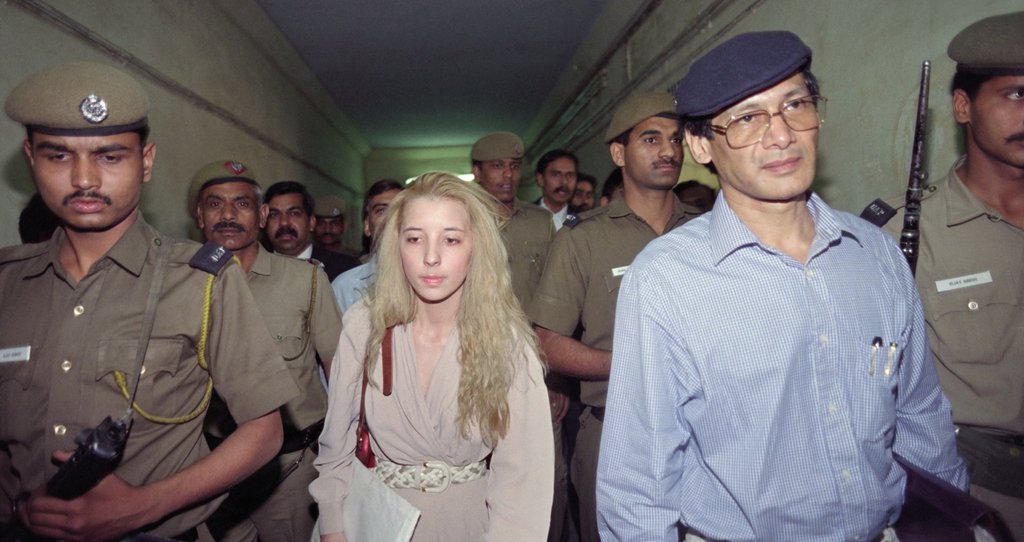
The Charles Sobhraj true story is not simply about murders. It is about charm used as camouflage and about a man who exploited the trust of strangers. Many believe he is among the most chilling examples of a serial killer who hid in plain sight. Today, Charles Sobhraj lives free in France as an elderly man, because the old charges there have expired or lacked proof. His case still raises hard questions about borders, justice, and how a single person could slip through so many systems. The Charles Sobhraj serial killer legend lives on in books, documentaries, and countless insider stories, and it is a reminder that danger can come with a friendly smile.