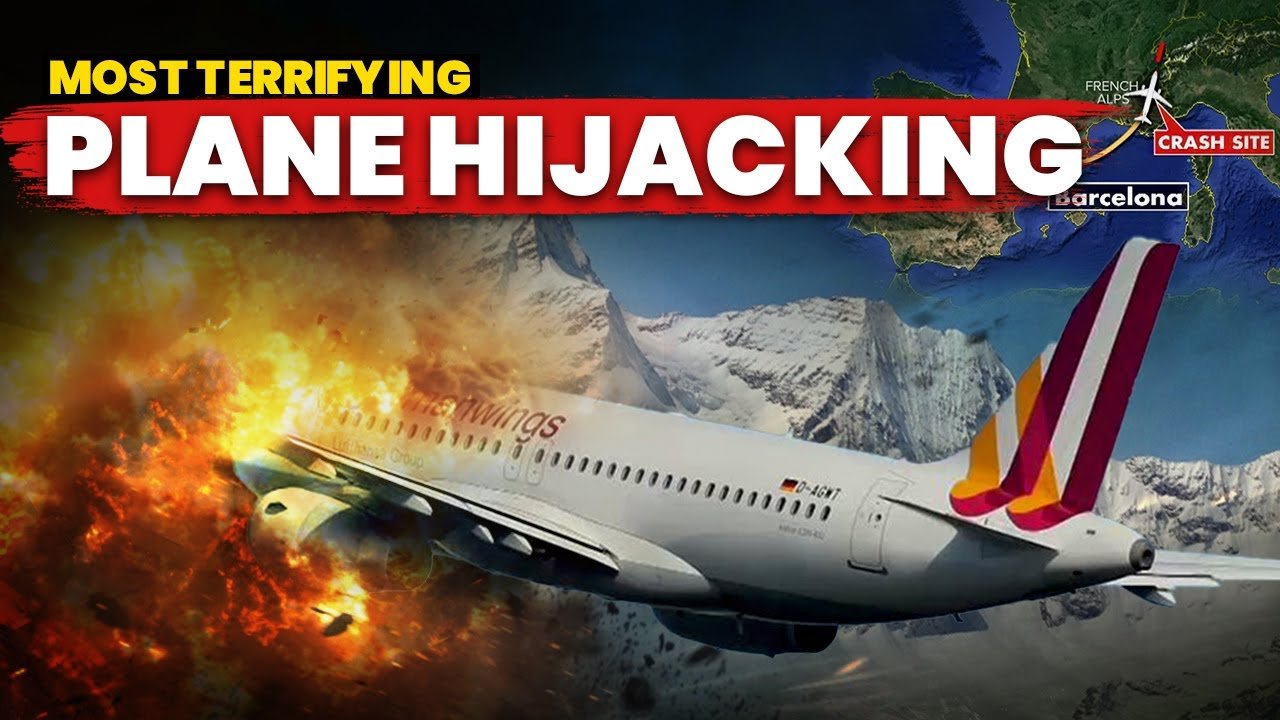

A Bright Morning in Barcelona, On the morning of March 24, 2015, sunlight covered Barcelona El Prat Airport. On runway 07R, an Airbus A320 was preparing for a routine trip to Dusseldorf, Germany. Germanwings Flight 9525 was meant to take about an hour and a half. Nobody on board had any reason to expect anything else.
There were 150 people on the aircraft, 144 passengers and six crew members. Most were German or Spanish, but sixteen other nationalities were represented. Among them were sixteen students and two teachers from a high school in Haltern am See, Germany, heading home after a Spanish exchange program. They laughed and swapped photos from the trip. Two opera singers who had performed in Barcelona were also on board, along with business travelers and tourists.
Up front, the captain was Patrick Sondenheimer, 34, a pilot with about ten years in the industry and more than six thousand flying hours. Beside him sat First Officer Andreas Lubitz, 27, with roughly six hundred and thirty hours. The two had already flown from Dusseldorf to Barcelona that morning and were now flying back. At around ten, the aircraft lifted off and climbed over the Mediterranean.
The Captain Leaves the Cockpit
While the plane climbed, Lubitz was the pilot flying. Captain Sondenheimer mentioned that he had not had time to use the washroom during the stopover and would need a break once they leveled off. Lubitz answered calmly that it was no problem. When the aircraft reached its cruising altitude of 38,000 feet, the captain pushed his seat back and stepped out. Lubitz was now alone in the cockpit, and the door closed behind the captain.
In the cabin, everything looked ordinary. Someone read a magazine. Someone scrolled through a phone. The students chatted, and the cabin crew prepared for service. Within minutes, Germanwings Flight 9525 would become one of the most heartbreaking events in modern aviation history.
The Descent Nobody Understood
Passengers first felt a small jolt, which many assumed was turbulence. Then the aircraft began to sink steadily. It was far too early for a landing, and people started peering out of their windows, unsure why the plane was losing height.
When the captain returned, he found the cockpit door locked. He pressed the call button and got no answer. He knocked, then shouted for Lubitz to open up. He entered the emergency access code that exists precisely for situations when a pilot inside is incapacitated. The door still did not open, because the pilot inside can override that code from within.
This is the cruel irony at the center of the Germanwings Flight 9525 story. After the attacks of September 11, airlines worldwide installed reinforced cockpit doors to keep terrorists out. That day, the same protection kept the captain out. Investigators later concluded that the aircraft was being flown into the ground deliberately by the person at the controls.
Fighting a Locked Door
Realizing what was happening, Sondenheimer grabbed the emergency axe and tried to break through. The door did not give way. Passengers watched their captain, soaked in sweat and nearly in tears, begging Lubitz to let him in. Alarms sounded in the cockpit. Some passengers screamed, while others went completely silent. Parents held small children tightly against their chests.
Meanwhile, the aircraft kept dropping. The altitude setting had been changed to just 100 feet, and the speed was increased well beyond a comfortable level for that profile. Marseille air traffic control saw the aircraft leave its assigned height and tried repeatedly to reach the crew. There was no reply. French military aircraft were alerted, but there was no time left.
The Final Minutes Over the French Alps
Shortly before eleven in the morning, radar contact with Germanwings Flight 9525 was lost over the snow-covered French Alps. People in the area near Digne-les-Bains saw the aircraft pass very low overhead. Seconds later it struck a mountainside near Le Vernet. All 150 people on board were killed.
Rescuers who reached the site found a scene that was hard to describe. The aircraft that had carried excited students and families only minutes earlier was reduced to debris scattered across the rocky slope. Around the world, the news spread through television, newspapers, and social media within hours.
What the Black Boxes Revealed
The cockpit voice recorder told the story the investigators had feared. Early in the flight, the conversation between the two pilots was normal. Later, as the captain left, he asked Lubitz to prepare the descent briefing, a routine request on a short flight. Lubitz gave an odd, noncommittal reply.
Flight data showed that after the captain left, the altitude selector was turned down to 100 feet within a short time. Recordings captured the knocking, the axe blows, and the radio calls that went unanswered. Throughout it all, Lubitz said nothing. His breathing was steady, which ruled out a fainting episode or sudden illness. The data also showed that the airspeed had been adjusted several times in the minutes that followed. The conclusion was clear. This was not a technical failure.
Who Was Andreas Lubitz
The investigation then turned to the man himself. Born in Bavaria in 1987 and raised in Montabaur, Lubitz dreamed of flying from childhood. He flew gliders as a teenager and later won a place in Lufthansa’s pilot training program, which drew thousands of applicants and accepted only a few hundred.
In 2008, he interrupted his training and returned home. Doctors diagnosed a severe depressive episode with suicidal thoughts, and he spent months in treatment. His medical certification was initially refused, then granted again with a permanent note requiring regular checks. Later, when he applied for medical clearance for flight training in the United States, he failed to disclose his history. The omission came to light, yet he was allowed to continue after submitting medical reports. He eventually became a first officer with Germanwings.
In late 2014, new symptoms appeared. He feared he was losing his eyesight, and doctors found no physical cause. One doctor suspected a psychosomatic condition. He was prescribed medication again and was reportedly advised not to work, but he kept flying and hid his condition from colleagues. Investigators later found torn-up sick notes at his home. They also found evidence that in the days before the crash, he had searched online for ways to end his life and for information about cockpit doors.
Why the System Failed
The inquiry exposed painful gaps. Strict medical confidentiality in Germany meant that doctors who knew about his condition did not share it with his employer. Lufthansa and aviation regulators had his earlier history, yet there was no effective way to connect the dots. Each party held a small piece of the picture, and no one saw the whole.
The Safety Reforms That Followed
The aftermath of Germanwings Flight 9525 led to real change in aviation safety. Many airlines adopted a two-person rule, meaning that another crew member must enter the cockpit whenever one pilot steps out. European regulators strengthened psychological screening and encouraged peer support programs so that pilots struggling with stress can ask for help without fearing for their careers. Debate also grew over how doctors should balance patient privacy against public safety when a pilot may be a risk.
Lufthansa paid compensation to the victims’ families, and a memorial was built near the crash site at Le Vernet. Captain Sondenheimer’s widow turned her grief into action by founding a charity that supports grieving children and teenagers.
Remembering the 150
Germanwings Flight 9525 remains a sobering lesson in how technology, regulation and human care must work together. The victims were students, teachers, artists, parents and travelers on an ordinary Tuesday morning. Remembering them means learning from what happened, and making it easier for professionals in safety-critical jobs to get help before a crisis becomes a tragedy.