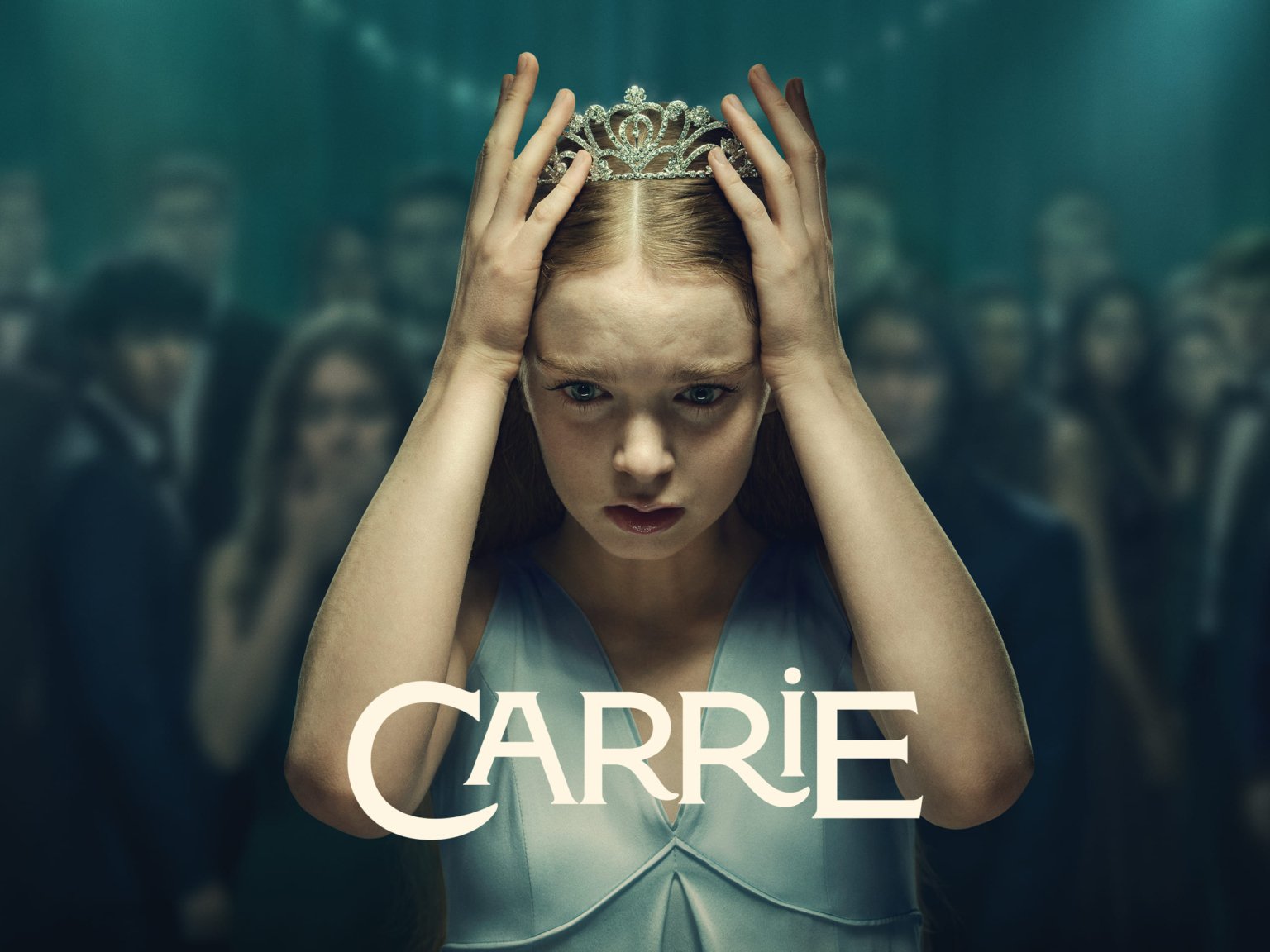

Amazon’s Carrie series largely lives up to its 7.9 rating, especially if you want a slow-burning, emotionally grounded horror story rather than a simple remake of the 1976 film. Mike Flanagan’s adaptation takes Stephen King’s first novel seriously, expands its characters across eight episodes, and turns Carrie White’s story into a modern examination of bullying, religious control, isolation, and online cruelty.
What the Carrie Series Gets Right
The biggest strength of the Carrie series is its patience. Instead of rushing toward the prom and the infamous blood-soaked climax, the show spends time building Carrie’s world before it breaks her. Carrie White has been kept isolated by her parents, and the death of her father forces her into public school for the first time. That setup gives the horror a painful human foundation: Carrie is not simply a girl with powers, but a teenager learning how cruel ordinary social life can be.
Summer H. Howell is the reason the Carrie series works as well as it does. Her performance makes Carrie fragile, sincere, intelligent, and quietly unsettling without turning her into a caricature. You believe her loneliness, and you also understand why the people around her underestimate her. Critics have particularly praised Howell’s lead performance, and it is easy to see why; she carries the emotional weight of nearly every episode.
Samantha Sloyan is equally powerful as Margaret White. Her Margaret is not just a screaming religious fanatic. She is controlling, frightened, manipulative, and convinced that her cruelty is protection. That complexity makes the mother-daughter relationship the darkest part of the Carrie series, sometimes more frightening than the supernatural elements.
A Modern Retelling With Purpose
The Carrie series updates King’s story for a world shaped by smartphones, viral humiliation, and social media pile-ons. That choice could have felt gimmicky, but it gives the bullying storyline real contemporary force. A cruel prank no longer disappears after one night; it can be recorded, shared, mocked, and replayed endlessly. The show understands that modern humiliation is public, permanent, and often collective.
The series also benefits from Flanagan’s usual strengths: strong character work, atmospheric tension, and a willingness to let emotional pain sit beside supernatural horror. The horror is effective, but the more disturbing material comes from the adults and teenagers who fail Carrie long before her powers become dangerous. In that sense, the Carrie series is less about a monster and more about how a community creates one.
Where It Falls Short

The Carrie series is not flawless. Eight episodes give the story room to breathe, but the middle stretch occasionally repeats its central idea: Carrie is hurt, Margaret tightens her grip, the bullies escalate, and the audience waits for the inevitable explosion. Some viewers may find the pacing deliberate in a way that tests their patience, particularly if they came expecting a fast-paced horror thriller.
The show also makes changes that will divide longtime fans of Stephen King’s novel and earlier adaptations. Some characters are reworked, certain relationships feel more modern, and the expanded school setting gives supporting students more screen time. These changes mostly serve the story, but purists may miss the tighter, more brutal simplicity of the original narrative.
Still, those flaws do not seriously damage the experience. The Carrie series earns its rating because it respects both its source material and its audience. It treats horror as tragedy, not just spectacle.
Cast of the Carrie Series

The cast is one of the strongest reasons to watch the Carrie series. The ensemble feels believable as a modern high school community, while the adult performers add depth to the show’s more disturbing family and institutional dynamics.
- Summer H. Howell as Carrie White
- Samantha Sloyan as Margaret White
- Siena Agudong as Sue Snell
- Alison Thornton as Chris Hargensen
- Joel Oulette as Tommy Ross
- Josie Totah as Tina Blake
- Arthur Conti as Billy Nolan
- Thalia Dudek as Emaline West
- Amber Midthunder as Miss Desjardin
- Matthew Lillard as Principal Grayle
- Tahmoh Penikett as Ralph White
- Michael Trucco as John Hargensen
- Rahul Kohli as Seth Peist
- Heather Graham as Madison
- Katee Sackhoff in a supporting role
- Kate Siegel in a supporting role
Alison Thornton deserves special mention as Chris Hargensen. She makes Chris more than a standard mean girl; she is charming, reckless, vindictive, and genuinely frightening because she believes she can get away with anything. Siena Agudong also brings warmth to Sue Snell, giving the Carrie series a moral center amid the cruelty.
Carrie Official Trailer
After her father’s sudden death, sheltered teenager Carrie White, raised by her overprotective mother, enters public high school, where she faces a viral bullying scandal and discovers mysterious telekinetic powers.
Should You Watch It?
Watch the Carrie series if you enjoy character-driven horror, Stephen King adaptations, high school dramas with real emotional stakes, or Mike Flanagan’s earlier work. It is especially rewarding for viewers who prefer dread and heartbreak over constant jump scares. The show is intense, violent in places, and emotionally heavy, so it may not suit anyone looking for light entertainment.
For me, the Carrie series lives up to the hype. It may not replace the iconic 1976 film for every viewer, but it does something different and valuable: it makes Carrie’s pain feel immediate, modern, and painfully believable. The 7.9 rating is deserved, though I would call it a strong, thoughtful horror series rather than a perfect one.