
Neoclouds are specialized cloud providers designed specifically for artificial intelligence workloads. Instead of offering a broad range of traditional cloud services, they focus on providing access to powerful GPUs, high-performance computing, and the infrastructure needed to train and run advanced AI models. Their business model is attractive because many AI companies need enormous computing capacity but cannot afford to build their own data centers.
However, not all neoclouds have the same competitive position. Some operate substantial physical infrastructure, while others depend heavily on leased facilities, rented computing capacity, or third-party infrastructure providers. That difference could become increasingly important as the market matures.
- Physical Infrastructure Is Becoming More Valuable Than Promises
- Elon Musk’s Data Center Strategy
- Neoclouds Could Die as Competition Intensifies
- Why Owning Data Centers Could Change the AI Cloud Market
- The Companies Best Positioned to Survive
- The Relationship Between Neoclouds and Traditional Cloud Giants
- Real Infrastructure
Owning or directly controlling a data center gives neoclouds greater influence over operating costs, hardware deployment, cooling systems, and long-term capacity planning. It can also reduce dependence on external infrastructure providers. Companies with established facilities and reliable electricity arrangements may find it easier to meet customer requirements when demand increases suddenly.
The distinction is particularly important because AI infrastructure is not something a company can build overnight. Securing land, obtaining electricity connections, installing cooling equipment, and deploying thousands of GPUs require significant capital and operational expertise. Neoclouds that have already completed much of this work could enjoy a meaningful advantage over competitors still trying to secure the basics.
Physical Infrastructure Is Becoming More Valuable Than Promises
The AI infrastructure market is entering a phase where actual computing capacity matters more than ambitious expansion announcements. Investors and customers increasingly need evidence that a provider can deliver operational GPUs, not simply promise access to future capacity.
According to JLL’s 2026 Global Data Center Outlook, the world could add nearly 100 gigawatts of new data center capacity between 2026 and 2030. The report also identifies electricity availability as a major site-selection challenge, with grid-connection delays adding pressure on developers.
This creates a difficult environment for neoclouds without established infrastructure. A company might have strong customer interest and substantial funding, but neither guarantees that it can deliver computing capacity on schedule.
Neoclouds with operational facilities can approach this challenge differently. They already have locations, equipment, engineering teams, and relationships with infrastructure providers. Their next expansion may involve increasing GPU capacity or upgrading existing facilities rather than starting every project from scratch.
That does not automatically make them more profitable. Data centers require continuous investment, and owning infrastructure also means taking responsibility for maintenance, electricity, cooling, and equipment depreciation. Nevertheless, operational control can provide a stronger foundation for sustainable growth.
Elon Musk’s Data Center Strategy
Elon Musk’s AI infrastructure ambitions clearly show how physical computing capacity is becoming a competitive advantage. His company’s Colossus supercomputer facility in Memphis demonstrates the scale of infrastructure required to support advanced AI development.
The facility supports the development and operation of Grok, and its expansion reflects the enormous computing requirements of modern AI models. SpaceX’s official Memphis infrastructure information describes plans to equip the facility with up to one million GPUs during 2026.
This development matters for more than the number of GPUs. It shows how quickly a company with substantial financial resources and direct infrastructure control can build a major computing operation.
The strategy also illustrates why infrastructure ownership and financing are closely connected. Companies that can secure electricity, buildings, equipment, and capital have more flexibility when expanding their AI operations.
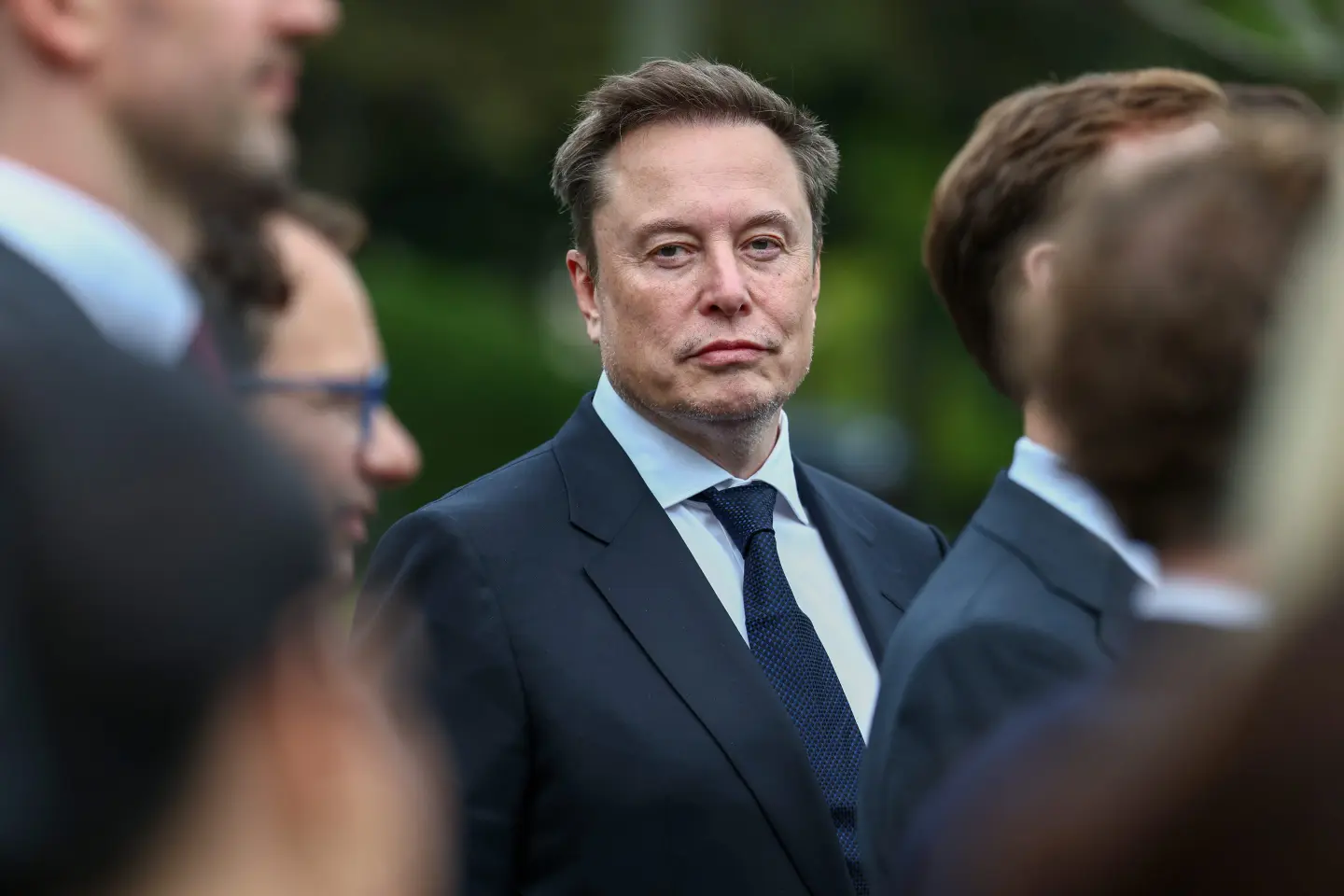
Elon Musk has also highlighted the financial risks facing smaller neocloud operators. In October 2026, Reuters reported his warning that debt markets were becoming increasingly difficult for companies without substantial revenue beyond AI data centers. He predicted that more than 200 neoclouds could fail and consolidate.
This is an important distinction. Having access to GPUs is one thing. Building a financially sustainable business around those GPUs is something entirely different.
Neoclouds Could Die as Competition Intensifies
The possibility that neoclouds could die is becoming a serious consideration as infrastructure costs increase and financing becomes more selective.
The market attracted numerous companies during the AI investment boom. Many entered because demand for GPUs was rising faster than traditional cloud providers could comfortably accommodate. Investors saw an opportunity to finance specialized computing platforms and capture a share of the expanding AI economy.
However, the economics of this business are complicated. GPUs are expensive, new hardware generations can shorten their commercial lifespan, and customers expect competitive pricing. Meanwhile, data center construction, electricity, networking, and cooling create substantial ongoing expenses.
A neocloud that relies entirely on borrowed money to buy GPUs may struggle if customer demand slows or financing costs rise. The situation becomes even more difficult when a company has signed long-term infrastructure commitments without securing equally dependable customer contracts.
Reuters reported on October 27, 2026, that Argentum AI was negotiating a potential $5 billion financing arrangement for additional AI chips. The report also highlighted tightening financing conditions across the neocloud industry.
This is where the market could separate established operators from weaker competitors. Companies with existing data centers, diversified revenue, reliable customers, and manageable debt may be better positioned to survive a difficult financing environment.
The phrase neoclouds could die should therefore not be interpreted as a prediction that the entire industry will disappear. Rather, it reflects the possibility that hundreds of operators will not survive the transition from rapid expansion to financial discipline.
Why Owning Data Centers Could Change the AI Cloud Market
The AI Cloud Market is no longer defined exclusively by who has the most advanced chips. Access to electricity, cooling infrastructure, networking capacity, and suitable physical locations is becoming equally important.
Training large AI models requires enormous computing resources, but inference is creating another significant opportunity. Inference refers to running trained AI models to generate responses, predictions, and other outputs.
As AI applications become more widely adopted, businesses will need reliable computing capacity to serve customers continuously. This creates opportunities for neoclouds that can deliver predictable performance and competitive pricing.
The World Economic Forum discussed this transformation in August 2026, highlighting the growing importance of specialized GPU cloud platforms. Its analysis also pointed to a potential $250 billion neocloud market by 2030.
For neoclouds, this potential growth means the opportunity extends beyond renting GPUs to AI research laboratories. Enterprise customers, governments, software companies and organizations developing their own AI systems could become important sources of long-term revenue.
However, these customers will not necessarily choose providers based on hardware availability alone. Reliability, security, service quality, data governance and contractual flexibility will influence purchasing decisions.
Neoclouds with established physical infrastructure may be better positioned to meet these requirements because they have greater control over how they deliver their services.
The Companies Best Positioned to Survive
The future of neoclouds will depend on execution rather than industry excitement. Companies such as CoreWeave, Nebius, and other specialized GPU cloud providers illustrate the different approaches emerging across this market.
Some operators focus on building large GPU cloud platforms, while others combine computing services with energy development, data center construction, or regional infrastructure strategies.
CoreWeave has established itself as a major specialized GPU cloud provider. Nebius is expanding its AI infrastructure business, while other operators are working to secure power and develop large-scale facilities.
The important consideration is that these companies should not all be evaluated in the same way. A provider with substantial operational infrastructure and long-term customer commitments has a different risk profile than a startup that depends on future financing and third-party facilities.
Investors evaluating neoclouds should focus on actual operating capacity, contracted electricity, customer concentration, debt obligations, and the cost of deploying new hardware.
Another important factor is whether a company can generate revenue from existing infrastructure before committing to another expensive expansion project. Growth without sufficient customer demand can quickly become a financial burden.
The strongest neoclouds will likely balance expansion with operational efficiency. They need enough capacity to attract large customers without building so much infrastructure that unused GPUs damage their margins.
The Relationship Between Neoclouds and Traditional Cloud Giants
Neoclouds don’t necessarily need to replace Amazon Web Services, Microsoft Azure, or Google Cloud to become major players in the AI infrastructure industry.
Traditional hyperscalers have enormous advantages, including established customer relationships, global networks, extensive software ecosystems, and substantial financial resources. They are also investing heavily in their own AI infrastructure.
However, specialized neoclouds can compete by focusing on a narrower set of services. They can optimize their facilities and software for demanding AI workloads instead of supporting every type of cloud computing requirement.
There is also room for partnerships. Hyperscalers may use specialized providers to secure additional GPU capacity, serve specific customers, or expand their infrastructure without building every facility themselves.
This creates an interesting market structure in which neoclouds can compete with traditional cloud providers while also becoming important infrastructure partners.
The opportunity is particularly attractive when AI demand grows faster than a hyperscaler’s internal capacity. In those circumstances, a specialized provider with operational facilities can offer valuable computing resources.
Over time, the relationship may shift from replacing established cloud companies to becoming an essential part of the broader cloud ecosystem.
Real Infrastructure
The next stage of the AI infrastructure market will reward companies that can deliver computing capacity consistently and economically. Announcing a large GPU order or securing an ambitious investment commitment no longer guarantees long-term success.
Neoclouds need operational facilities, dependable power, efficient cooling, strong customer relationships, and financing structures that can withstand market pressure.
This is also why the distinction between owning a data center and merely accessing one deserves closer attention. Physical ownership can provide strategic control, but long-term leases and contracted capacity can also be valuable when they offer dependable power, clear delivery schedules, and commercially sustainable terms.
The real question is not whether every successful neocloud must own every building it uses. It is whether the company controls enough of its infrastructure to deliver services reliably without becoming vulnerable to external suppliers.
Readers following developments through Real Time Billionaires, Tech Insider, and Mid Insider may notice that the conversation around AI wealth and technology is increasingly tied to the companies that control physical computing resources.
The future winners will probably not be the companies with the biggest marketing budgets or the most impressive announcements. They will be the operators that can turn expensive infrastructure into dependable revenue.
Neoclouds with real data centers, secure electricity, and strong financial foundations can inherit a meaningful share of the AI cloud market. Others may struggle to survive as capital becomes more selective and competition intensifies.
The AI cloud opportunity remains enormous, but the industry is entering a more demanding phase. Infrastructure, execution, and financial discipline will determine which neoclouds become long-term market leaders and which ones disappear.