

Some mysteries become famous because investigators cannot explain what happened. Others capture the public imagination because the truth is disturbing enough, yet still leaves people wondering how every piece fits together. The death of Elisa Lam at the Cecil Hotel in Los Angeles belongs to the second category.
In January 2013, Elisa Lam was a 21-year-old Canadian student traveling alone in California. Within weeks, her disappearance would become international news. A strange elevator recording, a desperate police search, and the discovery of her body inside a rooftop water tank transformed an ordinary missing person investigation into one of the internet’s most discussed true crime cases.
- A Young Traveler Disappears in Los Angeles
- The Elisa Lam Elevator Video That Haunted the Internet
- Inside the Cecil Hotel’s Dark History
- The Disappearance Takes a Terrifying Turn
- The Elisa Lam Autopsy and Cause of Death
- How Did Elisa Lam Get Inside the Water Tank?
- Elisa Lam Conspiracy Theories
- The LAPD Investigation and the Questions
- The Cecil Hotel Mystery
- What Elisa Lam’s Death Teaches Us About True Crime
- The Final Truth Behind the Elisa Lam Cecil Hotel Mystery
The story of Elisa Lam and the Cecil Hotel is often presented as a supernatural puzzle or an unsolved murder. But the documented evidence tells a more complicated story, one that involves a young woman whose final days remain deeply unsettling, a hotel with a troubling reputation, and a public desperate to find answers.
To understand the Cecil Hotel mystery, we must separate what investigators established from what the internet imagined.
A Young Traveler Disappears in Los Angeles
Elisa Lam arrived in Southern California in January 2013, traveling from Vancouver, British Columbia. She was exploring the West Coast on her own, sharing parts of her journey online and keeping in contact with her family.
On January 28, she checked into the Cecil Hotel in downtown Los Angeles, a budget accommodation that had operated for decades. The property was also known as the Stay on Main, a name associated with its more budget friendly lodging.
At first, there was nothing about her trip that suggested it would end in tragedy. She was a young traveler visiting a major American city, with plans to continue her journey north.
Then January 31 arrived.
Elisa was expected to check out and continue traveling, but her family could no longer reach her. The calls and messages that had helped reassure them during her trip stopped. When she failed to return to their lives as expected, concern turned into fear.
Her family reported her missing, and the Los Angeles Police Department began investigating her disappearance.
Searches and appeals for information followed. Investigators needed to establish where Elisa had gone, whom she had encountered, and whether anyone had seen her after she was last known to be alive.
Then police released a piece of surveillance footage that would change the case forever.
The Elisa Lam Elevator Video That Haunted the Internet
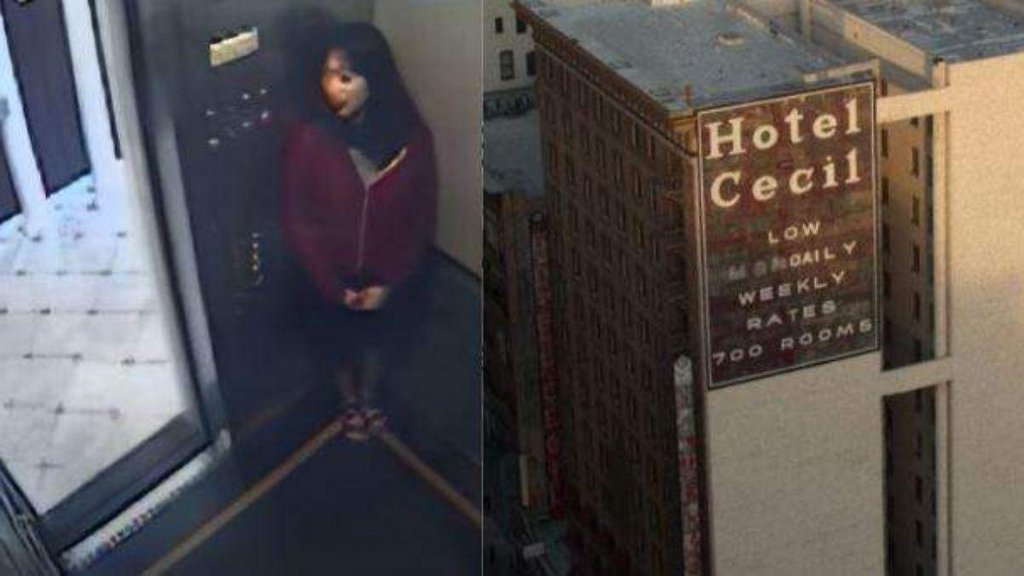
The Elisa Lam elevator video remains the most recognizable element of the case. Recorded inside the Cecil Hotel, the footage shows Elisa entering an elevator and pressing several buttons. She looks into the hallway, steps partly outside, retreats into the elevator, and makes a series of unusual hand movements.
At moments, she appears to be watching something beyond the camera’s view. At others, she moves in and out of the elevator as though uncertain whether to leave.
The doors remain open for stretches of the recording, and Elisa eventually walks away.There is no clear explanation within the video itself for what she was doing.That absence of context made the recording especially unsettling.
Viewers could see her movements, but they could not hear her thoughts, know what she was experiencing, or establish what had happened immediately before the camera began recording.
The Elisa Lam elevator footage spread rapidly online after police released it in an effort to find information about her disappearance. People watched it repeatedly, slowed it down, examined individual frames, and developed competing interpretations.
Some believed she was frightened by someone in the hallway. Others suggested she was trying to hide from an unseen person. More extreme theories claimed that the recording showed evidence of paranormal activity.
Yet the footage does not establish any of those explanations.
It documents unusual behavior, not the reason behind it. Without reliable evidence about what Elisa perceived or experienced at that moment, viewers cannot determine whether she was responding to something real, experiencing confusion, or dealing with a medical crisis.
The video became famous because it appeared to show a private moment of distress. Its greatest limitation was also its most important feature: it could not explain that distress.
Inside the Cecil Hotel’s Dark History
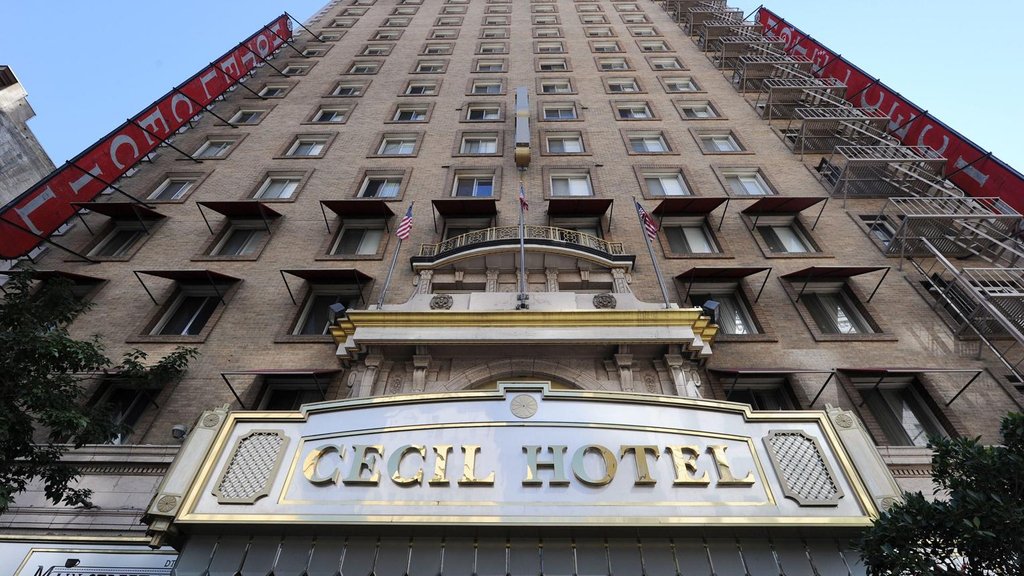
To understand why the disappearance attracted such intense attention, it helps to understand the place where Elisa spent her final days.
The Cecil Hotel opened in 1927 in downtown Los Angeles. Over the decades, it became associated with poverty, crime, deaths, and other disturbing incidents. Its location near Skid Row placed it in a neighborhood facing longstanding economic hardship and homelessness.
The hotel’s reputation grew through years of reported incidents and sensational accounts. By the time Elisa checked in, the building already carried an unsettling public image.
That history became inseparable from the investigation.
When the Elisa Lam death story reached a worldwide audience, the Cecil Hotel was no longer simply the location of a missing person case. It became a character in the narrative, a building that seemed to offer a sinister explanation for an event that otherwise made little sense.
The hotel’s history helped explain why people were willing to entertain supernatural theories. A disappearance inside a notorious building was more compelling to many viewers than an ordinary tragedy involving a vulnerable traveler.
But a disturbing reputation is not evidence of a connection between separate events. The Cecil Hotel’s past could shape public perception, yet it could not establish what happened to Elisa.
The real mystery was not whether the building had a dark history. It was how Elisa reached the place where she was eventually found, and what led to her death.
The Disappearance Takes a Terrifying Turn
For nearly three weeks, Elisa’s whereabouts remained unknown. Her family waited for answers while investigators tried to reconstruct her final movements.
The case took a disturbing turn when hotel guests began complaining about low water pressure. Some also reported unusual changes in the water. What initially appeared to be a maintenance problem would lead to a discovery that transformed the investigation.
On February 19, 2013, a hotel maintenance worker went to the rooftop to inspect the building’s water tanks.
Inside one of them, he found Elisa Lam’s body.
The discovery was shocking not only because of where she had been found, but because the hotel had already been the center of an extensive search. Investigators had examined the property during the missing person investigation, yet the water tank had not revealed its terrible secret until the maintenance worker inspected it.
Elisa had been missing for weeks. Now investigators faced a different question. How had a young woman entered a rooftop water tank, and what had happened between the last known sighting and her death?
The Elisa Lam water tank discovery immediately drew worldwide attention. News reports described the unusual circumstances, while online communities began assembling their own timelines and explanations.
The location seemed almost impossible to reconcile with the elevator recording. How had Elisa moved from the hotel elevator to the roof? Why had she gone there? And had anyone else been involved?
At this stage, investigators still needed forensic evidence before they could determine the cause and manner of death. The strange location alone could not establish whether the death was accidental or criminal.
The answers would take months to emerge.
The Elisa Lam Autopsy and Cause of Death
The initial uncertainty surrounding Elisa Lam’s death made the investigation especially difficult. An autopsy was performed, but investigators needed toxicology results and other findings before reaching a conclusion.
In June 2013, the Los Angeles County coroner ruled that Elisa had died from accidental drowning. Bipolar disorder was listed as a significant contributing condition. The examination found no visible signs of physical trauma, and toxicology results did not identify drugs that contributed to her death.
The Elisa Lam autopsy findings were important because they offered a documented explanation for her death without supporting the more sensational claims circulating online.
However, the official cause of death did not provide a complete account of every moment leading up to it.
Investigators considered her medical history and evidence that she had not been taking her prescribed medication as directed. Her condition may have affected her perception and behavior, but it is important not to treat a diagnosis as a complete explanation for everything that happened.
Bipolar disorder does not automatically cause a person to behave in the manner seen in the elevator recording, nor does the diagnosis alone establish what Elisa was thinking when she entered the water tank.
The medical findings supported the coroner’s conclusion. They did not provide a recording of her final moments or a definitive account of how she reached the rooftop.
This distinction is central to understanding the case. The cause of death was officially determined, even though some circumstances surrounding it remained difficult to reconstruct.
How Did Elisa Lam Get Inside the Water Tank?
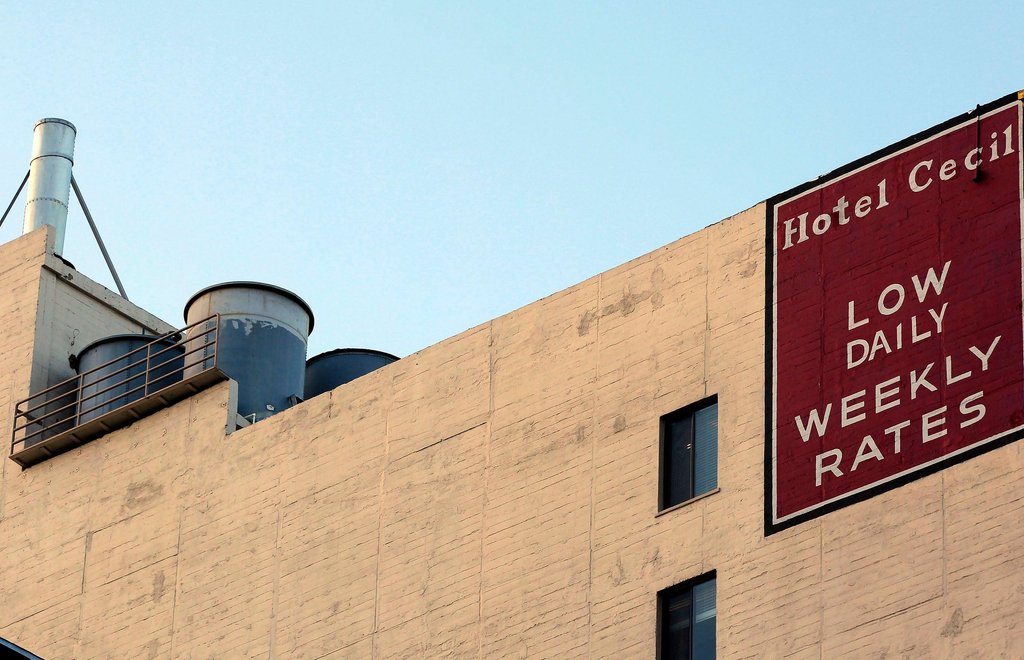
The rooftop water tank remains one of the most disturbing elements of the story because its location raises practical questions.
The Cecil Hotel’s rooftop was not an ordinary guest area. Investigators initially described access through a locked door and a fire escape. Reports also discussed an alarm associated with the rooftop door. The water tanks themselves had removable hatches.
These details created an apparent contradiction. If access to the roof was restricted, how did Elisa reach it without being noticed?
The answer may involve a route that was not secured in the way people assumed. The building’s fire escape provided another potential means of access, and the tank hatch was not locked. These facts help explain why entering the rooftop area was not necessarily impossible, although they do not establish Elisa’s exact movements.
The physical circumstances are unsettling enough without adding unsupported claims.
There is also a difference between showing that a person could access a location and proving precisely how that person arrived there. Available evidence does not allow every movement to be reconstructed with certainty.
The same applies to the question of why she entered the tank. Investigators considered the possibility that she was experiencing a serious episode involving fear and confusion. That interpretation is consistent with aspects of the evidence, but no one can know every thought or sensation she experienced.
The water tank mystery persists because people want a single, complete sequence of events. The evidence provides a broad explanation, but not an eyewitness account of the final moments.
Elisa Lam Conspiracy Theories
As the case spread across the internet, speculation expanded far beyond the available evidence.
Some people proposed that Elisa had been murdered and that the elevator recording concealed the identity of another person. Others suggested supernatural involvement, paranormal forces, or elaborate connections between the hotel’s history and her death.
The theories differed, but they shared one assumption: that the official findings could not account for what happened.
The Elisa Lam conspiracy theories became popular partly because the case contained several elements that seemed to resist easy understanding. There was an unusual video, an inaccessible-seeming location, a lengthy disappearance, and a body found in a place most guests would never expect.
When information is incomplete, people naturally search for patterns. Online discussions can turn those patterns into elaborate stories, especially when thousands of people examine the same footage and reinforce one another’s interpretations.
But repetition does not make a theory evidence.
There is no established evidence that paranormal activity caused Elisa’s death. The elevator footage does not prove that she was being chased, and the hotel’s history does not demonstrate that someone committed a crime against her.
The early investigation did consider the possibility of foul play. That was a reasonable question to investigate given the circumstances. The subsequent coroner’s ruling, however, classified the death as accidental, and the published findings did not establish a homicide.
A responsible account must preserve that distinction. It is possible to acknowledge unanswered questions without treating every imagined answer as equally credible.
The most compelling aspect of this case is not that it proves something supernatural occurred. It is that a documented human tragedy became the center of a story that millions of people wanted to solve.
The LAPD Investigation and the Questions
The Los Angeles Police Department’s investigation began as an effort to locate a missing young woman. Releasing the elevator footage was part of the appeal for public assistance, not an invitation to construct supernatural explanations.
The discovery of Elisa’s body changed the direction of the case. Investigators examined the circumstances, considered the possibility of foul play, and worked with the coroner’s office to establish the cause of death.
The resulting findings did not support a homicide determination.
Yet several questions continued to attract public attention. The exact route Elisa took to the roof was difficult to establish. Her motivation for entering the water tank could not be confirmed through direct testimony. And the elevator footage offered no conclusive explanation for her behavior.
These gaps have helped sustain the Elisa Lam unsolved mystery label across websites, videos, and documentaries. Strictly speaking, however, calling the death an unsolved murder would be misleading. The coroner determined that the death was accidental. What remains uncertain is the precise sequence of events that led to that outcome.
That distinction matters because an investigation can reach an official conclusion without answering every conceivable question.
It also matters to Elisa’s family. The public’s appetite for speculation should not overshadow the reality that a young woman died during what was supposed to be a journey through California.
The Cecil Hotel Mystery
The Elisa Lam Cecil Hotel case became much more than a news story. It grew into a cultural phenomenon, inspiring countless videos, discussions, podcasts, and the Netflix documentary series Crime Scene: The Vanishing at the Cecil Hotel.
Each retelling brought the case to a new audience. The elevator recording remained the centerpiece, while the rooftop tank and the hotel’s history gave the story its distinctive atmosphere.
But repeated exposure also changed how people understood the tragedy.
Elisa increasingly became a figure in an internet mystery rather than a person with a family, a medical history, and a life that extended beyond the final days of her trip. The video was replayed so often that viewers could forget the distressing reality behind it.
The Cecil Hotel’s dark history provided a ready-made backdrop for theories about evil, hidden crimes, and paranormal events. The more the story was told, the easier it became to confuse the hotel’s reputation with evidence about Elisa’s death.
This is one reason the case deserves a careful retelling. A compelling narrative does not need to exaggerate the facts. The real events are already deeply unsettling.
A young traveler disappeared. Her final known movements were recorded but not understood. Her body was found in a place that raised serious questions. Investigators established an accidental cause of death, yet the precise circumstances remained difficult to reconstruct.
That is a powerful story without inventing a killer or claiming that the supernatural played a role.
What Elisa Lam’s Death Teaches Us About True Crime
The enduring interest in Elisa Lam’s death reveals something about how people respond to uncertainty.
When a case contains missing information, audiences often feel compelled to fill the gaps. A video becomes a clue. A building becomes a suspect. A coincidence becomes a possible connection. Before long, an explanation can feel convincing simply because it makes the story more dramatic.
Responsible true crime writing requires a different approach.
It begins with the available records and distinguishes confirmed findings from interpretations. It recognizes that unusual behavior does not, by itself, prove criminal activity. It also treats mental health with care, avoiding the suggestion that a diagnosis makes a person dangerous or that it explains every action.
Most importantly, it remembers the person at the center of the story.
Elisa Lam was not simply the woman in the elevator video. She was a young woman traveling alone whose life ended in tragic circumstances. Her death deserves to be discussed with accuracy and compassion rather than reduced to a puzzle designed to entertain strangers.
For readers exploring the case, the most useful approach is to compare claims against reliable reporting and the published coroner’s findings. When a video presents a dramatic new theory, ask whether it introduces verifiable evidence or merely offers a different interpretation of the same images.
That simple distinction helps separate genuine investigation from speculation.
The Final Truth Behind the Elisa Lam Cecil Hotel Mystery
More than a decade after Elisa Lam disappeared, the elevator footage still unsettles viewers. The image of her moving in and out of the elevator remains difficult to forget, and the discovery of her body inside the rooftop tank continues to raise questions about her final movements.
The official findings, however, are clear on the central medical conclusion. Elisa Lam died from accidental drowning, with bipolar disorder recorded as a significant contributing condition. Investigators did not establish that she had been murdered or that paranormal forces were involved.
The remaining uncertainty concerns the precise circumstances that brought her to the tank and what she experienced in those final moments.
Perhaps that is why the story continues to draw people in. It offers no dramatic confession, no confirmed hidden conspiracy, and no definitive explanation for every movement captured on camera. Instead, it leaves a painful gap between what the evidence establishes and what the public wants to know.
The darkest secret of the Cecil Hotel may not be a supernatural force or an undiscovered criminal plot. It may be the uncomfortable reality that a tragedy can be investigated, an official conclusion can be reached, and some questions can remain unanswered.
Elisa Lam’s story deserves to be remembered not only because of its mystery, but because there was a real person behind it. The footage may keep circulating, and the theories may never disappear entirely. Neither changes the facts of her death or the importance of treating her memory with dignity.