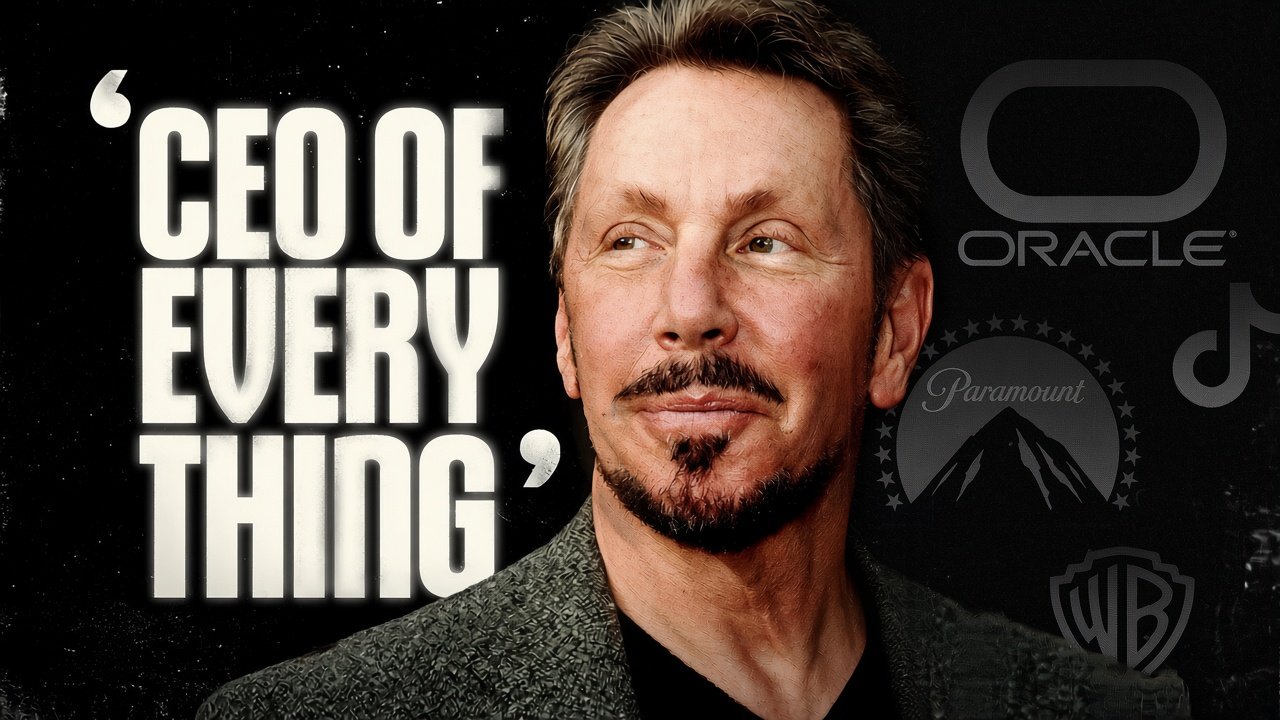

Corporate dictator Larry Ellison built Oracle not by asking permission, but by making the world accept his terms. He turned a small database software company into a global technology empire through aggression, fear, ambition, and an almost obsessive refusal to lose. His story is not a comfortable one. It is the story of a man who believed greatness required dominance and often treated people, rivals, and even customers as obstacles on the road to victory.
Larry Ellison co-founded Oracle in 1977 and served as its chief executive until 2014. Today, he remains executive chairman and chief technology officer of the company he created. But the numbers only explain part of his legacy. The rest lies in the culture he built around himself: intense, brilliant, combative, and frequently unforgiving.
The Making of a Ruthless Founder
Larry Ellison was born in New York in 1944 and raised in Chicago by his aunt and uncle after his mother gave him up for adoption. He came from no privilege, connections, or polished corporate background. That early experience shaped him. He learned early that the world did not owe anyone security, recognition, or a second chance.
Before Oracle, Ellison worked in technology roles, including at Ampex, where he became involved in a CIA project. That project, later connected to the development of a database system, helped inspire the software that would become Oracle. In 1977, Ellison co-founded Software Development Laboratories with Bob Miner and Ed Oates. The company later became Oracle Corporation.
What separated Ellison from many other founders was not simply technical knowledge. It was conviction. He saw relational databases as the future of enterprise computing before most businesses fully understood what that meant. He did not wait for the market to arrive. He tried to force it into existence.
The Birth of Oracle’s Empire
Oracle’s early success came from selling a powerful idea: companies needed a reliable way to store, organize, and retrieve enormous amounts of information. Ellison understood that data would become the backbone of modern business. Banks, governments, airlines, retailers, and corporations would all need software that could manage complex records at scale.
He was right.
Under his leadership, Oracle became one of the world’s most important enterprise software companies. Its database products became deeply embedded in major organizations’ systems. For decades, Oracle was not just another technology vendor. It was infrastructure. If Oracle failed, entire corporate systems could fail with it.
That reality gave Ellison extraordinary leverage. He did not merely sell software. He sold dependence.
A Culture Built Around Winning
The phrase “corporate dictator Larry Ellison” did not appear because Ellison ran Oracle like a quiet administrator. It appeared because he built a company where winning was the central religion.
Ellison demanded excellence, speed, and loyalty. He admired confidence and often rewarded people who shared his competitive instincts. Oracle became famous for hiring aggressive salespeople and pushing them to close deals at almost any cost. The company’s internal culture reflected its founder: ambitious, sharp, confrontational, and intensely results-driven.
That approach was brilliant. Oracle moved quickly. It took risks. It challenged larger rivals, including Microsoft and IBM, at moments when many companies would have chosen safety. Markets change fast, and the company that waits for certainty often loses the future.
But the same culture had a dark side.
The Cost of Absolute Control
Ellison’s leadership style produced admiration and resentment in almost equal measure. Former employees and business writers have described Oracle as a place where talented executives could rise quickly, then disappear just as quickly if they challenged the founder or failed to meet expectations. A New York Times review of a book about Oracle described Ellison as someone with little patience for executives who challenged him, and who removed many capable people from the company’s upper ranks.
This was not ordinary tough management. It was control exercised through personality, fear, and the knowledge that Ellison sat at the center of everything.
Oracle’s aggressive sales culture also created serious problems. In the early 1990s, the company faced a major crisis tied to practices that encouraged customers to buy large amounts of software upfront. Oracle laid off roughly 10 percent of its workforce, about 400 people, as the company struggled with financial and operational trouble.
The lesson was uncomfortable but clear. A company can grow through pressure, but if pressure replaces judgment, it eventually creates chaos.
The Sales Machine and Its Consequences
Oracle became known for selling hard. Very hard.
Customers and former employees have alleged that Oracle sometimes overstated what its products could do during sales presentations, leaving buyers with software that did not perform as promised. Whether every accusation was fair, the broader point remains important. When a company becomes obsessed with closing deals, it risks confusing revenue with trust.
Ellison’s genius was understanding power. His weakness was that power can make leaders believe their own narrative. Oracle’s reputation suffered at times because the company appeared more focused on defeating competitors than serving the people who paid for its products.
That is the central contradiction of Ellison’s career. He built one of the most important software companies in history, yet his methods often made Oracle feared rather than loved.
The Billionaire Who Refused to Blend In
Ellison was never a billionaire. He lived loudly. He bought yachts, collected real estate, pursued aviation, and embraced a lifestyle that made ordinary Silicon Valley wealth look restrained. Britannica notes that he became known for aggressive business tactics and conspicuous spending, and was long viewed as one of Silicon Valley’s most divisive figures.
That image mattered. Ellison did not want to be seen as a typical executive. He wanted to be seen as a force. His public persona reinforced the idea that Oracle was not a polite company. It was a company built to dominate.
In many ways, Ellison turned himself into a brand. The confidence, the swagger, the willingness to attack rivals publicly, and the refusal to apologize for ambition all became part of Oracle’s identity.
The Genius Behind the Dictator Label
Calling Ellison a corporate dictator is not simply an insult. It also describes how he operated.
He centralized vision. He shaped culture. He made decisions that defined the company’s direction for decades. Employees did not merely work for Oracle; in many cases, they worked within Larry Ellison’s gravitational field.
That concentration of power produced extraordinary results. Oracle survived crises, reinvented parts of its business, expanded into cloud computing, and remained a major force in enterprise technology long after many rivals faded. Ellison’s ability to keep Oracle relevant for so long shows his leadership wasn’t empty aggression.
But concentrated power also carries a warning. When one person becomes too central to a company, the organization can become an extension of that person’s ego. Success becomes personal. Failure becomes betrayal. Dissent becomes disloyalty.
What Modern Leaders Can Learn
Ellison’s story offers lessons for founders, executives, and anyone trying to build something meaningful.
First, conviction matters. Ellison succeeded because he believed in the future of databases before the market fully agreed. Great leaders often see opportunities before others can explain them.
Second, ambition is not enough without discipline. Oracle’s early crisis showed what happens when aggressive growth outruns operational control. A company needs systems, accountability, and honest internal feedback.
Third, fear can produce short-term performance, but trust produces long-term durability. Ellison built a powerful company, but Oracle’s reputation for ruthlessness followed it for years. Leaders should ask whether their culture creates loyalty or merely compliance.
Finally, dominance is not the same as greatness. Ellison achieved dominance. Whether every decision along the way deserved admiration is a separate question.
The Legacy of Larry Ellison
Larry Ellison stepped down as Oracle’s CEO in 2014 after leading the company for 37 years. Few founders in modern technology have held power over a major corporation for so long. Fewer still have shaped a company’s culture so completely.
His legacy is complicated. He was a visionary who understood the future of enterprise software. He was a fierce competitor who helped make Oracle a global powerhouse. He was also a leader whose methods attracted criticism, damaged relationships, and contributed to a corporate reputation built as much on fear as on innovation.
The phrase “corporate dictator Larry Ellison” captures that contradiction. He was not a dictator because he lacked talent. He was a dictator because he possessed enormous talent, enormous confidence, and little interest in sharing control.
Oracle became stronger because of him. It also became more dangerous, more feared, and more controversial because of him. That is the real Ellison story: a billionaire who proved that one man’s will can shape an empire, but also showed the price an empire pays when one man’s will becomes its law.