
Nvidia Without Jensen Huang can survive, but replacing his influence would be one of the biggest leadership challenges in the technology industry. The company has world-class engineers, a powerful software ecosystem, established customer relationships and a dominant position in AI computing.
However, there is an important distinction between surviving and maintaining its extraordinary growth.
- What happened to Jensen Huang?
- How strong is Nvidia without Jensen Huang?
- Nvidia’s Latest Reported Financial Performance
- Why replacing Jensen Huang is so difficult
- Who is running Nvidia now?
- Nvidia’s biggest risks after Huang’s departure
- Three possible futures for Nvidia
- What technology professionals and investors should watch next
- Frequently asked questions
- Conclusion: Nvidia’s biggest test is just beginning
Huang has spent decades shaping Nvidia’s strategy, technology and culture. His departure could affect everything from product development to investor confidence. The real question is whether Nvidia has become strong enough as an organisation to thrive independently of the person who built it.
Updated: 16 November 2026 | Technology & AI Industry Analysis
What happened to Jensen Huang?
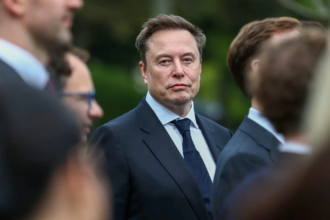
On 11 November 2026, Nvidia’s board accepted Jensen Huang’s resignation as president, CEO and board member, effective immediately. Nvidia publicly announced the transition on 12 November.
The company appointed longtime CFO Colette Kress as interim CEO, while board member Harvey C. Jones became its first independent board chair. A search for a permanent CEO is underway. SEC+1
Huang’s departure followed reports concerning his personal relationships and an alleged foreign intelligence connection. Nvidia’s board initiated an independent investigation into the circumstances. The allegations and their potential legal or regulatory implications should not be confused with established findings of wrongdoing. NVIDIA Newsroom+1
The sudden transition is particularly significant because Huang wasn’t simply a hired executive. He co-founded Nvidia in 1993 and led its transformation from a graphics-chip company into a central supplier of AI infrastructure.
For more than three decades, Nvidia’s leadership identity and technology strategy were closely associated with one person. That relationship has now ended at the executive level.
How strong is Nvidia without Jensen Huang?
Nvidia enters this leadership transition from a position of exceptional financial strength. Its most recently reported quarterly results show that AI infrastructure demand remained extremely strong before Huang’s departure.
Nvidia’s latest reported financial performance
Nvidia’s Latest Reported Financial Performance
Sources: Nvidia Investor Relations | Financial results published February and August 2026.
Sources: Nvidia financial releases, 25 February and 26 August 2026. NVIDIA Investor Relations+1
These figures demonstrate the scale of Nvidia’s existing business, but they do not prove that future growth is guaranteed. The most revealing statistic is the Data Center division’s contribution to quarterly revenue.
Nvidia Q2 FY2027 revenue mix
Data Center accounted for approximately 92.5% of total revenue.
■ Data Center
■ Other businesses
USD billions; calculated from Nvidia’s Q2 FY2027 reported figures. NVIDIA Investor Relations. Approximately 92.5% of Nvidia’s quarterly revenue came from Data Center operations.
This creates an important strategic reality: Nvidia’s future depends more heavily on AI infrastructure spending than on the identity of its CEO alone.
Even an excellent replacement cannot prevent a downturn in AI investment. Equally, strong customer demand could help Nvidia maintain growth during an imperfect leadership transition.
Why replacing Jensen Huang is so difficult
1. Huang connected engineering with long-term strategy
Huang’s most important contribution wasn’t simply recognising that AI would become a major market. It was positioning Nvidia to supply the computing infrastructure required to build and run increasingly sophisticated AI models.
That strategy involved years of investment in GPUs, software, networking and integrated computing systems. CUDA, Nvidia’s parallel computing platform, is a particularly important example.
Developers have built applications and workflows around CUDA for years. Its libraries, programming tools and optimisation capabilities create substantial switching costs.
Replacing a GPU supplier can therefore involve much more than purchasing a different chip. Companies may need to adapt software, retrain engineers, validate performance and rebuild deployment pipelines. Huang helped establish this long-term platform strategy. Nvidia’s next CEO must preserve its advantages while responding to changing AI workloads.
2. He was a major relationship builder
Nvidia’s business depends on relationships with cloud providers, chip manufacturers, AI developers, governments and enterprise customers.
These relationships affect manufacturing capacity, infrastructure investments and access to international markets.
Huang was closely involved in communicating Nvidia’s technology roadmap and strengthening relationships with major customers.
Following his departure, Elon Musk warned that Nvidia could lose important business opportunities without its former CEO. That is a stakeholder’s assessment, not proof that particular contracts will be lost. Reuters+1
The challenge for Nvidia is to transfer trust from Huang personally to the company’s wider leadership team.
3. He helped shape Nvidia’s engineering culture
Nvidia’s competitive advantage depends on more than semiconductor designs. Its engineering teams must coordinate hardware architecture, networking, software libraries, systems integration and product releases.
That requires consistent technical priorities and rapid decision-making. A new CEO who introduces unnecessary bureaucracy or changes technical direction too frequently could weaken execution.
Conversely, a more distributed leadership model might reduce dependence on one executive and make the organisation more resilient. The outcome depends on how effectively Nvidia preserves technical authority during the transition.
Who is running Nvidia now?
Colette Kress, Nvidia’s CFO since September 2013, is serving as interim CEO while retaining her finance responsibilities.
Before joining Nvidia, she held senior finance positions at Microsoft and Cisco. Her long tenure gives her extensive knowledge of Nvidia’s operations, financial structure and customer relationships. NVIDIA Newsroom+1. Kress offers continuity at a time when customers and investors need reassurance.
However, financial leadership and long-term semiconductor technology leadership are not identical responsibilities. The permanent CEO will need to make difficult decisions involving chip architecture, AI systems, research investment, manufacturing partnerships and competition.
An effective succession strategy may therefore involve a CEO with strong business capabilities supported by technically authoritative engineering leaders.
Nvidia’s board has confirmed that it will consider both internal and external candidates. No permanent successor had been announced as of 16 November 2026. NVIDIA Newsroom
Nvidia’s biggest risks after Huang’s departure
Competition from AMD and custom AI chips
Nvidia competes in a market where customers increasingly want alternatives to expensive, power-intensive AI infrastructure.
AMD develops competing AI accelerators, while major cloud providers invest in custom silicon designed for their own workloads.
For large AI operators, the relevant comparison isn’t simply GPU performance. It is the total cost of producing useful results, including hardware, power, networking, memory, software development and maintenance.
If competing platforms deliver better economics for specific inference workloads, Nvidia could face pricing pressure even while overall AI demand continues to grow.
The next CEO must defend Nvidia’s full computing platform rather than relying exclusively on its existing GPU leadership.
Customer concentration and AI spending
Nvidia’s strong Data Center revenue also creates exposure to large infrastructure customers. If major cloud providers reduce capital expenditure, extend hardware replacement cycles or shift more workloads to internally designed accelerators, Nvidia could experience slower growth.
The key distinction is between a temporary reduction in orders and a permanent change in customer technology preferences.
Investors should monitor both.
Manufacturing and supply-chain complexity
Nvidia relies on external manufacturing and packaging partners to deliver advanced processors and complete computing systems. The company cannot independently control every part of semiconductor production.
Any disruption involving foundry capacity, advanced packaging, high-bandwidth memory or international trade restrictions could affect deliveries. These risks existed before Huang’s resignation and remain significant regardless of who becomes CEO.
Investor confidence and governance
Leadership uncertainty has already contributed to concerns about Nvidia’s valuation.
Reuters reported on 16 November that Nvidia’s market valuation had fallen from approximately $5.8 trillion in early October to around $3.9 trillion amid broader AI-market weakness and the leadership crisis. This change should not be attributed solely to Huang’s departure. Reuters
Investors are now evaluating two separate questions: whether Nvidia’s business remains strong and whether the company deserves the same valuation premium without its founder. The board’s handling of succession, governance and disclosure will influence the second question.
Three possible futures for Nvidia
Nvidia’s future is not a simple choice between continued dominance and collapse. Three scenarios deserve consideration.
Scenario 1: Successful transition
Nvidia appoints a technically credible CEO, retains key engineers and delivers its next-generation AI platforms on schedule. Customer demand remains strong, and the company continues expanding its software and infrastructure ecosystem.
Potential outcome: Nvidia maintains its leadership position despite losing Huang.
Scenario 2: Strong business, slower growth
Nvidia maintains customer relationships and executes its existing roadmap, but competitors gain ground and AI infrastructure spending normalises.
Potential outcome: Nvidia remains profitable and strategically important, although its growth rate and valuation decline.
Scenario 3: Strategic disruption
Leadership uncertainty causes senior engineering departures, delays important products or weakens relationships with major customers. Competitors exploit the transition.
Potential outcome: Nvidia loses market share and faces sustained pressure on revenue growth and margins.
These are analytical scenarios, not forecasts with assigned probabilities. The evidence available today is insufficient to determine which will occur.
What technology professionals and investors should watch next
The most useful way to evaluate Nvidia without Jensen Huang is to track measurable business outcomes rather than leadership headlines alone.
| Indicator | What to look for | Why it matters |
|---|---|---|
| CEO appointment | Technical expertise and strategic continuity | Tests succession quality |
| Product roadmap | Blackwell and Rubin delivery milestones | Measures execution |
| Gross margins | Sustained margin pressure | Signals pricing or cost challenges |
| Data Center growth | Sequential and annual trends | Measures AI demand |
| Customer spending | Cloud capital expenditure and chip purchases | Reveals future demand |
| Engineering retention | Senior departures and organisational changes | Tests leadership stability |
A practical five-step evaluation
- Review Nvidia’s next earnings report. Its fiscal Q3 2027 results are scheduled for 17 November 2026, making this the first major financial update following the leadership change. NVIDIA Newsroom
- Separate inherited performance from new leadership decisions. Revenue reported immediately after a CEO change largely reflects earlier contracts, demand and execution.
- Compare product performance using real workloads. Evaluate throughput, latency, memory capacity, energy consumption and total cost of ownership instead of marketing benchmarks alone.
- Watch software compatibility. For engineering teams considering alternative accelerators, measure migration costs alongside hardware savings.
- Reassess after several quarters. A successful leadership transition should eventually become visible through product delivery, customer retention and financial performance.
For enterprises building AI infrastructure, the immediate response should be measured. Huang’s resignation alone is not a technical reason to abandon CUDA or existing Nvidia deployments.
However, organisations planning large, multiyear investments should benchmark alternative hardware and maintain portability where economically practical.
Frequently asked questions
Has Jensen Huang officially left Nvidia?
Yes. Nvidia confirmed his resignation as president, CEO and board member in November 2026. Colette Kress is serving as interim CEO. NVIDIA Newsroom+1
Can Nvidia survive without Jensen Huang?
Yes. Nvidia has substantial financial resources, established technology platforms, experienced employees and major customer relationships. Its biggest challenge is maintaining long-term strategic leadership and execution without its founder.
Who will replace Jensen Huang permanently?
No permanent successor had been announced as of 16 November 2026. Nvidia’s board is evaluating internal and external candidates.
Will Nvidia stock recover after Huang’s departure?
A recovery is possible, but not guaranteed. Future stock performance will depend on earnings, growth expectations, competitive developments, governance and broader market conditions. Strong operating results do not automatically guarantee a higher share price.
Could AMD overtake Nvidia?
AMD could gain share in particular AI computing segments. Overtaking Nvidia across hardware, networking, software and integrated systems would be a much broader challenge. Nvidia’s software ecosystem remains an important competitive advantage.
Will Nvidia stop developing AI chips?
There is no announced plan to stop AI chip development. Nvidia’s board has stated that it expects existing operations, customer commitments and the technology roadmap to continue without interruption. That is a management commitment, not a guarantee against future delays. NVIDIA Newsroom
Conclusion: Nvidia’s biggest test is just beginning
Nvidia is capable of surviving without Jensen Huang. Whether it can sustain its extraordinary competitive position is a more difficult question.
Huang leaves behind a company with enormous financial strength, sophisticated technology and an established position in global AI infrastructure. Those advantages do not disappear with a CEO’s resignation. But neither do they guarantee continued dominance.
Nvidia must demonstrate that its innovation, customer relationships and strategic decision-making are institutional strengths rather than capabilities dependent on one individual. The next several quarters will reveal whether Nvidia has successfully made that transition.
For technology experts, the most important signal won’t be who wears the black leather jacket at the next keynote. It will be whether Nvidia continues delivering competitive computing systems that customers want to buy.