
If you have spent any time on social media lately, you have probably seen someone wearing Ray-Ban Meta glasses, snapping photos, recording video, or asking Meta AI to identify a landmark, translate a menu, or read a label out loud. They look like ordinary sunglasses; they livestream to Instagram, and they can answer questions about whatever you are looking at. That combination is exactly why so many people are asking the same question: are Ray-Ban Meta glasses a privacy risk, and if so, how big of one?
I have tested wearable tech for years, and I have talked to enough privacy researchers, security professionals, and everyday users to know that the honest answer is not a simple yes or no. Ray-Ban Meta smart glasses collect different types of data depending on what you are doing with them, which settings you have enabled, and even which country you live in. Some of that data stays on your device.
Some of it gets uploaded to Meta’s servers and, in certain cases, reviewed by human contractors. Understanding the difference matters if you want to use these glasses without handing over more of your life than you intended. This guide breaks down exactly what Ray-Ban Meta glasses collect, when they collect it, and what you can actually do to limit it.
Do Ray-Ban Meta Glasses Record Everything You See?
No. This is probably the most common misconception I run into. People assume that because the glasses have a camera built into the frame, Meta must be watching a live feed of everything the wearer looks at. That is not how it works.
Ray-Ban Meta glasses only capture a photo or video when you actively trigger the camera, whether that is by pressing the capture button, using a voice command, or turning on the autocapture feature that snaps photos automatically at set intervals. Outside of those moments, the camera is not recording or transmitting anything.
Meta has stated that unless you choose to share captured media with the company or with other people, that footage stays on your device rather than being uploaded automatically. That is an important distinction, because it means simply owning a pair of Ray-Ban Meta glasses does not put you under constant surveillance by Meta.
What Happens If You Turn On Cloud Media Storage?
Here is where things get more nuanced. Ray-Ban Meta glasses offer an optional cloud media storage setting. If you turn it on, every photo and video you capture is automatically uploaded to Meta’s servers and kept there for about thirty days.
This setting is not just a convenience feature you can ignore. Several popular capabilities depend on it, including the ability to share captures with friends through voice commands and the autocapture feature many users rely on for hands-free photography. So while cloud storage is technically optional, plenty of people end up enabling it to get the full experience out of their Ray-Ban Meta smart glasses.
The good news is that deleting a photo or video from your gallery in the Meta AI app also removes it from Meta’s cloud. Meta also says it does not use the content of your photos or videos to train its AI models or serve you targeted ads, regardless of whether cloud storage is switched on. You can check and adjust this setting inside the Meta AI app under Settings, then Glasses, then Glasses privacy, then Cloud media.
How Does Meta AI Change the Privacy Equation?
This is where I think most Ray-Ban Meta glasses owners underestimate what is actually happening. When you use a Meta AI feature that relies on the camera, such as asking the assistant to identify an object or using Live AI to get real-time information about your surroundings, your glasses capture an image for the AI to analyze. That image is not saved to your regular camera roll, but Meta stores it.
What surprised me most in researching this is that algorithms do not just process these AI captures. Meta has confirmed that third-party contractors sometimes review and label this content to help improve the AI system’s accuracy. Meta says it applies filters intended to protect personal information and prevent identifying details from being seen by reviewers, but the company does not make this review process obvious to users in the moment they are asking a question.
That matters a lot for people who use Ray-Ban Meta glasses for accessibility purposes, such as blind or low vision users who rely on Live AI to describe their surroundings throughout the day. These are exactly the situations where the camera might capture something sensitive, like a private document, a medical form, or the inside of someone’s home. If you fall into this group, it is worth being intentional about when you activate AI features and avoiding them around anything you would not want a stranger to see potentially.
Are Voice Commands With Ray-Ban Meta Glasses Private?
Not by default, and this is another area where the privacy picture has shifted over time. Every time you talk to Meta AI through your glasses, the device records your voice and generates a transcript, which is then saved to Meta’s systems. At one point, US users could opt out of having these voice recordings stored in the cloud. That option no longer exists for people in the United States, though users in the European Union can still opt out thanks to stronger regional privacy regulations.
Meta says it uses a mix of machine learning and human reviewers to process these voice interactions, explaining that human review helps catch cases where the AI misunderstands what was said. The company also acknowledges that its glasses occasionally record short audio clips by accident, when the device mistakenly thinks it heard its wake phrase. Meta calls these false wakes and says it removes them from its systems within ninety days of detection.
You are not completely powerless here. You can manually review and delete your voice recordings inside the Meta AI app by going to Settings, then Glasses, then Glasses privacy, then Voice activity log. Most people who check this log are surprised by how many entries show up, even if they rarely talk to their glasses on purpose.
Can Someone Use Ray-Ban Meta Glasses to Secretly Record You?
This is arguably the biggest privacy concern surrounding Ray-Ban Meta glasses, and it does not involve Meta’s servers at all. It involves other people wearing the glasses around you.
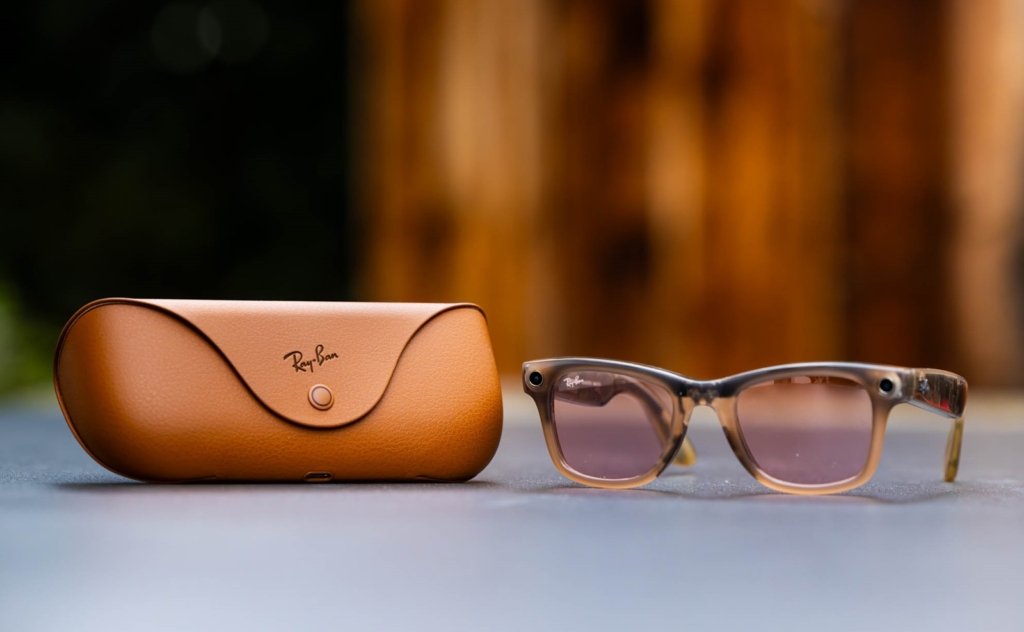
By design, the glasses have a small LED indicator light that turns on when a photo is taken and blinks during video recording. That light exists specifically so bystanders know when they are being filmed. In theory, this makes covert recording difficult.
In practice, people have found workarounds. There is a small but active market for stickers, covers, and other accessories designed to obscure the LED without triggering the software that detects tampering. Some people have gone further, physically damaging the light with tools so it can never turn on. I have covered cases where cheap adhesive stickers were enough to defeat the safeguard, which tells you the system is far from foolproof.
Meta has responded by pushing software updates that turn off the camera entirely if the system detects the LED has been physically tampered with, and Instagram has banned accounts that posted videos showing people misusing modified glasses to record others without consent. Even so, enforcement is reactive rather than preventative, meaning the company is chasing bad behavior after it happens rather than stopping it before it starts.
If you spend time in public spaces, gyms, or private settings, it is reasonable to assume that anyone wearing Ray-Ban Meta glasses could theoretically be recording, even without the LED lighting up. That is less a flaw specific to Meta and more a reflection of how quickly wearable camera technology has outpaced social norms and etiquette.
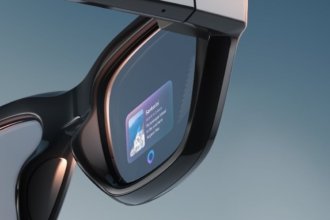
Meta Ray-Ban Display Glasses and What Changes With a Screen
Meta’s newer Ray-Ban display glasses add a built-in screen you can see through one lens, along with a neural wristband for gesture control. From a privacy standpoint, the underlying data practices are largely the same as the camera-only models. The device still relies on the camera for AI features, voice commands still get transcribed, and cloud media settings still apply the same way.
The difference is that a display makes the glasses more capable, which in turn makes people more likely to use AI features regularly, which means more captures and more transcripts flowing to Meta over time. More capability tends to mean more data, even when the privacy settings themselves have not changed.
Practical Steps to Protect Your Privacy With Ray-Ban Meta Glasses
If you already own a pair, or you are deciding whether to buy one, a few habits go a long way.
Review your cloud media settings and decide whether the convenience is worth having your captures stored on Meta’s servers for thirty days. If you are only taking occasional photos, you may not need it enabled.
Check your voice activity log periodically and delete recordings you do not want sitting on Meta’s systems. It only takes a minute, and it is easy to forget this exists.
Be deliberate about when you use Meta AI features, especially Live AI. Avoid pointing the camera at sensitive documents, other people’s private spaces, or anything you would not want reviewed by a third-party contractor.
Respect the LED indicator when you are the one wearing the glasses, and understand that tampering with it can now get your camera disabled entirely.
If you are on the other side of the lens and unsure whether someone is recording, it is fair to ask. Social norms around wearable cameras are still catching up to the technology, and a direct question is often the simplest way to protect your own privacy.
So, Are Ray-Ban Meta Glasses Worth the Privacy Tradeoff?
That really depends on how you plan to use them. If you mostly want a hands-free way to take photos and occasionally ask a quick question, the privacy exposure is fairly limited as long as you leave cloud storage off and stay mindful of when you trigger AI features.
If you plan to lean heavily on Meta AI, Live AI, or voice commands throughout your day, you should go in understanding that a meaningful amount of what you say and see could be stored, and in some cases reviewed by a person you will never meet.
As someone who covers this category for Tech Insider, my take is that Ray-Ban Meta glasses are not inherently a privacy trap, but they are also not privacy neutral the way a regular pair of sunglasses is. The technology asks you to trust Meta with more of your everyday environment than a phone typically does, simply because the camera and microphone are pointed outward at the world by default.
Whether that tradeoff is acceptable comes down to how much you use the AI features, how comfortable you are with human review of certain captures, and how seriously you take the handful of settings that actually give you control.
Ray-Ban Meta glasses are a genuinely impressive piece of hardware, and for many people the convenience will outweigh the privacy concerns. Just go in with your eyes open, adjust the settings that matter to you, and remember that the person wearing a pair of Ray-Ban Meta glasses near you might be recording too.