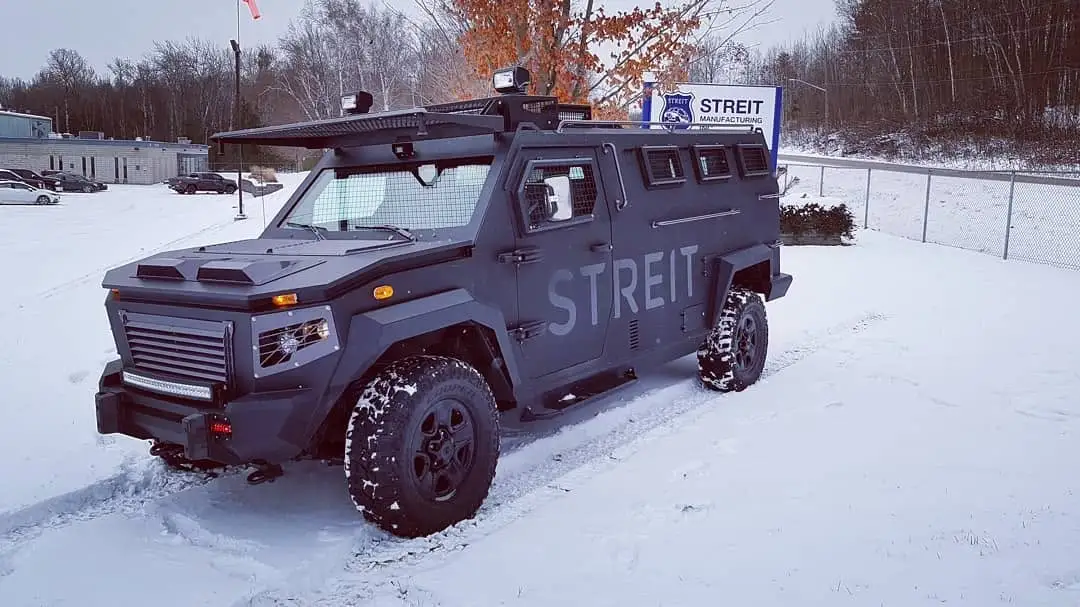

Ottawa sanctions Streit Group in a move that puts a Canadian-connected armoured vehicle manufacturer under greater scrutiny over its alleged role in supplying Russia during the war in Ukraine.
Foreign Affairs Minister Anita Anand announced the sanctions against Streit Group on August 10, saying the company had supplied vehicles to Russia’s National Guard. The force has participated in Russia’s war against Ukraine. Ottawa says the measures are intended to disrupt Streit Group’s ability to supply military technology and equipment to Russia.
The decision matters because Streit Group has a Canadian history even though its main production operations are now based outside Canada. Guerman Goutorov founded the company after he immigrated to Canada from the former Soviet Union. It later established a major production facility in the United Arab Emirates.
Ottawa sanctions Streit Group after growing international attention.
Ottawa sanctions Streit Group after similar action involving the company and Goutorov by European authorities. In April 2026, the European Union identified Goutorov as the chief executive of Streit Group FZE and described the company as a military industrial business specializing in armoured personnel carriers. The EU said Streit Group had partnered with Russian military industrial entities and linked Goutorov to support for Russia’s military industrial complex.
That international context helps explain why Ottawa sanctions Streit Group now. Canadian officials have faced questions about the company’s activities for some time. A February 2026 Global Affairs Canada briefing document noted that Streit Group, headquartered in the UAE, is owned by Canadian Guerman Goutorov and has a Canadian entity called Streit Manufacturing. The document also referred to previous allegations involving arms embargoes and sanctions.
Ottawa sanctions Streit Group as part of wider pressure on Russia
Canada has used economic sanctions extensively since Russia launched its full-scale invasion of Ukraine in 2022. Ottawa has targeted individuals, companies, financial institutions, military suppliers and other entities connected to Russia’s war effort.
Ottawa sanctions Streit Group with a specific focus on restricting the company’s ability to contribute to Russia’s military capabilities. The Canadian government says the objective is not simply symbolic. By limiting dealings with a company accused of supplying military equipment, sanctions are intended to make procurement and international business more difficult.
The practical impact, however, depends heavily on enforcement and the company’s ability to operate through different jurisdictions. Streit Group has production and business connections outside Canada, making international coordination particularly important.
Ottawa sanctions Streit Group while questions remain
The sanctions also raise questions about the difference between ownership, corporate operations and Canadian jurisdiction. A company can have Canadian ownership or historical roots while manufacturing and selling products largely from another country. That makes sanctions enforcement more complicated than simply stopping production at a Canadian factory.
Global News reported that the Ukrainian Canadian Congress welcomed the Canadian sanctions but criticized Ottawa for not imposing measures against Goutorov himself. The company did not respond to requests for comment from Global News. Russia’s ambassador to Canada dismissed the sanctions as having no practical effect.
Ottawa sanctions Streit Group amid a broader record.
The company has faced scrutiny beyond the current Russia issue. Global News reported that the United States has fined Streit Group and repeatedly accused it of sanctions violations by the United Nations. The report also noted that Streit vehicles have appeared in several conflict zones. These claims should be distinguished from findings formally established by Canadian authorities.
The February 2026 Global Affairs briefing adds another important piece of context. It says the US Department of Commerce fined Streit operations in the United States and UAE US$3.5 million over unlicensed exports and reexports of armoured vehicles during 2008 and 2009. It also notes that Streit Group has denied responsibility for how its vehicles are modified or used after sale.
Why Ottawa sanctions Streit Group matters.
Ottawa sanctions Streit Group because Canada is trying to prevent companies connected to its jurisdiction from helping strengthen Russia’s military capacity. The case also illustrates a larger challenge facing governments that impose sanctions on globally distributed defence businesses.
For readers following the issue through News Insider, the most important point is that sanctions are not the same as a criminal conviction. They are government restrictions designed to limit financial and commercial activity involving designated people or entities. Allegations, sanctions designations and proven criminal wrongdoing are separate matters and should not be treated as interchangeable.
Ottawa sanctions Streit Group at a time when governments are increasingly focused on tracing how military technology moves through international supply chains. Whether these measures significantly affect Streit Group will depend on enforcement, cooperation between countries and the company’s ability to access markets outside Canada.
For now, Ottawa sanctions against Streit Group represent a significant escalation in Canada’s response to allegations that the company supplied armoured vehicles to Russian security forces involved in the Ukraine war. The decision also puts renewed attention on how Canada monitors businesses with Canadian ownership or corporate links when their operations extend far beyond the country’s borders.