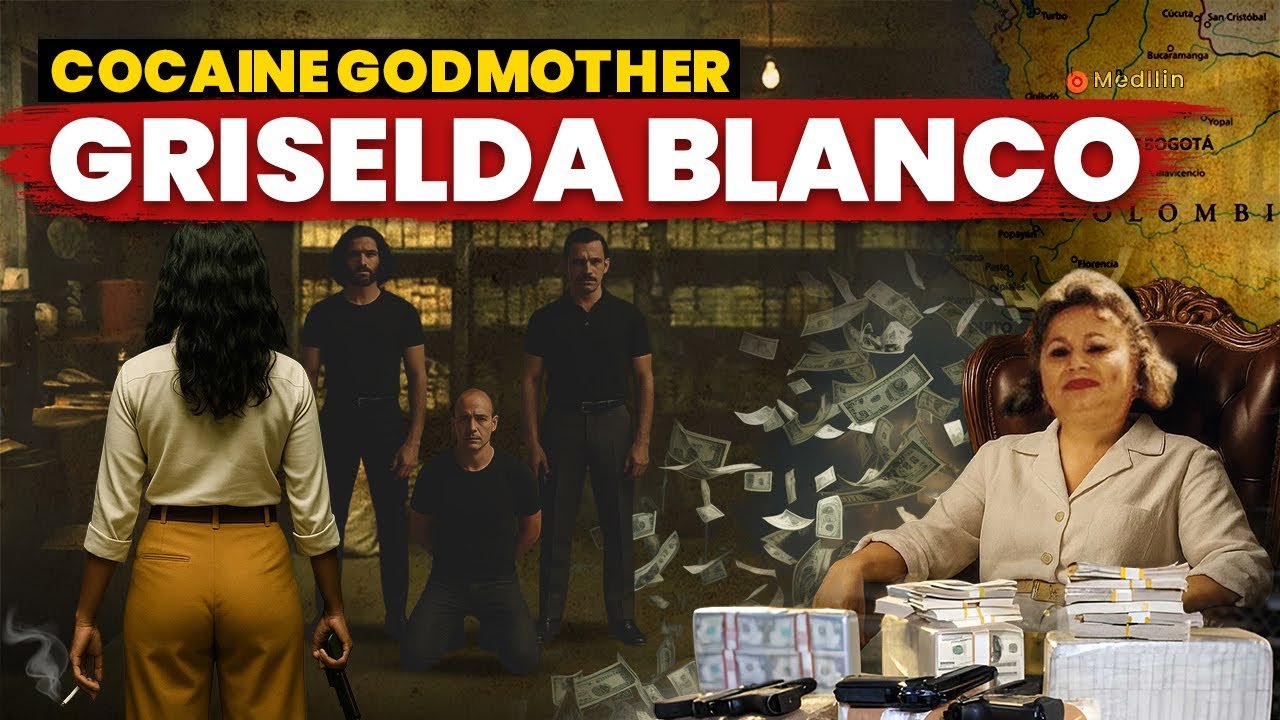

Some criminals build empires through patience. Others rely on money, political connections, or loyal armies. Griselda Blanco relied on fear.
Known as the Griselda Blanco Cocaine Queen, she became one of the most feared figures in the history of international drug trafficking. Her story moved from poverty in Colombia to the dangerous streets of New York and Miami, where cocaine transformed the criminal underworld and turned violence into a daily reality.
- A Childhood Shaped by Poverty
- The Beginning of the Cocaine Empire
- Miami and the Age of Fear
- The Ruthlessness of the Godmother of Cocaine
- A Criminal Business Built on Fear
- The Cost of the Empire
- The Investigation and Arrest
- The Murder Charges
- Prison, Release, and Deportation
- The Final Chapter
- Myth Versus Reality
- Why Her Story Still Matters
- Short Story of Griselda Blanco
She was called the Godmother of Cocaine, but that nickname only reveals part of her legacy. Griselda Blanco was not merely a drug trafficker. She was a strategist, a manipulator, and a ruthless crime boss who understood how fear could protect an empire.
Yet behind the legend was a complicated and destructive story. The rise of the Griselda Blanco Cocaine Queen was built on ambition, betrayal, violence, and the suffering of countless people caught in the cocaine trade.
A Childhood Shaped by Poverty
Griselda Blanco was born in Colombia in the early 1940s, although some details about her birthplace and early life remain disputed. She grew up in poverty, surrounded by violence and limited opportunities. Her childhood did not resemble the glamorous image later created by television and popular culture.
From an early age, Blanco learned that power often belonged to those willing to use force. Accounts of her youth describe a girl who became involved in crime while still young. As she grew older, she entered Colombia’s criminal underworld and eventually became connected to cocaine trafficking.
The young Griselda Blanco Cocaine Queen, understood something that many male criminals overlooked. The cocaine business was not only about moving drugs. It was also about controlling people, hiding money, managing suppliers, and creating fear among competitors. That insight helped her rise in a male-dominated world.
The Beginning of the Cocaine Empire
During the 1970s, Blanco moved between Colombia, New York, and the United States. She became involved in the early cocaine networks that connected Colombian suppliers with American markets. At that time, cocaine had not yet reached the scale it would later achieve, but demand was growing rapidly.
Blanco and her associates reportedly helped establish trafficking routes into New York. She also developed methods for concealing cocaine during transportation. Popular accounts have often focused on secret clothing compartments, but the larger truth was more important. Blanco helped make cocaine trafficking organized, repeatable, and profitable.
The Griselda Blanco Cocaine Queen was not operating as a street dealer. She was building a supply network.
She worked through couriers, suppliers, distributors, enforcers, and trusted intermediaries. When someone became unreliable, she replaced them. When a competitor challenged her authority, she answered with intimidation or violence. This was the period when the Griselda Blanco Story began changing from a tale of survival into a story of organized criminal power.
Miami and the Age of Fear
Miami became the center of Blanco’s empire during the late 1970s and early 1980s. The city was close to Colombia, had a growing nightlife economy, and offered access to wealthy American customers. Cocaine money flowed through nightclubs, restaurants, apartments, banks, and luxury homes.
The streets changed quickly.
Drug profits attracted ambitious traffickers, violent gangs, corrupt officials, and desperate couriers. Disagreements that might once have been settled quietly became deadly conflicts. This period later became associated with the Miami drug wars.
The Griselda Blanco Cocaine Queen stood at the center of that violent world. She reportedly ordered attacks against rivals, former associates, and people she believed had betrayed her. Authorities linked her name to numerous killings, although the exact number remains uncertain.
One of the most notorious incidents connected to her network occurred at the Dadeland Mall area in 1979. Two gunmen attacked a cocaine dealer and his bodyguard at a liquor store. The public nature of the shooting shocked Miami and became a symbol of how openly drug violence had entered everyday life. The message was unmistakable. In Blanco’s world, nowhere was completely safe.
The Ruthlessness of the Godmother of Cocaine
Blanco earned the title Godmother of Cocaine because she combined business discipline with extreme brutality. She was feared not only by rivals but also by people who worked for her.
Several stories describe a leader who demanded obedience and punished suspected betrayal. Her reputation became a weapon. Sometimes the fear of what she might do was enough to force people into silence.
This reputation also created a legend that grew larger than the documented evidence. Newspapers, investigators, witnesses, and later entertainment productions repeated different estimates of the number of deaths associated with Blanco. Some claims place the figure in the dozens, while other accounts suggest far more.
A responsible account of the Griselda Blanco Cocaine Queen must distinguish between confirmed legal findings, police suspicions, witness testimony, and sensational stories. Blanco was convicted in a federal cocaine conspiracy case, and she later pleaded guilty to three murder charges in Florida. Other killings were attributed to her by investigators, but not all were proven in court. That difference matters. The myth may be dramatic, but the documented record is already disturbing enough.
A Criminal Business Built on Fear
Blanco’s success did not come only from violence. She also understood logistics and human behavior. She knew that drug trafficking depended on secrecy. She used layers of intermediaries to separate herself from street-level operations. She reportedly moved money through various channels and relied on trusted people to maintain contact with suppliers and buyers.
Her power came from three sources.
- The first was access to cocaine. Without a reliable supply, no criminal organization could survive.
- The second was distribution. Blanco helped connect Colombian producers with American markets, especially in New York and Miami.
- The third was fear. Employees, rivals, and associates understood that betrayal could have fatal consequences.
This combination made the Griselda Blanco Cocaine Queen more than a wealthy trafficker. She became an organization in human form, with her personal reputation holding the network together.
The Cost of the Empire
The popular image of a crime boss often focuses on money, luxury, and power. But the real cost of Blanco’s empire appeared in the lives destroyed by the cocaine trade.
Families lost loved ones. Addicts lost their health and financial security. Young people were recruited into dangerous work. Innocent bystanders were exposed to shootings. Communities struggled with violence and corruption.
The Griselda Blanco Story is therefore not a success story. It is a warning about what happens when money is separated from accountability and violence becomes a management tool.
Her wealth did not create safety. It created suspicion. She had to watch employees, fear rivals, and worry about law enforcement. The same system that made her powerful also trapped her inside a permanent war.
The Investigation and Arrest
Law enforcement began pursuing Blanco during the 1970s. A federal indictment was returned in 1975, but she was not immediately captured. According to the United Nations Office on Drugs and Crime, she was eventually arrested by the DEA in Irvine, California, on February 17, 1985.
Her arrest marked a major turning point. The woman who had spent years avoiding authorities was finally placed in the legal system she had tried to outrun.
Blanco was prosecuted for conspiring to manufacture, import, and distribute cocaine. She was convicted and sentenced to fifteen years in prison. The legal case demonstrated that even a criminal organization built on secrecy could eventually be weakened through surveillance, witnesses, and long investigations.
For the Griselda Blanco Cocaine Queen, the empire was no longer protected by fear. She was now under the control of the state.
The Murder Charges
Blanco’s legal troubles did not end with the federal drug conviction. Prosecutors in Florida later connected her to several murders. One case involved the killing of a former enforcer’s young son during an attempted attack on the child’s father.
According to Britannica, former hit man Jorge Ayala later testified against Blanco, and she was charged with three murders. In 1998, she pleaded guilty to the charges and received three concurrent twenty-year sentences.
The guilty plea ended years of legal uncertainty surrounding those cases. It also separated the proven courtroom record from the much broader collection of allegations surrounding her name.
This is one of the most important facts in the Griselda Blanco Story. Her reputation suggested hundreds of killings, but the convictions established a narrower legal record. Both the legend and the court documents must be considered carefully.
Prison, Release, and Deportation
Blanco spent years in prison, far removed from the streets where she had built her reputation. While she was imprisoned, the criminal world continued to change. New traffickers rose, new routes developed, and the cocaine economy became even more international.
The woman who had once been known as the Griselda Blanco Cocaine Queen no longer controlled the same empire. Time had weakened her influence, and the world outside prison had moved forward without her.
After serving her sentences, Blanco was deported to Colombia. She returned to Medellín, the city associated with many of the region’s most powerful trafficking networks.
For someone who had once ruled through fear, her later years were surprisingly quiet. She was no longer the central power she had once been, but her name remained connected to one of the most violent chapters in Miami’s history.
The Final Chapter
On September 3, 2012, Griselda Blanco was shot and killed in Medellín. The attack took place after she had left a butcher shop, and the method reportedly resembled the motorcycle shootings that had become associated with the drug wars.
Her death closed the life of the Godmother of Cocaine, but it did not erase her influence on popular culture. Books, documentaries, podcasts, and television dramas continued to revisit her story.
The attention is understandable. Blanco was a woman who entered a male-dominated criminal world and rose to a position of extraordinary power. But her gender should not distract from the central truth. She was not powerful because she was an unusual woman in crime. She was powerful because she participated in a violent system and used its methods with exceptional ruthlessness.
Myth Versus Reality
The image of the Griselda Blanco Cocaine Queen has been shaped by documentaries and fictional dramas. These productions often combine verified events with invented dialogue, compressed timelines, and dramatized relationships.
That does not mean the entertainment is entirely false. It means viewers should understand the difference between a historical record and a dramatic interpretation.
The documented facts are already compelling. Blanco was a Colombian cocaine trafficker. She played a major role in the cocaine trade connecting Colombia, New York, and Miami. She was arrested by the DEA in 1985, convicted on federal drug charges, and later pleaded guilty to three murders.
The unverified stories should be treated with caution. Claims about the total number of victims, private relationships, and specific orders may rely on allegations rather than court-proven evidence.
A trustworthy Griselda Blanco Story should not glorify her or repeat every rumor as fact. It should show how criminal power operates and who pays the price.
Why Her Story Still Matters
The story of the Griselda Blanco Cocaine Queen continues to attract attention because it reveals several uncomfortable realities.
- First, criminal empires are often built through ordinary business skills such as organization, networking, money management, and supply control.
- Second, violence can create obedience, but it also produces enemies and accelerates collapse.
- Third, public fascination with crime can turn real suffering into entertainment. When the focus remains on luxury cars, wealth, and fear, victims disappear from the story.
Finally, Blanco’s life shows that power gained through crime is unstable. She spent years running from law enforcement, rivals, and former allies. Her empire gave her wealth, but it could not give her peace.
Short Story of Griselda Blanco
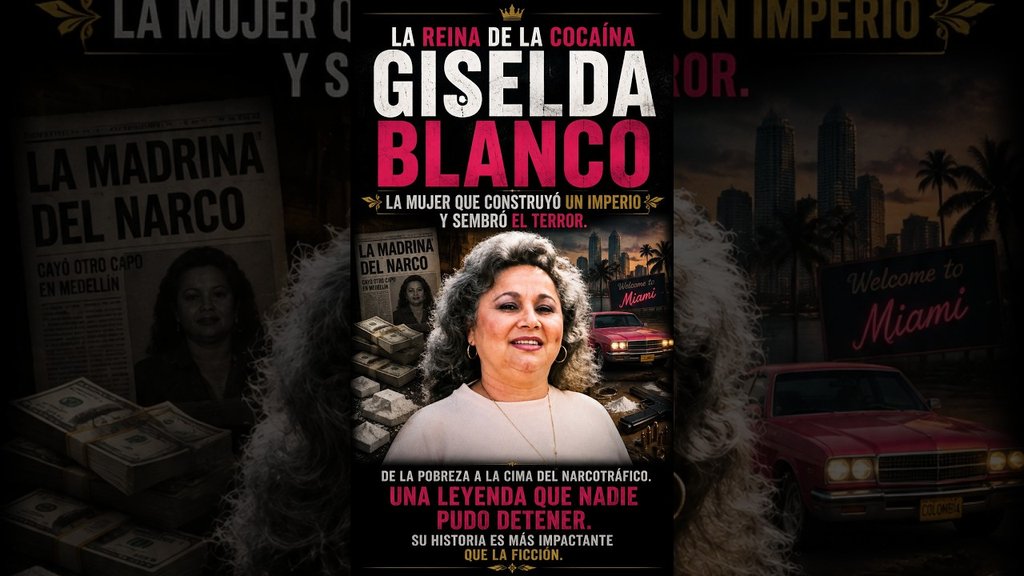
Griselda Blanco remains one of the most notorious figures in narco history. The Griselda Blanco Cocaine Queen became a symbol of the early cocaine trade, the Miami drug wars, and the brutal transformation of organized crime in the United States.
She was called the Godmother of Cocaine, but the title should never become a compliment. Her story is not about glamour or empowerment. It is about a criminal empire sustained by addiction, intimidation, corruption, and death.
The most honest way to remember the Griselda Blanco Cocaine Queen is to look beyond the legend. She was a skilled trafficker, a convicted criminal, and a woman whose decisions helped spread violence far beyond her own circle.
Her story by Insider ended with a gunshot in Medellín, but the consequences of the world she helped build lasted much longer.